
By Zambian Economist Analyst
The Tax Clearance Certificate used to be a piece of paper you produced when someone asked. It is now a gate. Without a valid TCC you cannot obtain a licence from any government ministry, department or agency, and you cannot obtain finance from any institution registered under the Banking and Financial Services Act.
For a small business, that means tax compliance is no longer a year-end task. It is a precondition for operating and for borrowing.
What the TCC now controls
| You want to… | Valid TCC required? |
|---|---|
| Obtain or renew a licence from a ministry, department or agency | Yes |
| Access finance from a regulated bank or lender | Yes |
| Remit or export above US$2,000 without advance tax | Yes |
That third line is the one that catches exporters and anyone paying an overseas supplier. Since 1 January 2025, remittances and exports exceeding US$2,000 or the equivalent attract an advance income tax of 15% where the transaction is made without a valid Tax Clearance Certificate.
On a US$10,000 payment, that is US$1,500 tied up because a certificate lapsed. It is recoverable against your eventual liability, but in the meantime it is your working capital sitting with the Authority.
Why this changes the arithmetic for informal businesses
Zambia has a large informal sector, and the traditional calculation was simple: staying informal avoided tax, and the cost was limited to missing out on government contracts.
That calculation no longer holds. The cost of informality now includes:
- No access to regulated credit. Bank finance, asset finance and most structured lending are closed without a TCC.
- No licences. Any activity requiring a permit from a ministry or agency is unavailable.
- No mine or corporate supply chains. Large procurement functions require tax-compliant vendors as standard. Local content rules make this sharper still, as we set out in the copper production and local content piece.
- A 15% haircut on cross-border payments.
Formalisation used to be optional and mildly advantageous. It is becoming the price of entry to the parts of the economy where the margins are.
The window most businesses do not know about
If your records are not clean, there is a route that did not exist before.
A permanent Voluntary Disclosure Programme under Section 91A of the Income Tax Act took effect on 1 January 2026. It allows a taxpayer to disclose errors or omissions before the ZRA detects them, in exchange for a full waiver of penalties.
The logic is straightforward and worth taking seriously. With Smart Invoice transmitting transaction data in real time and the Authority investing in data-driven audit capability, the probability of historic errors surfacing is rising sharply. The VDP is a one-way door that closes the moment they find it first.
The 2026 budget also cut the penalty for late turnover tax payment from 5% to 0.5% per month, which materially reduces the cost of catching up on arrears.
Getting compliant: the practical sequence
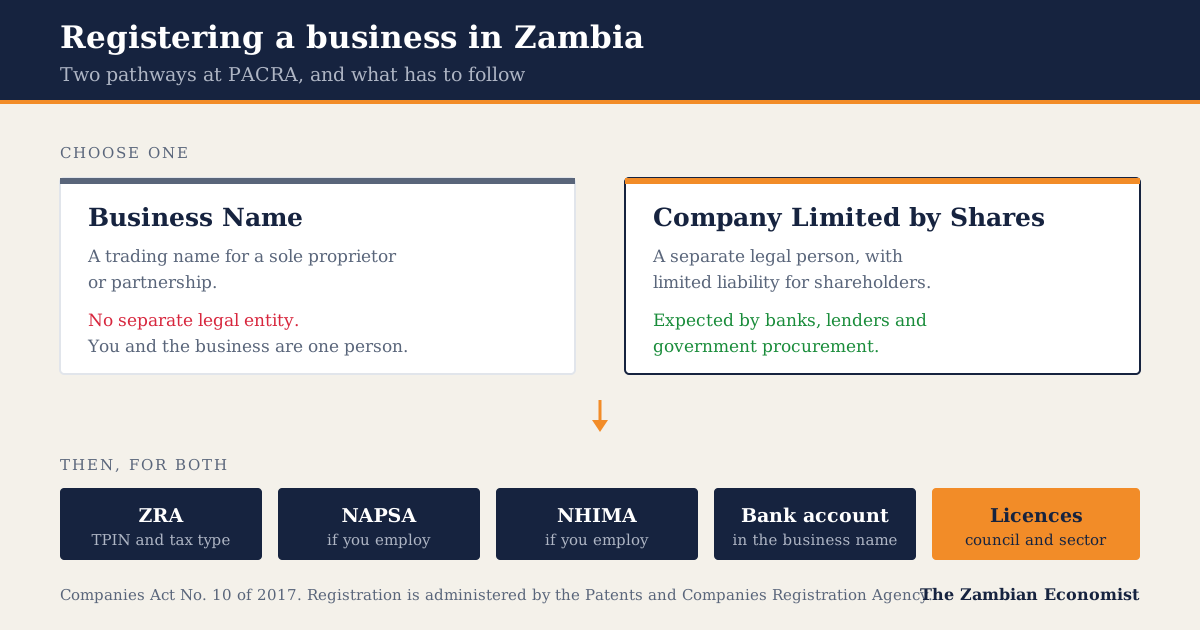
- Register the business properly. Business name or limited company, then TPIN. Our guide to registering a company in Zambia covers the PACRA process and what follows.
- Get current on filings, not just payments. Nil returns still have to be filed. Unfiled returns block a TCC even when nothing is owed.
- Use the VDP if there is history to clean up. Before, not after.
- Diarise the renewal. A TCC has a validity period. Businesses routinely discover an expired certificate at the exact moment they need to draw down a facility.
- Get onto Smart Invoice. From 1 January 2026 input VAT is only claimable against Smart Invoice receipts — see what changed in January.
The wider point
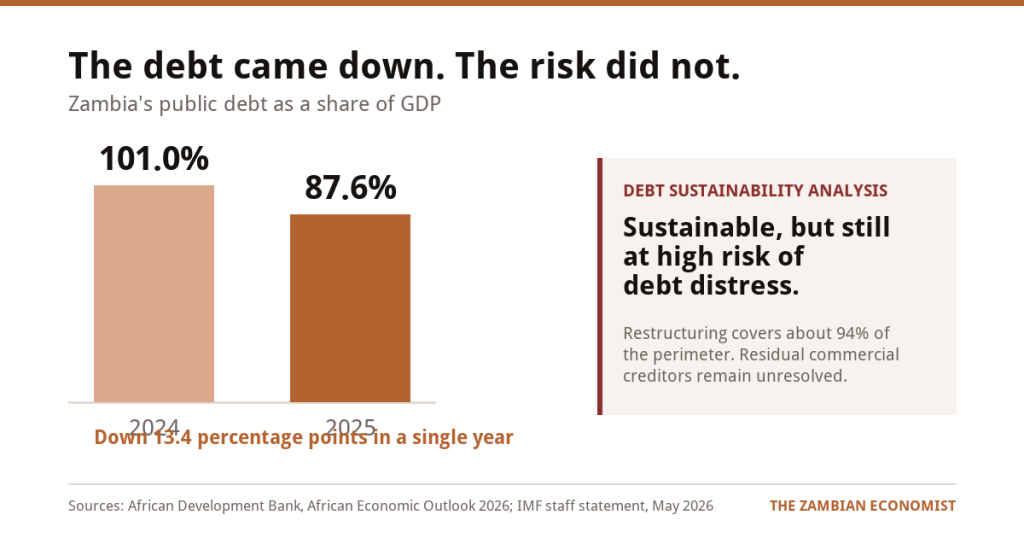
None of this is happening by accident. The 2026 budget is 81.6% domestically financed, with tax revenue supplying 65.5%. After a debt restructuring, that is the deliberate design: fund the state from domestic revenue rather than borrowing.
Achieving it requires broadening the base rather than raising rates — which in practice means making formality the only viable way to trade at scale. The TCC gate, Smart Invoice, the mobile money levy and mandatory disclosure are four instruments pointing the same direction.
For small businesses the message is uncomfortable but clear: the compliance cost of operating has risen, and the cost of not complying has risen faster.
For finance options at the smaller end see CDF grants and loans, and for the transaction costs of digital payments see the mobile money levy.
Current as at July 2026. General information only, not tax advice. Confirm your position with the ZRA or a registered tax practitioner.
Part of our Zambia Tax 2026 coverage.