
State House has denied that President Hakainde Hichilema ordered Zambia’s courts to close on 24 August 2026, arguing that the President has no constitutional authority over court filings. The denial addresses the allegation directly, but it does not by itself resolve questions raised by lawyers and civil society about the timing of the closures, the security basis for them and the arrangements made for urgent filings.
Key takeaways
- State House denies that President Hichilema ordered the court closures and says he has no power to control when or from whom courts receive filings.
- The Presidency says the security operation covered several government institutions and was not directed at the Judiciary alone.
- The closures occurred during the seven-day presidential-petition filing period, making their timing a serious access-to-justice concern for legal and civil society groups.
- State House says no presidential petition had been lodged before the closure and challenges anyone claiming obstruction to produce evidence of an attempted filing.
- A credible resolution now requires a documented account from the Judiciary and police on authorisation, duration, affected premises and alternative arrangements for urgent filings.
What State House says
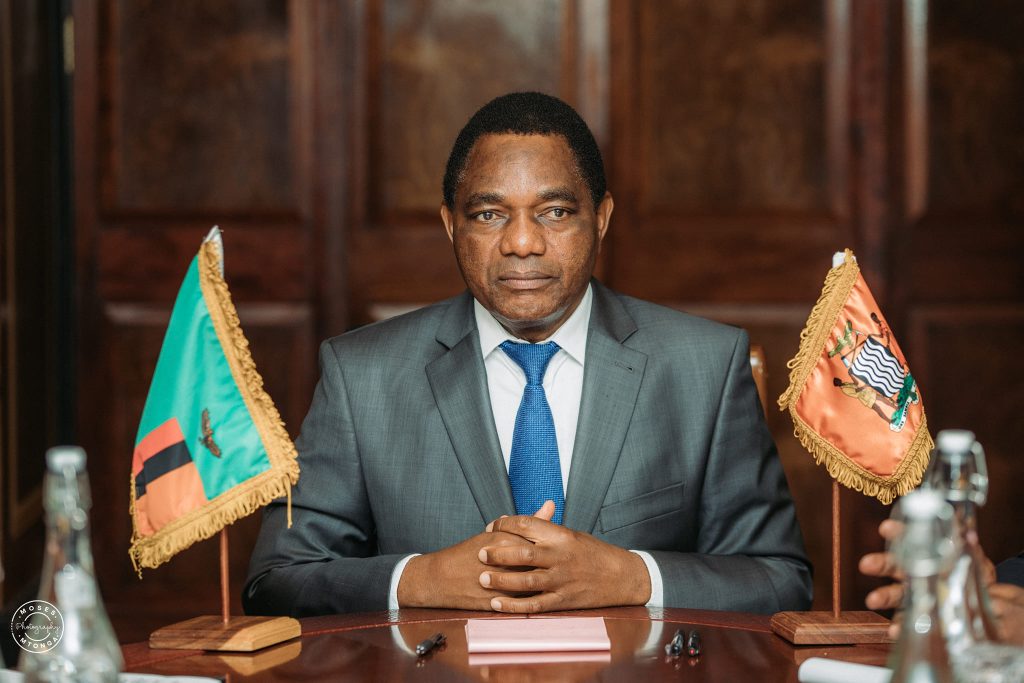
In a statement issued by Chief Communications Specialist Clayson Hamasaka, State House said allegations that President Hichilema directed the closures to prevent an opposition election petition were inconsistent with Zambia’s constitutional order and the available facts.
Its central argument is institutional: the Judiciary is an independent arm of the State, and the President cannot determine when, how or from whom the courts accept documents. State House said the 24 August measures followed intelligence-led security assessments at selected government premises, including institutions under the Ministry of Justice, the Ministry of Home Affairs and Internal Security, the National Prosecution Authority and the Attorney General’s Chambers.
According to the statement, the operation was preventive and intended to protect institutions, public officers and members of the public. It also cited earlier suspensions of court business, including during the COVID-19 pandemic, as evidence that temporary administrative closures are not inherently partisan.
What is independently reported
The physical closure of court premises is not in dispute. Lusaka Times reported police deployments and restricted access at the Supreme Court, High Court and Constitutional Court premises in Lusaka, as well as court facilities in several provincial centres. News Diggers reported armed officers and police tape at judicial complexes in Lusaka, Ndola, Chipata and Kasama.
Reports also referred to an administrative communication instructing Judiciary staff not to report for work because of security concerns. The publicly reported communication did not explain the nature of the threat, the expected duration of the closure or what alternative filing arrangements were available.
Why the timing matters
State House says the Electoral Commission of Zambia declared the presidential result on 18 August and that courts remained available on the working days that followed. It argues that the law establishes an outer filing limit and does not require a petitioner to wait until the final hours.
That is a relevant point, but the constitutional concern is not limited to whether a prospective petitioner could have filed earlier. The closures occurred during the seven-day presidential-petition period and at or near what critics treated as the deadline. The Law Association of Zambia said the timing was particularly significant and warned about the immediate implications for people needing urgent judicial intervention. Several civil society organisations also called for a fuller explanation.
The Constitutional Court’s own service charter describes presidential election petitions as formal filings before that Court, accompanied by supporting documents and followed by tightly timed service and response requirements. Physical access and clear registry arrangements therefore matter, especially in time-sensitive constitutional proceedings.
Separation of powers does not end the access question
State House is correct that the President does not constitutionally administer the courts. That principle, however, does not settle the separate governance question: whether a security operation materially impaired access to judicial remedies and, if so, what safeguards were put in place.
The most useful evidence would come from the institutions responsible. The Judiciary should identify who authorised the suspension of operations, when it began and ended, which registries were affected and whether emergency, electronic or off-site filing was available. The Zambia Police Service should explain the scope and legal basis of the operation as fully as security considerations reasonably permit.
The evidence challenge cuts both ways
State House says anyone claiming that a prepared petition was blocked should produce the document and evidence showing when and how an attempt was made to lodge it. That is a fair evidentiary challenge. A serious allegation that a constitutional remedy was deliberately obstructed should be supported by verifiable records, not political assertion alone.
Institutional accountability carries a corresponding burden. Authorities should publish a clear chronology, the administrative instructions governing the closure and the practical arrangements offered to litigants. Such disclosure would allow the public to distinguish a genuine preventive security measure from speculation about political interference.
How far does the COVID-19 precedent go?
The pandemic precedent shows that court operations may be adjusted for public safety. It does not answer every question about the present case. COVID-19 restrictions were part of a publicly understood, system-wide health emergency. The 24 August closures were linked to an undisclosed security assessment and coincided with a constitutionally sensitive electoral period. The comparison supports the general power to protect court users, but not the adequacy of the explanation or contingency arrangements in this instance.
What should happen next?
The quickest route to public confidence is a joint, factual clarification from the Judiciary and police. It should state the decision-making authority, the premises and hours affected, when normal operations resumed, and the options that existed for urgent or deadline-bound filings. It should also explain, without compromising legitimate intelligence, why closure rather than narrower security controls was considered necessary.
State House’s denial is an important part of the record, but the independence of the Judiciary is protected through transparent institutional conduct as much as constitutional language. Zambia’s democratic credibility will be strengthened by evidence that lawful grievances remained capable of reaching a court, regardless of the politics of the prospective litigant.
Related coverage
- Zambia’s courts close as questions mount over the presidential petition window
- Police cite security assessments at government premises
- The economics of Zambia’s 2026 election
- The Zambian Economist editorial standards
WARNING! All rights reserved. This material and all other digital content on this website may not be reproduced, published, broadcast, rewritten, or redistributed, in whole or in part, without the prior express permission of The Zambian Economist. Where permission is granted, the content must be clearly credited to “The Zambian Economist,” with “www.zambianeconomist.com” prominently displayed.
WhatsApp: +260775574228 | Email: info@zambianeconomist.com
© 2026 The Zambian Economist.