

Economist Dr Kiru Sichoongwe has told ZNBC News that the production targets at the heart of President Hakainde Hichilema’s Grow Zambia Agenda are realistic within the plan’s five-year horizon, if the investment arrives to meet them.
Key takeaways
- Economist Dr Kiru Sichoongwe says the Grow Zambia Agenda’s production targets can be met within five years, telling ZNBC News the shift from economic stabilisation to expansion is achievable.
- Copper is the headline number: 3 million tonnes a year. Zambia produced about 820,000 tonnes in 2024, so the target means nearly quadrupling output.
- Sichoongwe calls the soya target feasible on Zambia’s underused arable land, and says tourism can lean on Victoria Falls, Chishimba Falls and the country’s wildlife.
- The 10,000 megawatt electricity goal is attainable through solar, he argues, in a country that gets roughly 300 days of sunshine a year.
- The agenda, unveiled in President Hichilema’s inaugural speech for his second term, aims at industrial transformation and job creation. Its first test is the 2027 national budget, due within weeks.
Can Zambia meet the targets in the Grow Zambia Agenda? Yes, within five years, according to economist Dr Kiru Sichoongwe, provided the investment arrives. In a telephone interview with ZNBC News, he backed the plan’s production goals for copper, soya, tourism and electricity as realistic for the horizon President Hakainde Hichilema has set.
The endorsement matters because of what it follows. Hichilema’s first term was consumed by stabilisation: the November 2020 eurobond default, three years of restructuring negotiations, a US$1.3 billion IMF programme approved in August 2022, and a drought that cut hydropower when the economy could least afford it. Grow Zambia, introduced in the inaugural speech opening his second term, is built to change the subject from repair to expansion.
What is the Grow Zambia Agenda?
It is the second term’s economic programme, organised around production targets rather than fiscal arithmetic. Sichoongwe describes it as a strategic shift, from stabilising the economy after the debt crisis to expanding it through productive investment. The stated aim is industrial transformation and job creation. Four sectors carry the weight: mining, agriculture, tourism and energy.
Is the three-million-tonne copper target realistic?
Start with the size of the ask. Zambia produced about 820,000 tonnes of copper in 2024, according to Ministry of Mines figures. Three million tonnes a year, a target Hichilema first set in 2022 for 2031, means nearly quadrupling output inside five years.
Sichoongwe says it is achievable “if there is significant investment in the sector”, a condition that does more work than the endorsement itself. The pipeline gives his case something to stand on. First Quantum is spending more than a billion dollars expanding Kansanshi. Barrick plans about US$2 billion to turn Lumwana into a super pit. KoBold Metals is financing the high-grade Mingomba project in the Copperbelt with investors including Bill Gates.
What the pipeline cannot yet show is time. Expansions add tonnes within a few years; new mines take the better part of a decade. We examined how the three-million-tonne ambition stacks up against the projects actually under construction earlier this year.
Can soya scale on Zambia’s idle land?
The case for soya is simpler, and Sichoongwe makes it in one clause: feasibility rests on Zambia’s “large amount of currently underutilized arable land”. The Ministry of Agriculture counts about 42 million hectares of arable land, of which only a fraction is cultivated in any given year. Demand is domestic and steady, since poultry feed and cooking oil both run on the crop. Scaling soya is a logistics and finance problem, which is easier than a geology problem.
Can solar really deliver 10,000 megawatts?
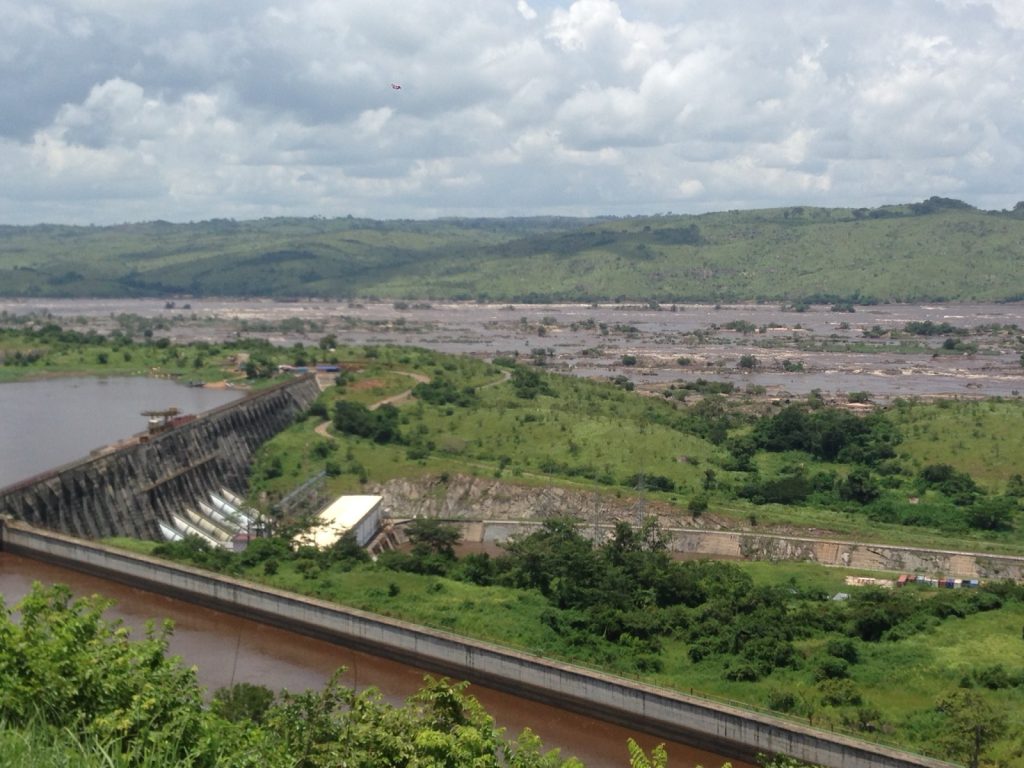
The power target looks like the boldest number until you recall where Zambia is starting from. Installed capacity sits at roughly 3,400 megawatts, more than 80 percent of it hydro. After the 2024 drought, the worst in decades, households endured load shedding of up to twenty-one hours a day. Tripling generation capacity in five years would have sounded fanciful before the cost of solar panels fell.
Sichoongwe’s arithmetic leans on the sky. Zambia gets about 300 days of sunshine a year, he notes, which makes solar the natural route to 10,000 megawatts. Panels can be installed in months, unlike dams. The slower engineering is the grid that carries the power and the tariffs that repay the people who build it.
Where tourism fits
Tourism is the one target that needs no invention. Sichoongwe points to Victoria Falls and Chishimba Falls outside Kasama, plus the wildlife in the parks between them. Before the pandemic, the World Travel and Tourism Council put the industry’s contribution at close to 7 percent of GDP. The constraint here is not attractions but beds and roads, which is why the target’s fate sits with capital spending as much as marketing.
What happens next
- The 2027 national budget, normally presented in late September or early October, will show whether the targets have money and tax measures attached.
- Investment announcements in mining, where the gap between 820,000 and 3 million tonnes has to be closed.
- Solar power purchase agreements and grid upgrades, which decide how fast new megawatts become usable electricity.
- The kwacha and inflation, as an expansion push meets the stabilisation gains of the past two years.
Sichoongwe has given the agenda an early, nameable vote of confidence, which counts for something in a country that has heard five-year plans before. The clock on this one started with the inaugural speech. Budget season, which opens within weeks, will supply the first evidence of whether the government intends to beat it.
More coverage of Zambia’s economy and mines is collected in our Agriculture and Mining hub.
WARNING! All rights reserved. This material and all other digital content on this website may not be reproduced, published, broadcast, rewritten, or redistributed, in whole or in part, without the prior express permission of The Zambian Economist. Where permission is granted, the content must be clearly credited to “The Zambian Economist,” with “www.zambianeconomist.com” prominently displayed.
WhatsApp: +260775574228 | Email: info@zambianeconomist.com © 2026 The Zambian Economist.
Work With The Zambian Economist: Advertise With Us · List With Us · Submit an Article
Related: Grow Zambia Targets Offer Real Opportunities, Says Haabazoka