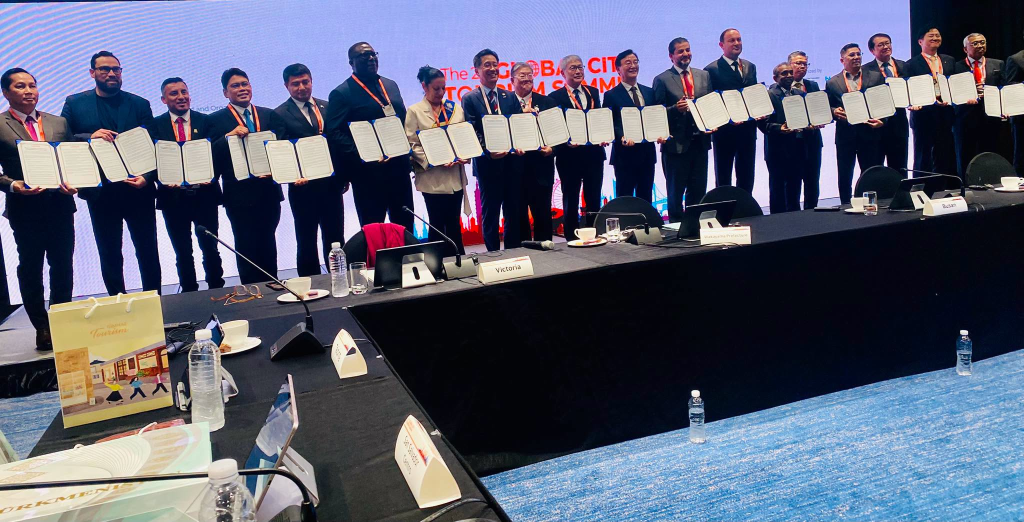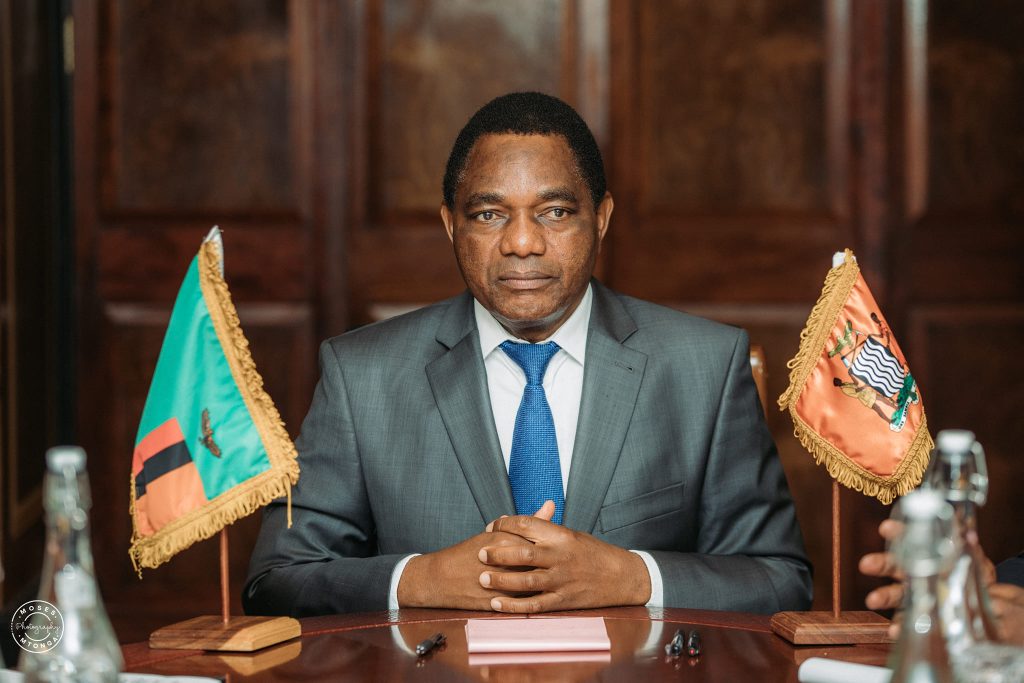


Government has brought public agencies and private institutions into a single partnership to fight money laundering, with officials warning that criminals are turning to artificial intelligence to move illicit funds just as Zambia’s mineral wealth raises the stakes for getting enforcement right.
By The Zambian Economist Analyst
KEY TAKEAWAYS
- Government has launched a Public-Private Partnership (PPP) model to strengthen coordination between the public and private sectors against financial crime and illicit financial flows.
- Attorney General Mulilo Kabesha cautioned that fraudsters, money launderers and cyber criminals are increasingly using technology and artificial intelligence to move and conceal illicit funds.
- Financial Intelligence Centre Director General Clement Kapalu called the PPP a significant milestone in the fight against illicit financial flows.
- National Anti-Money Laundering Task Force chairperson Nsandi Manza linked the initiative to the Grow Zambia agenda’s call for prudent use and protection of national resources.
- The launch follows a separate but related gain: Zambia is now compliant or largely compliant with 38 of 40 Financial Action Task Force recommendations, an upgrade secured in Kigali on 4 September 2026.
A single table for public and private enforcement
Government has launched a Public-Private Partnership model designed to close the gaps that financial criminals exploit when public agencies and private institutions work in isolation. Attorney General Mulilo Kabesha, who led the launch, stressed the need for stronger coordination between the two sides to combat financial crimes and safeguard the country’s resources.
The model brings regulators, law enforcement, banks and other private-sector players into a shared framework rather than leaving each to police its own corner of the financial system. Money laundering typically moves through several institutions in a single chain, a bank account here, a property transfer there, a shell company somewhere else, so a gap at any one link can undo the work done at the others.
Criminals moving faster with AI
Kabesha cautioned that fraudsters, money launderers and cyber criminals are increasingly leveraging technology and artificial intelligence to move and conceal illicit funds. The warning reflects a shift regulators across the region have flagged in recent years: financial crime is no longer confined to slow, paper-based schemes but now moves through digital channels at a pace traditional oversight was not built for.
That shift is a large part of the case for a formal partnership. Private institutions, particularly banks and payment providers, often see suspicious transaction patterns first. A structure that gets that information to law enforcement and regulators quickly matters more when the underlying crime is moving faster too.
Mineral wealth raises the stakes
Kabesha noted that Zambia stands at a defining moment in ensuring its mineral wealth benefits citizens and contributes to national development. He pointed to the country’s position to benefit from minerals critical to powering electric vehicles, renewable energy and digital infrastructure, resources that make Zambia a more attractive target for the kind of financial crime the partnership is meant to disrupt.
Copper and the other minerals behind that positioning generate the large, cross-border transactions that illicit finance schemes are built to exploit. Protecting that value chain, from mine gate to export receipt, is as much a governance question as a security one.
What the other officials said
Financial Intelligence Centre Director General Clement Kapalu described the establishment of the PPP as a significant milestone in the fight against illicit financial flows, a role that puts the FIC’s own transaction-monitoring work at the centre of how the partnership is expected to function in practice.
Chairperson of the National Anti-Money Laundering Task Force, Nsandi Manza, tied the initiative to the Grow Zambia agenda, emphasising that it calls for the prudent utilisation and protection of national resources. Manza underscored that strengthening measures to protect national resources from financial crime is critical to ensuring that Zambia’s wealth delivers meaningful and lasting benefits to its people.
Building on a recent compliance gain
The PPP launch follows a separate advance in Zambia’s anti-money laundering standing. At the 52nd Eastern and Southern Africa Anti-Money Laundering Group Task Force of Senior Officials Plenary Meeting and the 26th Council of Ministers meeting, held in Kigali, Rwanda, on 4 September 2026, Zambia secured upgrades in three areas of its framework under Financial Action Task Force standards: transparency and beneficial ownership of legal persons, regulation and supervision of financial institutions, and regulation and supervision of designated non-financial businesses and professions. Zambia is now compliant or largely compliant with 38 of the 40 FATF recommendations.
Speaking after that meeting, Kabesha credited the progress to the combined efforts of public and private institutions, the same coordination the PPP now aims to formalise, and challenged Zambian institutions to move beyond meeting compliance requirements to proving those measures actually work.
What comes next
A framework is only as strong as the reporting and enforcement that follow it. For the PPP to be more than a signing ceremony, banks and other private institutions will need clear channels for flagging suspicious activity, the Financial Intelligence Centre will need the capacity to act on what it receives, and prosecutors will need cases that hold up in court. Zambia’s improved FATF standing gives the partnership a credible starting point. Whether it changes outcomes will be judged in the volumes of illicit flows detected and disrupted, not in the improved rating alone.
Related reading: ACC Rejects Claims It Failed to Protect Ministry of Finance Whistleblower and The Looming Fiscal Cliff: Rebuilding Zambia’s Political Retirement Architecture for Fiscal Sustainability.
Update: for the international delegates who joined this launch and the priorities set out on day two, see Zambia’s AML Dialogue Draws International Delegates as Officials Set Three Priorities.
WARNING! All rights reserved. This material and all other digital content on this website may not be reproduced, published, broadcast, rewritten, or redistributed, in whole or in part, without the prior express permission of The Zambian Economist. Where permission is granted, the content must be clearly credited to “The Zambian Economist,” with “www.zambianeconomist.com” prominently displayed.
WhatsApp: +260775574228 | Email: info@zambianeconomist.com
© 2026 The Zambian Economist.