By Kelvin Chisanga | 30 September 2026 | Opinion
Key Takeaways
- Zambia must treat climate risk as economic risk and build a growth model around resilience, argues Kelvin Chisanga.
- The SADC regional outlook points to below-normal rainfall over southern Zambia and wetter conditions in the north for the 2026/27 season.
- The 2023/24 drought cut agricultural output and opened a power-generation deficit exceeding 1,000MW, with hydropower supplying more than 80% of electricity.
- FAO reports a second consecutive year of increased cereal production, but Chisanga warns against complacency and calls for strategic reserves.
- The shift required: from reacting to climate disasters to pricing climate risk into every major investment and production decision.
Zambia must treat climate risk as an economic risk and should work out a key growth model and resilience strategy.
Zambia should enter the 2026/27 agricultural season with a risk-management mindset, because the emerging climate outlook points to potentially uneven rainfall across the country.
The SADC regional outlook indicates an increased likelihood of below-normal rainfall across much of central and southern Southern Africa, including southern Zambia, while wetter conditions are favoured in parts of northern Zambia.
My concern is not simply whether Zambia gets rain. The real economic question is whether the country can maintain production when rainfall becomes increasingly unpredictable.
One Shock, Many Transmission Channels
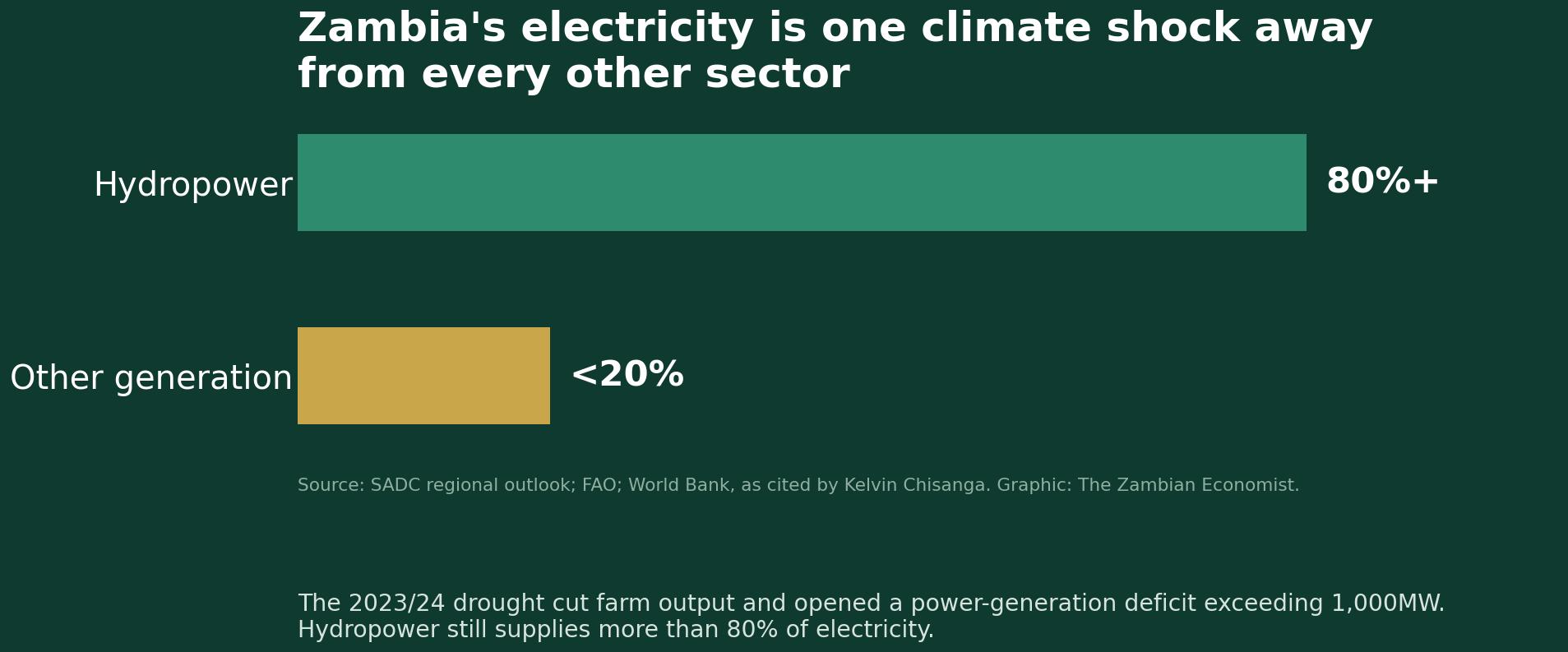
Zambia has just demonstrated how interconnected this risk is. The 2023/24 drought reduced agricultural production and created a power-generation deficit exceeding 1,000MW.
Because hydropower supplies more than 80% of electricity, a climate shock can move rapidly from the farm into the electricity system, manufacturing, mining, transport, food prices and household incomes.
This means climate resilience is now part of Zambia’s growth strategy. The country cannot build its 2031 economic ambitions around rainfall-dependent agriculture and predominantly hydro-dependent electricity.
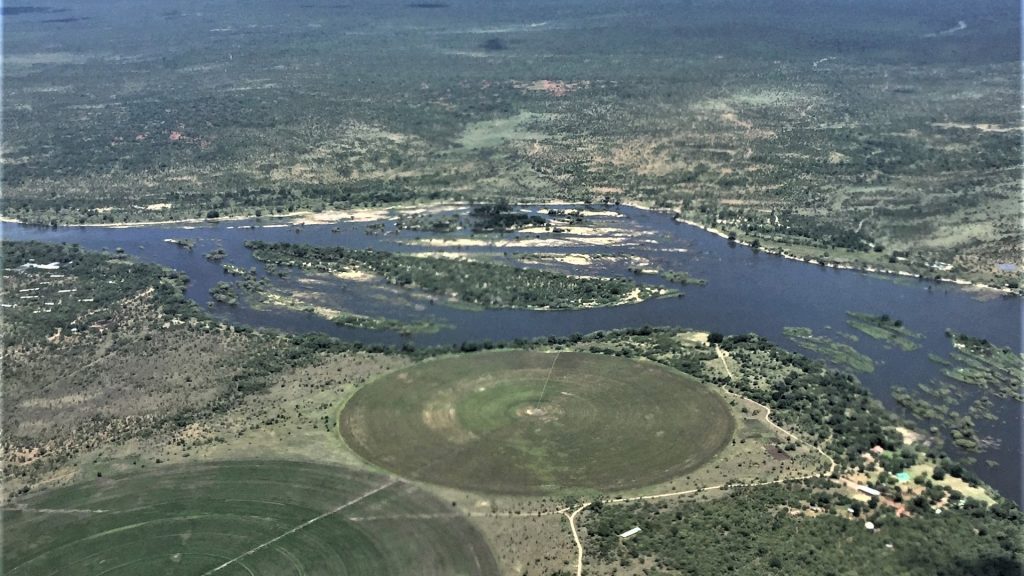
Irrigation, climate-smart agriculture, solar and other generation sources, resilient infrastructure, water management, insurance and early-warning systems must increasingly become productive economic infrastructure.
The Recovery Should Not Breed Complacency
There is also an important opportunity. Zambia’s recent agricultural recovery shows what happens when weather conditions improve. The Food and Agriculture Organization reported an increase in cereal production for a second consecutive year. But that recovery should not create complacency, and there is a strong need for strategic reserve.
The strategic shift should be from reacting to climate disasters to pricing climate risk into every major investment and production decision.
For Zambia, the ultimate objective is simple: convert climate resilience from a cost on the budget into an investment that protects production, jobs, exports, energy security and household welfare.
The World Bank similarly identifies irrigation, resilient infrastructure, renewable-energy diversification, disaster-risk systems and private-sector investment as central to building Zambia’s climate resilience.
The views expressed in this opinion piece are the author’s own.
WARNING! All rights reserved. This material and all other digital content on this website may not be reproduced, published, broadcast, rewritten, or redistributed, in whole or in part, without the prior express permission of The Zambian Economist. Where permission is granted, the content must be clearly credited to “The Zambian Economist,” with “www.zambianeconomist.com” prominently displayed.
WhatsApp: +260775574228 | Email: info@zambianeconomist.com © 2026 The Zambian Economist.
Work With The Zambian Economist: Advertise With Us | List With Us | Submit an Article