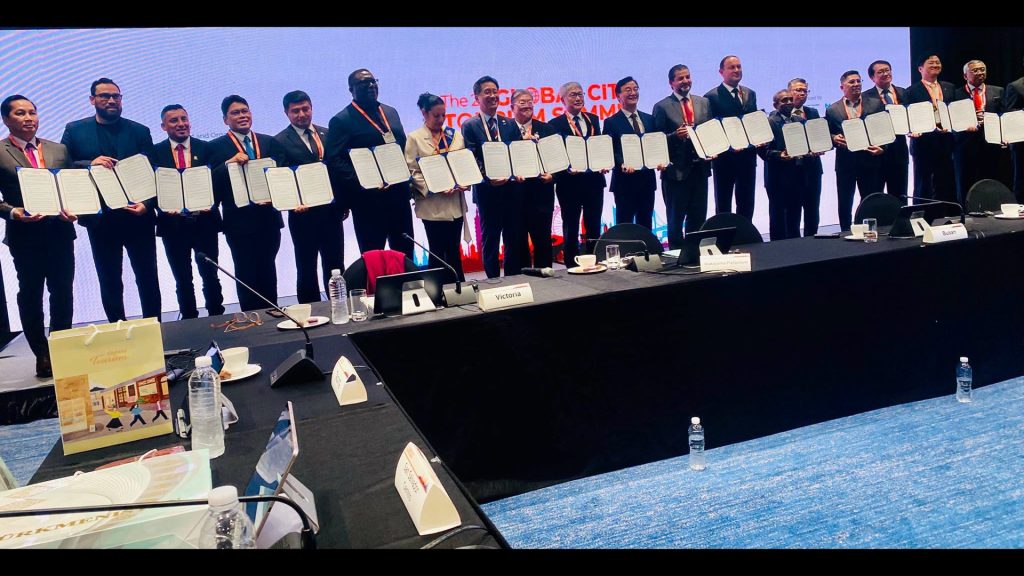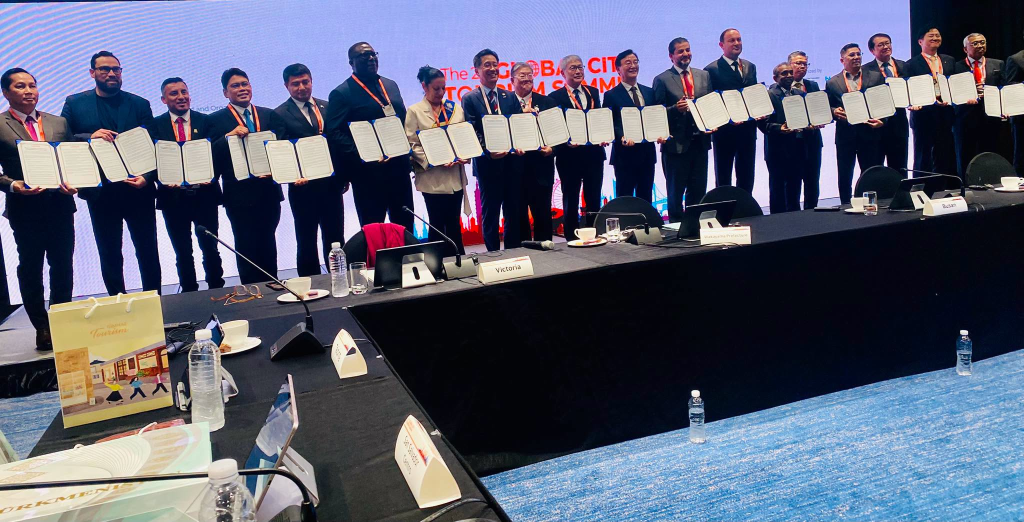


The Economics Association of Zambia elects its new council in Livingstone today. The question before members is what kind of change an association in mid-stride can afford, and evidence from professional bodies worldwide offers a clear test.
Key Takeaways
- The EAZ elects its new council today, 4th September, on the final day of its 2026 AGM at Avani Victoria Falls Resort in Livingstone.
- The core choice before delegates: return a council that has held the association together through a bruising economic period, or hand over to fresh faces who would begin with a learning curve.
- Evidence from professional associations internationally shows that planned, staged transitions outperform sudden wholesale turnover in membership organisations.
- The decisive test is trajectory: continuity only earns a mandate when the record shows delivery.
- Results are expected by close of proceedings. The full list of elected office bearers will be published here once confirmed.
The business end of the Economics Association of Zambia’s 2026 Annual General Meeting has arrived. The sessions have been held, the panels have spoken, and the item that will outlast everything else on the agenda is the vote.
Delegates at Avani Victoria Falls Resort in Livingstone will today elect the council that carries the association’s voice through the coming term. The ballot paper will carry names, but the real choice before members is older than this meeting. Every membership organisation eventually faces it: renew the mandate of the people who steadied the ship, or hand the wheel to someone new?

The oldest question in organisational life
Political scientists call it the incumbency question. Management scholars call it board turnover. Professional associations around the world call it the AGM. Whatever the label, the evidence gathered across decades and continents points in a consistent direction. In membership organisations, sudden wholesale change is among the riskiest moves a general meeting can make.
The reasons are structural.
A professional body’s most valuable asset is not its letterhead or even its membership register. It is institutional memory: the accumulated knowledge of who answers the phone at the Ministry of Finance, how a policy position is negotiated into a national budget speech, which media house will carry a considered economic comment without flattening it into a headline. That knowledge lives in people, not in files. When experienced hands leave at once, it walks out of the room with them.
The American Economic Association, the Royal Economic Society in the United Kingdom, and the International Economic Association all conduct their leadership changes through staged, overlapping terms. Officers rotate rather than vacate en masse. The design is deliberate. It guarantees that at any given moment, someone at the table knows where the bodies of past negotiations are buried, and where the opportunities are.
What continuity actually buys
For the EAZ, the argument for a renewed mandate rests on a record that members can verify. The outgoing council period has coincided with the association holding a visible, quoted position in national economic debate through an extraordinarily difficult stretch: a power deficit that squeezed mines and manufacturers, a debt restructuring that is being implemented rather than archived, and food prices that continued to do the real talking in household budgets.
An association does not stay relevant through that environment by accident. It takes a council that shows up, that maintains relationships with the Bank of Zambia, the Ministry of Finance and ZamStats, and that keeps the association’s name attached to credible analysis rather than comfortable silence.
Continuity, in other words, is another name for the compounding of relationship capital. Compounded assets, every economist in that room knows, are the ones that yield the most.
The honest case for new blood
Fairness requires saying clearly that new faces bring real value. Fresh candidates often carry fresh networks, new technical specialisms, and an outsider’s impatience with “how things are done.” Association governance literature is full of cases where long-serving boards drifted into groupthink, and the entrance of an energetic newcomer reset the institution’s ambition.
New people are welcome. Every great association was, at some point, led by people who were once new. The risk is timing and dosage. A newcomer joining a functioning team adds to it. A newcomer replacing an entire functioning team at once subtracts from it, first quietly through lost memory, then loudly through stalled initiatives.
The international best practice, visible from the Institute of Directors to the Commonwealth associations model, is exactly this: renew aggressively at the margin, change cautiously at the core. Bring in new talent. Keep the spine.
The test delegates should apply
Strip away the personalities and the campaign conversations in the hotel corridors, and today’s vote comes down to a single question each delegate can ask of every candidate on the ballot:
Has this person, or this team, delivered something the association would not have had without them, and is the unfinished work better served by their return than by a restart?
Where the answer is yes, the evidence from association management worldwide says renewal of mandate is the lower-risk, higher-return choice. Where the answer is no, no amount of familiarity should save an incumbent. Continuity earns its mandate; it is never owed one.
Applied honestly, that test lets delegates honour both loyalties at once: gratitude for the record, and discrimination about the future. It is also the test this publication applied when it examined the association’s electoral rulebook earlier this year.
A watching brief
Whatever the delegates decide, the stakes are easy to state. The incoming council will speak for Zambia’s economists at a moment when the profession’s tools of restraint, sequencing and credibility are exactly what the national economy needs. The kwacha’s path, the electricity gap, the last miles of debt restructuring, and the joblessness that headlines undercount will all land on the new council’s desk within weeks of the vote.
To every candidate who offered themselves: standing for office in a professional body is unpaid, often thankless, and essential work. The association is richer for the contest, and The Zambian Economist wishes the best candidates the day. May the delegates’ verdict, weighed in the voting line at Avani and delivered by close of proceedings, give the association momentum as well as winners.
Election results are expected by the end of today’s proceedings. The full list of elected office bearers will be published here and on our social channels as soon as it is confirmed. The association’s official record is carried at eaz.org.zm.
WARNING! All rights reserved. This material and all other digital content on this website may not be reproduced, published, broadcast, rewritten, or redistributed, in whole or in part, without the prior express permission of The Zambian Economist. Where permission is granted, the content must be clearly credited to “The Zambian Economist,” with “www.zambianeconomist.com” prominently displayed.
WhatsApp: +260775574228 | Email: info@zambianeconomist.com © 2026 The Zambian Economist.
Work With The Zambian Economist: Advertise With Us | List With Us | Submit an Article