Zambia expects about K271.9 billion in resources for 2027. After arrears, social cash transfers, CDF, free education and school feeding are paid for, the Treasury says roughly K6.9 billion is left for every other programme.
Key takeaways
- Total resources for 2027 are projected at about K271.9 billion, K18.8 billion more than the K253.1 billion approved for 2026.
- The discretionary budget rises from K67.8 billion to K86.8 billion, but existing commitments leave only about K6.9 billion for other programmes.
- The largest named commitment is K15.0 billion to clear arrears, ahead of K10.2 billion for Social Cash Transfer and K9.0 billion for the Constituency Development Fund.
- Government wants domestic revenue to rise from K206.5 billion in 2026 to K290.1 billion by 2029, growth of roughly 12 percent a year.
- Public comments on the 2027-2029 Medium Term Budget Plan (Green Paper) close on Friday, 9 October 2026.
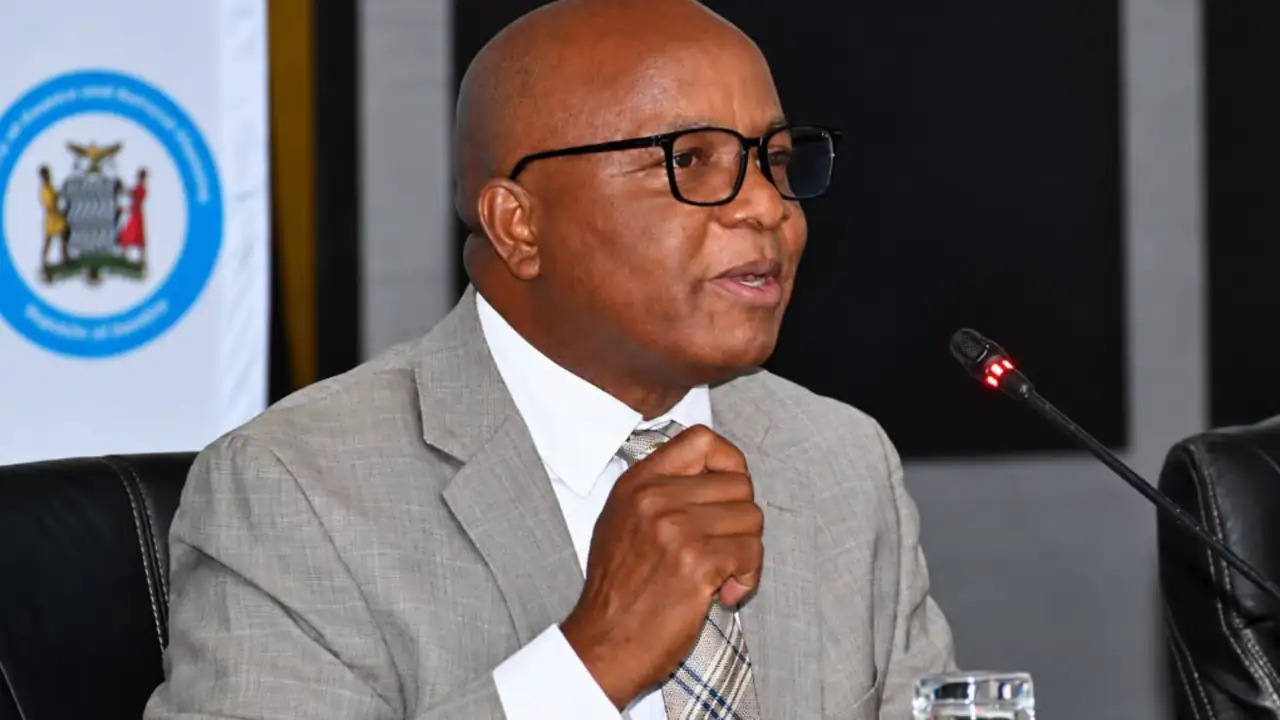
Zambia expects to have about K271.9 billion to work with in 2027, and the Treasury has told spending institutions that very little of it is free. Opening the 2027 Budget Hearings, Secretary to the Treasury Mr Felix Nkulukusa directed Ministries, Provinces and Agencies to stay within their approved expenditure ceilings and to show measurable results for whatever they propose to spend.
“We must do more with less,” he said.
The hearings are where each spending institution defends its request before the Treasury. This year’s round comes as Government describes a move from economic stabilisation toward higher and more inclusive growth under the Grow Zambia Agenda. Growth is projected at 5.3 percent in 2026 and is expected to average 7 percent a year between 2027 and 2029. Mr Nkulukusa said the stronger outlook did not reduce the need for fiscal discipline.
How much will Zambia spend in 2027?
Permanent Secretary for Budget and Resource Mobilisation Mrs Mwaka Mukubesa told delegates that total resources for 2027 are projected at about K271.9 billion. That is K18.8 billion, or roughly 7.4 percent, above the 2026 approved level of K253.1 billion.
The discretionary budget, the part the Treasury can direct between programmes once fixed obligations are met, is set to rise from K67.8 billion to K86.8 billion. On these figures it grows by about K19.0 billion, which is close to the whole increase in the envelope.
The difficulty is what is already spoken for. Mrs Mukubesa said competing commitments leave only about K6.9 billion for other programmes. That is about 8 percent of the discretionary budget and about 2.5 percent of total resources, and it is the pool from which new or expanded programmes outside the protected lines must be funded.
Where the 2027 discretionary money is already committed
| Commitment | 2027 projection (K billion) |
|---|---|
| Dismantling arrears | 15.0 |
| Social Cash Transfer | 10.2 |
| Constituency Development Fund | 9.0 |
| Free education | 2.8 |
| School feeding | 1.0 |
| Five named lines combined | 38.0 |
| Left for other programmes | 6.9 |
| Total discretionary budget | 86.8 |
Arrears are the biggest single line
The K15.0 billion set aside for dismantling arrears is larger than any other line the Treasury named, including the K10.2 billion for Social Cash Transfer. Arrears are bills Government has already run up, such as unpaid contractors and suppliers, carried over from earlier years. Paying them does not build a new road or classroom. It does return cash to businesses that have been waiting to be paid, and it reduces liabilities that weigh on the Treasury’s credibility with lenders.
The priority is consistent with recent spending. In August, debt servicing and arrears took K7.6 billion of the K16.1 billion the Treasury released, about 47 percent, as we reported last month.
Social protection and CDF take a large share
Social Cash Transfer and the Constituency Development Fund together account for K19.2 billion, about 22 percent of the discretionary budget. Both reach large numbers of beneficiaries, which makes them hard to cut. The sharper question for 2027 is value for money. Our earlier analysis argued that CDF needs national cost benchmarks so that similar projects in different constituencies do not carry very different price tags.
Free education, at K2.8 billion, and school feeding, at K1.0 billion, complete the list of named priorities.
Where the extra money is meant to come from
Government says it will create fiscal space by raising more revenue at home and leaning less on borrowing. Domestic revenue is projected to rise from K206.5 billion in 2026 to K290.1 billion by 2029. That is an increase of K83.6 billion, or about 40 percent over three years, and works out to growth of roughly 12 percent a year.
The plan draws on the 2027-2031 Medium-Term Revenue Strategy, which aims to widen the tax base and lift compliance. Because nominal revenue depends on both real growth and prices, the target leans heavily on the economy reaching its projected 7 percent average and on compliance gains arriving on time. If either falls short, the thin margin left for other programmes is where the pressure would show first.
What the One-Government approach asks of ministries
The Treasury wants institutions to coordinate their spending, protect priority programmes, and judge expenditure by its effect on productivity, investment, economic activity and future revenue, not only by its cost.
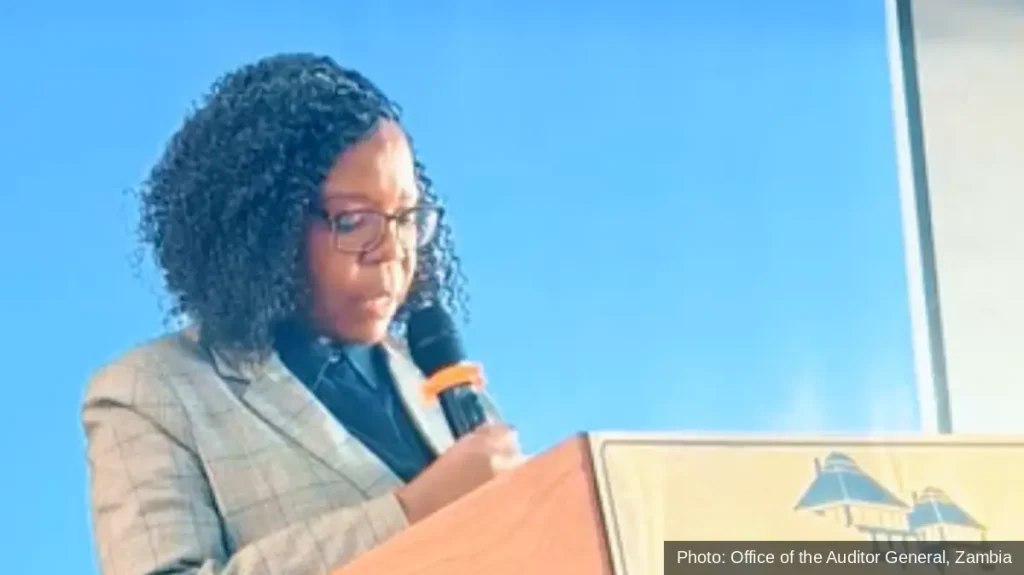
In practice, a ministry seeking money for 2027 will need to show what the spending returns. A request that duplicates another agency’s work, or cannot point to a measurable result, starts at a disadvantage. The same instruction is already filtering through government: at its own budget meeting this week, the Office of the Auditor General was told to justify every budget provision and protect core audit work.
What it means for business, investors and households
For business: contractors and suppliers owed money by Government have the most direct stake in the K15.0 billion arrears allocation. Firms bidding for new public work should expect closer questions about costs and results.
For investors: the numbers describe a Treasury that is clearing liabilities and holding ceilings rather than launching new programmes, in line with Cabinet’s stated aim of reducing deficits while supporting growth. The revenue path to 2029 is the figure to track.
For households: Social Cash Transfer, free education and school feeding are named as protected priorities. New initiatives outside those lines will be competing for a share of about K6.9 billion.
How can the public comment on the 2027 Budget?
The 2027-2029 Medium Term Budget Plan, known as the Green Paper, is open for public consultation. Businesses, civil society organisations, professional bodies, development partners, academia and individual citizens can review the proposals and submit comments and recommendations by Friday, 9 October 2026.
The Treasury says public and private-sector submissions, together with input from the Budget Hearings, will help shape the final 2027-2029 Medium Term Budget Plan and the 2027 National Budget. With ceilings this tight, submissions that name a specific programme, its cost and the result it should deliver are the ones most likely to be of use to officials.

What to watch
- Final ceilings: whether ministry allocations in the 2027 Estimates of Revenue and Expenditure match the ceilings set at the hearings.
- Arrears: whether the K15.0 billion is released in full during 2027, and whether the stock of arrears actually falls.
- Revenue: monthly and quarterly collections against the path to K290.1 billion by 2029.
- The Green Paper: whether public submissions produce visible changes between the draft plan and the Budget tabled in Parliament.
The Treasury has set its own test for the 2027 Budget: every kwacha should advance national priorities and produce benefits citizens can see. The Estimates, and the spending year that follows, will show how close it comes.
More from our Zambia Economy 2026 coverage. Related: Budget 2027 Should Put Jobs and Productive Investment First and Musokotwane’s Day-One Message: Zambia Moves From Stabilisation to Growth.
For weekly analysis, subscribe to The Ledger. Find events, read about the publication or contact us.
WARNING! All rights reserved. This material and all other digital content on this website may not be reproduced, published, broadcast, rewritten, or redistributed, in whole or in part, without the prior express permission of The Zambian Economist. Where permission is granted, the content must be clearly credited to “The Zambian Economist,” with “www.zambianeconomist.com” prominently displayed.
WhatsApp: +260775574228 | Email: info@zambianeconomist.com
© 2026 The Zambian Economist.