Serviced plots, affordable finance and upgrades to existing settlements will determine whether the new ministry changes how Zambians live.
Zambia’s new Ministry of Housing can improve urban development by coordinating serviced land, affordable housing delivery and the upgrading of existing settlements. Its test will be whether households gain access to habitable neighbourhoods at a cost they can afford.
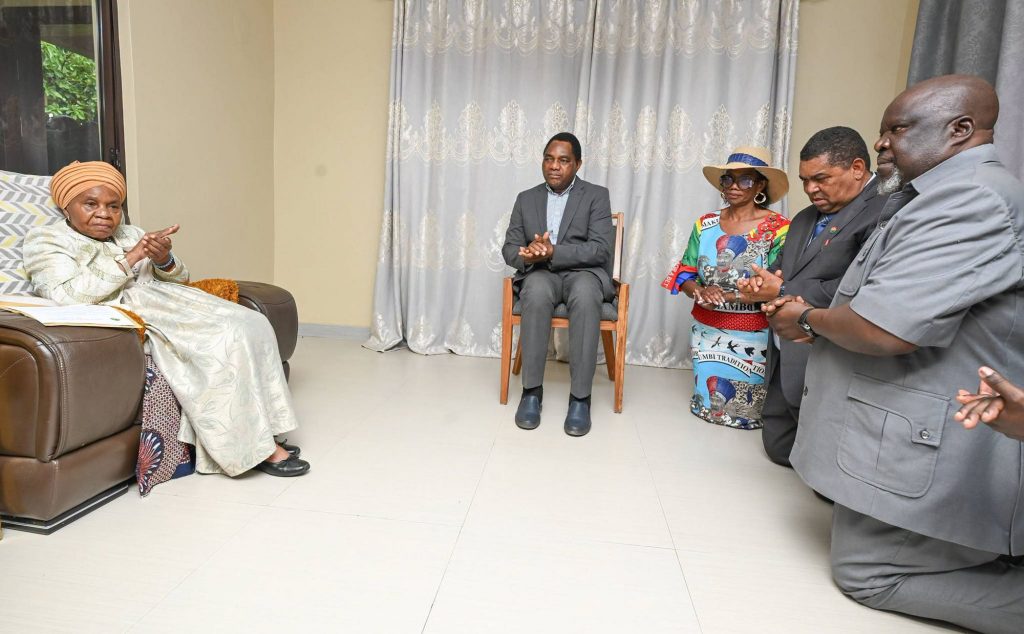
At the swearing-in of Housing Minister Christopher Kalila on 29 October, President Hakainde Hichilema instructed local authorities to allocate land with basic infrastructure already in place, according to State House’s account. The challenge is turning that instruction into financed projects and enforceable decisions at council level.
What does plan-service-build-occupy mean?
In a planned development, authorities first establish the layout and land rights. Roads, drainage, water and sanitation are provided before houses are built and occupied. Electricity connections and access to schools, workplaces and public transport must also be considered in the development programme.
The reverse sequence begins when people occupy land and build before services and an agreed layout arrive. Government then tries to fit infrastructure around established homes. The World Bank’s 2015 housing-sector stocktaking describes these opposing sequences as plan-service-build-occupy and occupy-build-service-plan.
Retrofitting can require difficult negotiations over road reserves, drainage routes and relocation. Residents may spend years paying for alternatives while waiting for public networks. Those burdens are part of the real cost of a supposedly cheap plot.
Planning ahead has its own financing problem: somebody must pay for infrastructure before plot sales, rates and connection charges generate enough revenue. A serviced-land directive therefore needs a funding plan. Otherwise it risks restricting legal supply while unmet demand continues elsewhere.
How large is Zambia’s housing deficit?
Kalila put the backlog at about 1.5 million units and said it could reach 3 million by 2030, according to State House. He also identified rural areas as having the greatest need. A housing strategy centred on urban disorder must therefore retain a rural housing programme.
Other official documents use different figures. The ministry’s 2024 newsletter cited a shortfall exceeding 1.5 million units and warned that it could exceed 3.3 million by 2030 without substantial intervention. These projections should not be presented as interchangeable measurements of today’s stock.
The new ministry should publish a reconciled baseline with the Zambia Statistics Agency, councils and housing agencies. It should separate a shortage of dwellings from overcrowding, unsafe structures and homes lacking services. Each requires a different response. An occupied house needing sanitation is a different policy problem from a household needing an additional dwelling.
Start with land that households can actually use
In commentary supplied to The Zambian Economist, Dr Kelvin Kamayoyo, Projects Director at Acacia Trade and Development Consulting Group, welcomed the dedicated ministry and called for collaboration with private developers and agencies including the National Housing Authority. His emphasis on land, planning and construction costs identifies where delivery can get stuck.
For new developments, the ministry should broker agreements between councils, land authorities and utilities before plots are offered. Each scheme needs a verified layout, a service specification, published charges and a realistic connection timetable. Buyers should be able to distinguish infrastructure already available from infrastructure merely promised.
Compact developments can spread network costs across more households. Reviewing plot sizes and allowing suitable higher-density housing could improve affordability, provided access, ventilation and safety standards are maintained. Cheap land far from employment can still leave a family with an expensive daily commute.
What happens to existing unplanned settlements?
Improving existing settlements should run alongside preventing new unplanned development. Residents cannot wait for a future estate to solve a present drainage or sanitation problem.
The ministry should work with councils and communities to map service gaps and prioritise upgrades. Where safe and feasible, improving neighbourhoods in place can preserve access to work and established support networks. Areas exposed to serious hazards may require relocation, with consultation, lawful procedures and workable alternatives.
Regularisation also needs care. Recognising an address or improving tenure security does not automatically make a building safe, produce a clean land title or qualify a household for a mortgage. These are separate steps with separate costs.
Housing finance must fit how people earn and build
The Centre for Affordable Housing Finance in Africa’s Zambia profile describes a market in which rental housing is prominent and many households cannot afford to buy or construct a home. Expanding mortgage lending alone will leave important needs unmet.
Policy should support a range of options: rental homes near jobs, serviced plots with safe incremental construction, and appropriately assessed loans for building or improving homes in stages. Standard house designs could reduce repeat design costs and simplify approvals. New materials still need independent testing and credible maintenance arrangements.
Any subsidised loan or guarantee should disclose its budget cost, eligibility rules and treatment of defaults. Lower repayments achieved through a public subsidy still have to be financed. Pension-backed investment also needs commercially sound projects that protect contributors’ savings.
Where businesses and investors fit
Predictable approvals and transparent land information can help developers prepare viable projects. Smaller contractors and building-material suppliers could benefit from a more regular construction pipeline. Employment gains will depend on projects reaching construction and on procurement opening genuine opportunities for capable local firms.
Public-private partnerships should specify which income groups a scheme serves, the infrastructure each partner must provide and the public liabilities involved. A completed estate is a weak affordability measure if the intended households cannot meet its deposits or rents.
For investors, the backlog signals unmet need. It does not establish purchasing power. Demand assessments must test household incomes, financing costs and the full cost of servicing each site.
A delivery scorecard for the new ministry
The ministry should publish quarterly results covering serviced plots made available, completed and occupied homes, settlement upgrades, approval times and project costs. Affordability reporting should identify the income groups reached and include rent or loan repayments alongside service and transport costs.
A first stocktake should also identify stalled public housing projects and explain what each needs to become usable. Counting announcements or land allocations would tell citizens little about whether delivery is improving.
The new ministry creates a focal point for responsibilities spread across several institutions. Its success will depend on getting those institutions to deliver together. For a household buying a plot, progress will be tangible: a secure claim to the land, a usable road and functioning services when the home is ready.
Reporting note: This analysis draws on Dr Kelvin Kamayoyo’s commentary supplied on 29 October 2026, with independently checked official sources and additional editorial analysis. Unverified international rankings and cross-country mortgage-access statistics in the supplied text have been omitted.
Explore our Leadership & Governance coverage and Business & Economy coverage. For related accountability analysis, read Zambia’s Next Economic Phase Needs a Stronger Government Accountability Forum.
WARNING! All rights reserved. This material and all other digital content on this website may not be reproduced, published, broadcast, rewritten, or redistributed, in whole or in part, without the prior express permission of The Zambian Economist. Where permission is granted, the content must be clearly credited to “The Zambian Economist,” with “www.zambianeconomist.com” prominently displayed.
WhatsApp: +260775574228 | Email: info@zambianeconomist.com
© 2026 The Zambian Economist.