The President directed that chiefs whose chiefdoms cross district lines may send proxies to council meetings, as the Soli leader raised boundary rows traced to a 1958 colonial demarcation.
By The Zambian Economist Analyst | 30 October 2026
KEY TAKEAWAYS
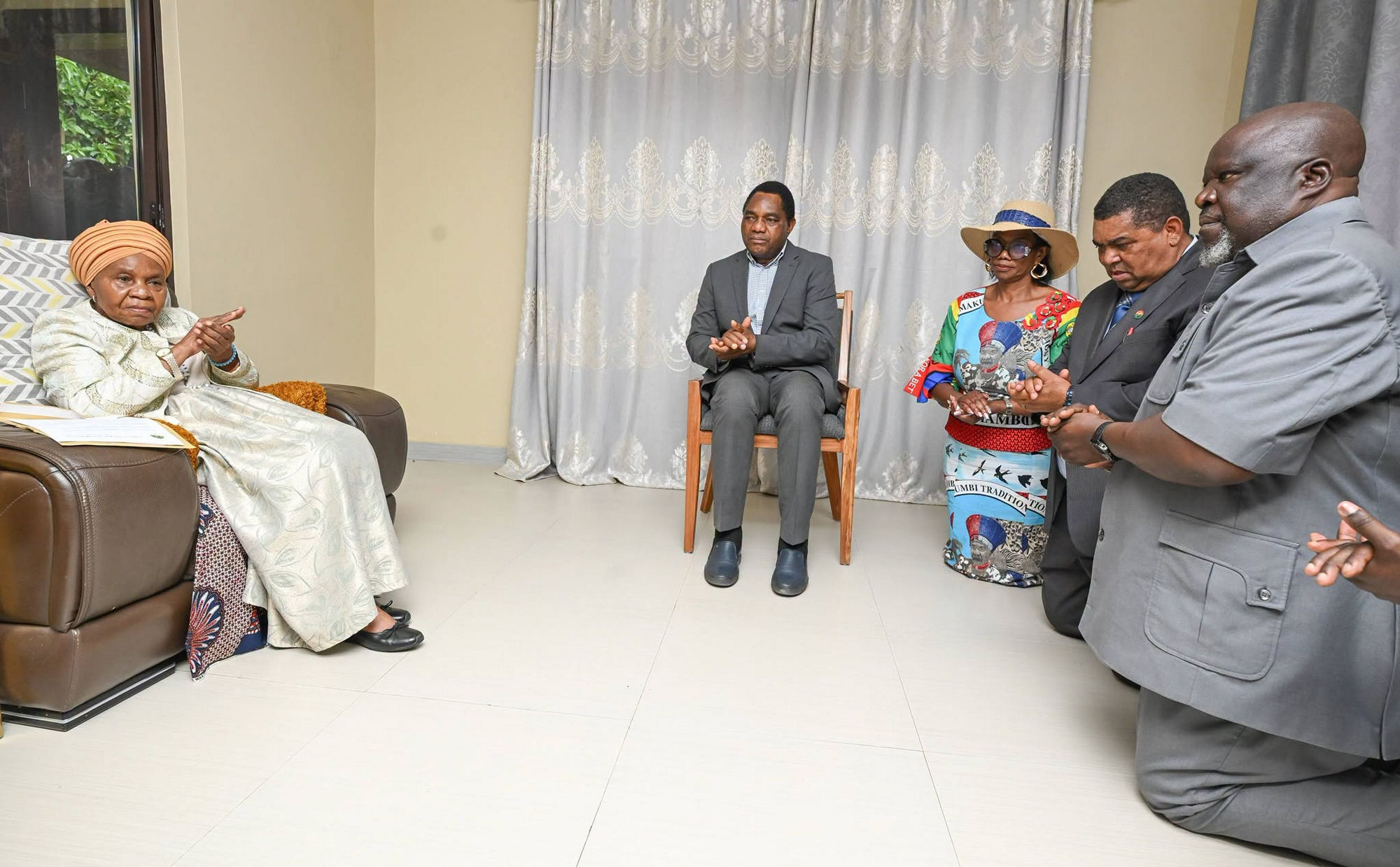
- President Hakainde Hichilema paid a courtesy call on Senior Chieftainess Nkomeshya Mukamambo II of the Soli people at her palace in Chongwe District on 29 October 2026.
- The Chieftainess raised boundary disputes in her chiefdom that trace back to the colonial demarcation of 1958, a problem the President said affects many other chiefdoms across Zambia.
- She also complained that her chiefdom falls under more than one council, and that a 2025 constitutional amendment made it harder for traditional leaders to attend council meetings.
- The President directed that where a chiefdom straddles several districts, traditional leaders should nominate proxies to attend council meetings on their behalf.
- The government has committed to resolving the boundary question, which carries practical consequences for land administration in Chongwe, one of the fastest growing districts on Lusaka’s doorstep.
President Hakainde Hichilema travelled to Chongwe District on 29 October 2026 to pay a courtesy call on Senior Chieftainess Nkomeshya Mukamambo II of the Soli people, choosing to go to her palace himself although, he said, the Chieftainess had asked to visit State House instead.
“We felt it was only right that we should be the ones to go to our mother and traditional leader at her palace,” the President said in a statement issued after the meeting.
The Chieftainess is no ordinary ceremonial figure. Before ascending to her throne, she served on the Central Committee of UNIP, the party that governed Zambia for 27 years under Kenneth Kaunda, and later as Member of Parliament for Chongwe. She used Thursday’s audience to put three problems before the head of state, all of them rooted in how her chiefdom fits inside the local government map.
The 1958 boundary problem
The first is a boundary dispute that dates to the demarcation of 1958, drawn seven years before Zambian independence, when colonial administrators carved up the land without regard for where the Soli people actually lived. Sixty-eight years later, the lines have never been corrected.
The President acknowledged the grievance and committed his government to resolving it. “We have committed to resolving the boundary question, which affects many other chiefdoms as well,” he said, an admission that the Chongwe case is one instance of a national problem rather than an isolated quarrel.
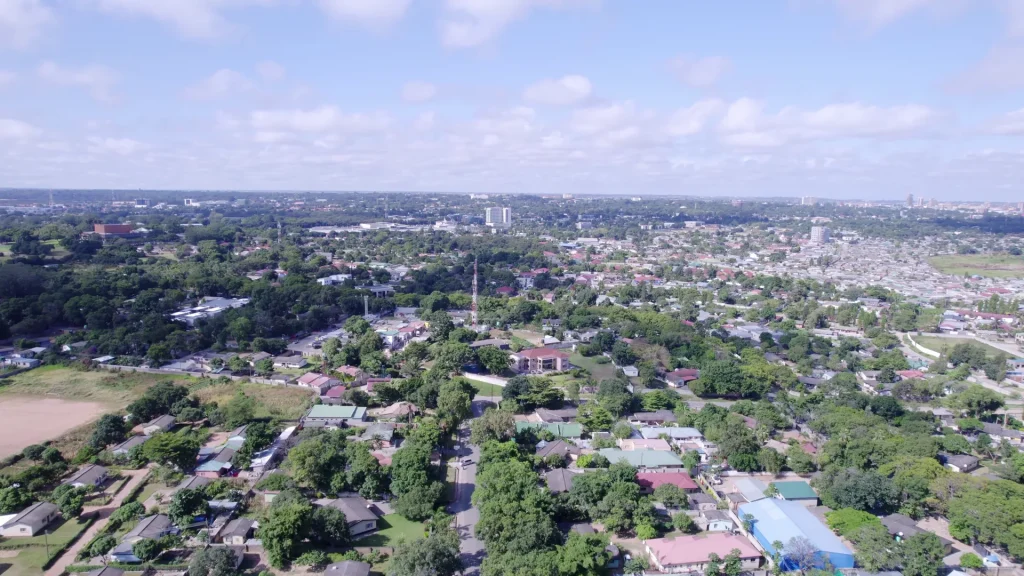
Boundaries are not an abstract concern in this part of Zambia. Chongwe sits on the eastern edge of Lusaka, and households and businesses have been spilling into the district for years as the capital runs out of affordable land. When a plot sits near a contested boundary, it is often unclear which council issues the title, which one collects rates, and whose courts hear disputes. Investors and mortgage lenders tend to notice such uncertainty quickly.
One chiefdom, several councils
The second problem follows from the first. Because the colonial lines cut across the chiefdom, Nkomeshya’s territory falls under more than one council. A chief who answers to two or three local authorities has no single channel through which to press for roads, clinics or boreholes for her people.
The third difficulty is newer. The Chieftainess told the President that traditional leaders are struggling to attend council meetings following the 2025 amendment to the Constitution, which changed the composition of local authorities. The government brought traditional leaders back into councils so that, in the President’s words, “they contribute directly to the development of their areas.” For chiefs whose territories span several districts, attendance at every relevant council sitting is practically impossible.
The proxy directive
The President’s answer was a directive: where a chiefdom straddles several districts, the traditional leader should nominate a proxy to attend council meetings on their behalf. The arrangement is meant to preserve the intention behind the reform, keeping chiefs inside the rooms where district budgets and development plans are decided, without demanding that an elderly leader commute between two or three council chambers in a single month.
The statement closed cordially, with the President thanking the Chieftainess for her best wishes and prayers and wishing her continued good health.
What it means
For Chongwe, the test will be delivery. Boundary corrections require surveys, consultations with neighbouring chiefs who hold competing claims, and legal instruments to give effect to any new lines. Successive governments have found reasons to defer exactly this work, because redrawing one boundary tends to invite petitions from every chiefdom with a similar grievance.
The proxy directive, by contrast, can be implemented quickly and at almost no cost. It requires only that councils accept nominated representatives when chiefdoms cross their borders. If it works in Chongwe, it offers a template for the many chiefdoms in Zambia that sit astride two or more districts.
Work With The Zambian Economist: Advertise With Us | List With Us | Submit an Article
WARNING! All rights reserved. This material and all other digital content on this website may not be reproduced, published, broadcast, rewritten, or redistributed, in whole or in part, without the prior express permission of The Zambian Economist. Where permission is granted, the content must be clearly credited to “The Zambian Economist,” with “www.zambianeconomist.com” prominently displayed.
WhatsApp: +260775574228 | Email: info@zambianeconomist.com © 2026 The Zambian Economist.