
Zambia’s message to Moscow: we want partners in fertiliser plants, irrigation, power and mineral processing, not the extractive deals of the past.
By The Zambian Economist Analyst | 30 October 2026
KEY TAKEAWAYS
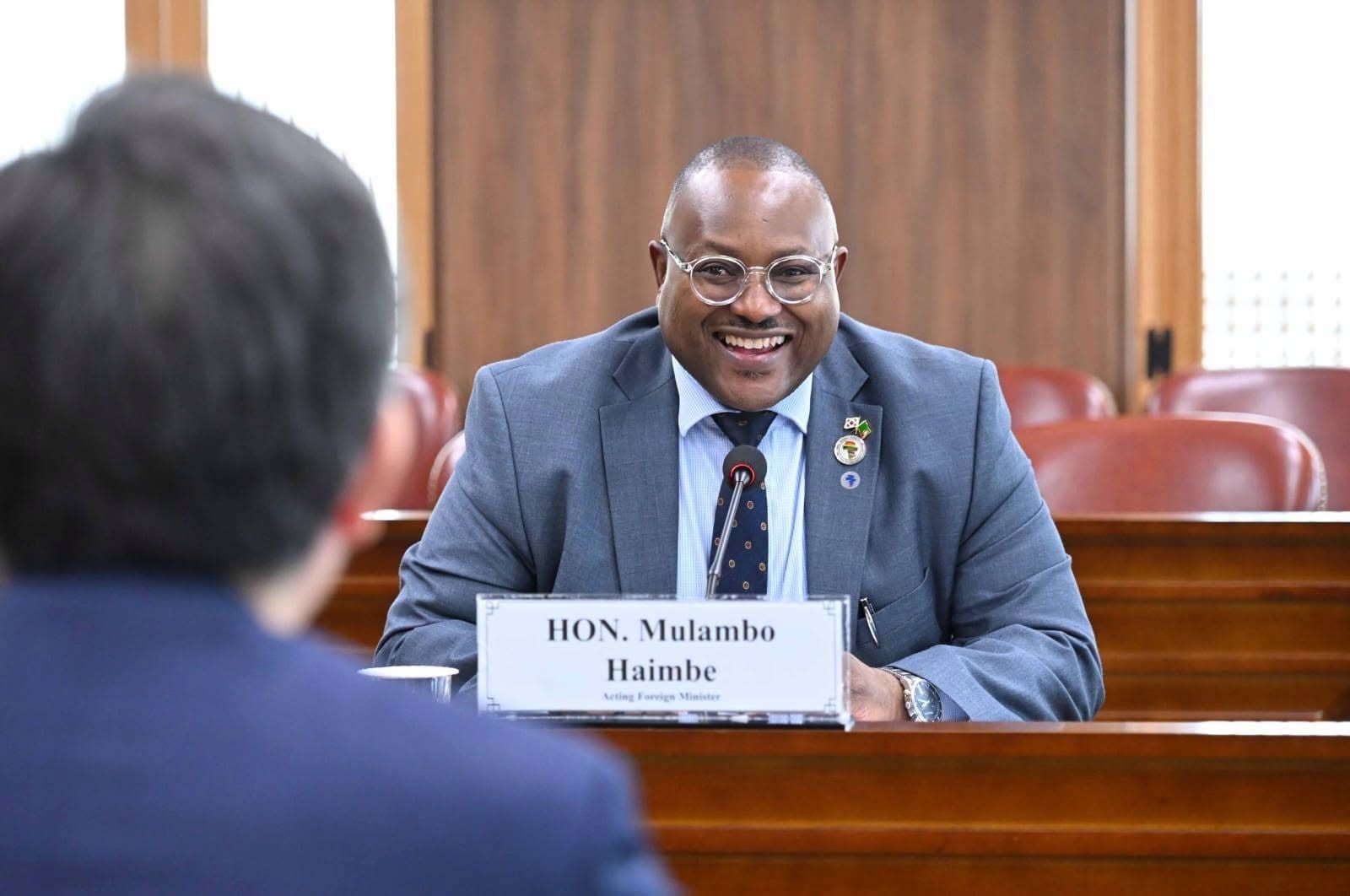
- Foreign Minister Mulambo Haimbe delivered Zambia’s statement to the plenary of the Third Russia-Africa Summit in Moscow on 29 October 2026, standing in for President Hakainde Hichilema.
- Zambia invited Russian investment in fertiliser production, irrigation technology and its 10,000 megawatt energy expansion target.
- Haimbe said Africa must stop exporting raw materials, citing Zambia’s 3 million tonne copper target and plans for 10 million tonnes of maize under the Grow Zambia Agenda.
- He linked the 2023/24 drought, which affected over 9 million Zambians, to a global system in which Africa contributes less than 0.01 percent of emissions, and asked for anticipatory climate finance rather than more debt.
- Zambia also called for reform of credit ratings, the global financial architecture and the United Nations Security Council, and welcomed the Summit’s 2027-2029 Action Plan.
Zambia went to Moscow with a shopping list, and it read less like a diplomatic speech than a term sheet.
Foreign Affairs Minister Mulambo Haimbe told the plenary of the Third Russia-Africa Summit on 29 October 2026 that Zambia wants a partnership measured in deliverables. “We come to Moscow committed to translating dialogue into tangible deliverables,” he said, speaking on behalf of President Hakainde Hichilema.
The timing was Zambia’s own argument. Haimbe tied every ask to the Grow Zambia Agenda, the government’s plan to double the economy within five years, framing Russia as one of several partners being courted for the capital and technology that plan requires.
Fertiliser, irrigation and 10,000 megawatts
The first invitation was the most concrete. Zambia, which holds an estimated 40 percent of Southern Africa’s water resources, wants Russian investment in fertiliser production and irrigation technology, and in a power build-out targeting an extra 10,000 megawatts of generation capacity.
All three speak to constraints Zambian producers name every season. Fertiliser is among the largest input costs for commercial farmers, and power cuts have repeatedly forced mining and manufacturing operations to curtail output.
Value addition, not extraction
The second ask was blunter. Africa, Haimbe said, must stop being “an exporter of raw materials and an importer of finished goods.” He offered Russia a place in Zambia’s push to add value to copper, cobalt, manganese and lithium, anchored on a national target of 3 million metric tonnes of copper production.
The agricultural targets came with the same condition: 10 million tonnes of maize, 3 million tonnes of soya beans and a million tonnes each of wheat and sugar, with partnerships sought in agro-processing. His closing phrase on the point did the diplomatic work of the whole speech: “not extractive models of the past.”
Climate finance before the crisis, not after
Haimbe put Zambia’s drought record on the table as evidence in an argument about fairness. The 2023/24 season brought the worst drought in more than a century, affecting over 9 million people, triggering a national energy deficit and destroying 60 to 95 percent of maize crops in many areas, in a country that contributes less than 0.01 percent of global emissions.
With El Niño forecast for the 2026/27 season, he asked for a shift from humanitarian response to anticipatory action: climate-smart agriculture, early warning systems, water harvesting and drought-resistant seeds. On money, his line was direct. Africa needs predictable climate finance, he said, “not more debt.”
AI on African terms
On technology, Haimbe said artificial intelligence is “not a luxury but a tool for development,” and set two conditions that few summits voice so plainly. Africa must not remain only a consumer of foreign technology or a supplier of data and raw minerals, and the AI it adopts should speak African languages and respect African values. He paired the ask with cybersecurity cooperation, including protection of critical infrastructure and a joint fight against disinformation.
Corridors, credit ratings and the Security Council
The remaining asks covered familiar African negotiating ground: investment in the Lobito, Nacala and Walvis transport corridors under the AfCFTA; reform of a credit rating system that prices African borrowing out of reach; and a more representative United Nations Security Council. On peace, Haimbe quoted President Hichilema’s line that “instability anywhere is instability everywhere.”
Zambia welcomed the Summit Declaration, the 2027-2029 Action Plan and the Declaration on the Civilian Use of AI.
What to watch
Summit declarations are cheap; fertiliser plants are not. The test of Moscow will be whether any of the three concrete openings, fertiliser, irrigation or power, converts into a signed project with numbers attached. The 2027-2029 Action Plan gives Zambia a three-year window to find out, and the Grow Zambia Agenda gives it a reason to keep the pressure on.
Work With The Zambian Economist: Advertise With Us | List With Us | Submit an Article
WARNING! All rights reserved. This material and all other digital content on this website may not be reproduced, published, broadcast, rewritten, or redistributed, in whole or in part, without the prior express permission of The Zambian Economist. Where permission is granted, the content must be clearly credited to “The Zambian Economist,” with “www.zambianeconomist.com” prominently displayed.
WhatsApp: +260775574228 | Email: info@zambianeconomist.com © 2026 The Zambian Economist.