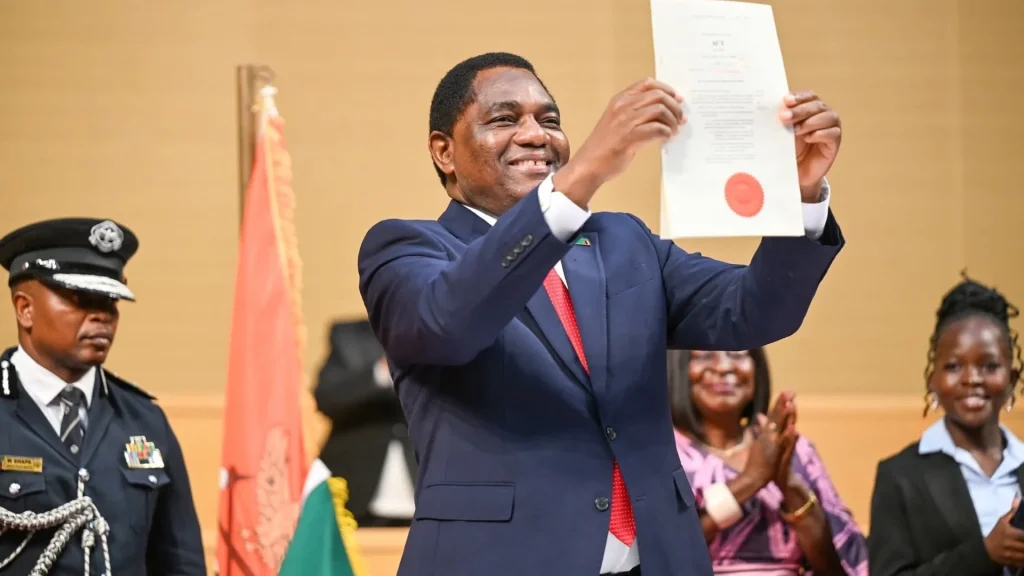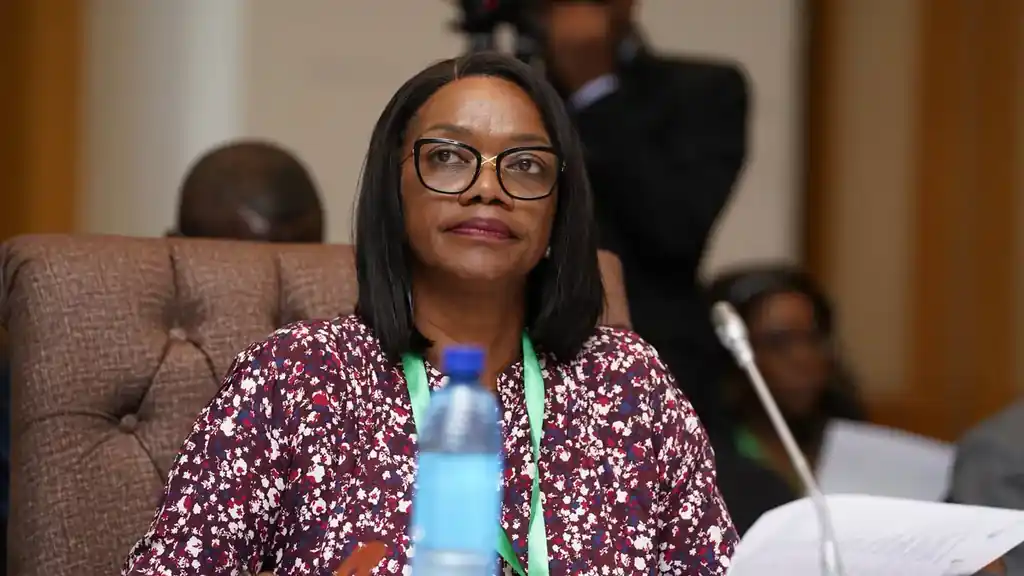
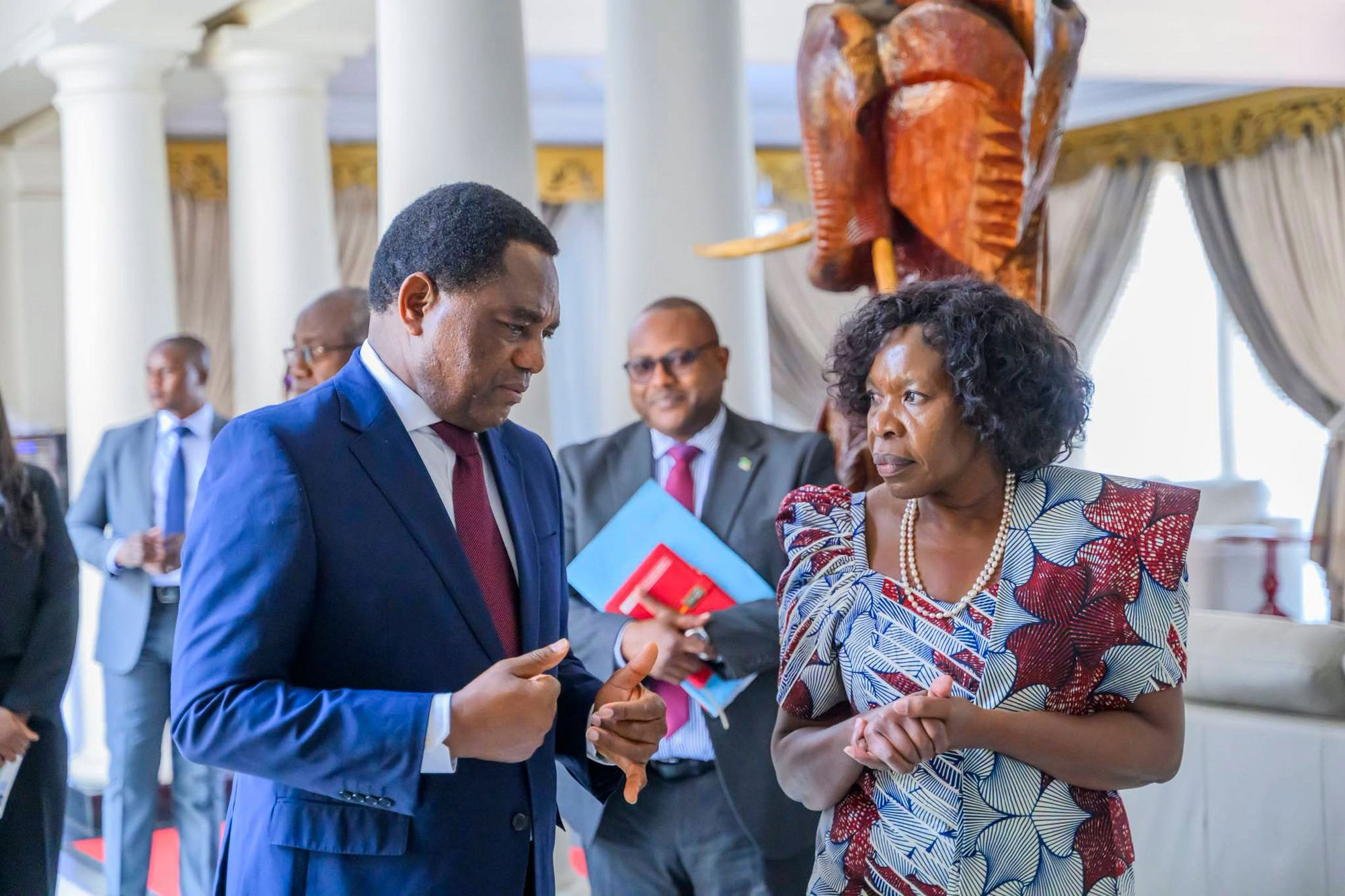
Outgoing UN Resident Coordinator Beatrice Mutali. President Hakainde Hichilema pledged continued partnership with the United Nations on growth, health and public well-being. Photo: supplied.
KEY TAKEAWAYS
- President Hakainde Hichilema bade farewell to outgoing UN Resident Coordinator Beatrice Mutali at State House on 18 September 2026.
- He pledged continued partnership with the United Nations on social and economic development, health and public well-being.
- The Treasury echoed the message, saying development partnerships should now be judged by the growth, opportunities and measurable improvements they deliver.
- The Ministry of Finance frames the next phase around investment, production, exports and jobs, with aid complementing rather than replacing domestic resource mobilisation.
- The statement signals a shift in tone from stabilisation, which dominated the first term, to growth and accountability in the second.
President Hakainde Hichilema has pledged a stronger partnership with the United Nations centred on growth, health and public well-being, as Zambia bade farewell to UN Resident Coordinator Beatrice Mutali at State House. The President met Ms Mutali on Friday 18 September, after she concluded her tour of duty at the end of August. She had earlier bade farewell to Vice President Mutale Nalumango, who used the occasion to call for deeper cooperation.
Writing to citizens, the President said Ms Mutali reflected on the successes achieved together and called for continued partnership for the greater good of all. Zambia, he wrote, will continue working closely with the UN on social and economic development, health and the general well-being of the people.
The Treasury’s add-on: partnerships judged by results
The more consequential part of the day’s messaging came from the Ministry of Finance and National Planning, which framed the President’s remarks as a doctrine for how Zambia’s development partnerships should now work.
The Ministry’s position, in plain terms, is that cooperation should be judged by three tests: the growth it supports, the opportunities it creates, and the measurable improvements it delivers in people’s lives. It argues partnerships work best when they reinforce national priorities, and that they should expand economic opportunity, strengthen human capital, improve health and education outcomes, raise productivity and protect vulnerable households.
Two commitments stand out for anyone watching the public purse. First, development cooperation is expected to complement, not substitute, Zambia’s own responsibility to mobilise domestic revenue and manage public finances prudently, a point that connects directly to the 2027 to 2031 revenue strategy now in consultation. Second, accountability: every ngwee of public resource and every unit of assistance should connect to clear priorities and demonstrable results that citizens, partners and investors can see.
From stabilisation to growth
The language tracks the government’s stated second-term pivot. Finance Minister Situmbeko Musokotwane has been signalling the shift since his reappointment, most recently in his day-one message that Zambia is moving from stabilisation to growth. The IMF, which congratulated Hichilema after the election, has pointed the same way, signalling support for a next reform phase focused on investment and production.
The UN relationship fits into that frame differently than the IMF programme does. UN cooperation carries less money and more technical support, social sector programming and coordination. What the Treasury statement suggests is that even this softer form of assistance is now expected to line up behind the productive economy agenda: investment, production, productivity, exports, employment and domestic economic capacity.
What to watch
Three things will show whether the rhetoric becomes practice. The first is the design of the next UN Sustainable Development Cooperation Framework, which will set the actual priorities for UN spending in Zambia. The second is whether the Treasury’s results language survives contact with the 2027 budget, where competing pressures on the wage bill and debt service are real. The third is the arrival of a new Resident Coordinator, whose portfolio shapes how far the UN system pushes the accountability agenda the government says it wants.
What this means for you
For taxpayers: the Treasury’s line that aid must complement, not replace, domestic revenue means the burden of financing development stays on Zambian taxpayers, with the revenue strategy carrying that load.
For businesses: partnerships redirected toward investment, production and exports could mean more support for productive sectors rather than purely social programming.
For citizens: the promise is measurable results. The test is whether the government publishes the outcomes it says citizens should be able to see.
WARNING! All rights reserved. This material and all other digital content on this website may not be reproduced, published, broadcast, rewritten, or redistributed, in whole or in part, without the prior express permission of The Zambian Economist. Where permission is granted, the content must be clearly credited to “The Zambian Economist,” with “www.zambianeconomist.com” prominently displayed.
WhatsApp: +260775574228 | Email: info@zambianeconomist.com © 2026 The Zambian Economist.
Work With The Zambian Economist: Advertise With Us | List With Us | Submit an Article