Forty proportional representation seats will seat record numbers of women, young people and Zambians with disabilities when the National Assembly opens on 9 October. Who sits in the chamber has changed. What citizens get out of it is the test that follows.
By The Zambian Economist Analyst | Lusaka | 24 September 2026
Key Takeaways
- Zambia’s 13 August election filled the first 40 proportional representation seats in the National Assembly’s history: 20 reserved for women, 15 for youth and 5 for persons with disabilities, shared between parties according to their presidential vote.
- Women won only 32 of the 226 constituency seats, about 14 percent, close to the share they held in the last Assembly. The reserved seats lift the number of women in the new House to at least 52, the highest on record.
- President Hakainde Hichilema has framed the change as a responsibility for all citizens to “GROW ZAMBIA TOGETHER”; the Zambia Agency for Persons with Disabilities has welcomed the five disability seats.
- The First Session of the 14th National Assembly opens on 9 October, when members elect a Speaker and take up committee assignments.
- The seats will count only if they change output: laws, budgets and scrutiny that improve access to services, credit and markets for groups the chamber has long missed.
Zambia’s next Parliament will seat more women, more young people and more Zambians with disabilities than any House before it. The Electoral Commission of Zambia completed the allocation of 40 new proportional representation seats in September, and President Hakainde Hichilema has cast the moment as a call for every citizen to help GROW ZAMBIA. The harder question begins after the swearing in: what will the new members actually pass, scrutinise and change?
The seats exist because of Constitutional Amendment Bill No. 7 of 2025, which Parliament passed in December 2025. The law expanded the Assembly to 226 constituency seats and added 40 list seats reserved for three groups: 20 for women, 15 for youth and 5 for persons with disabilities. Parties receive the seats based on the national vote their presidential candidates won, then fill them from candidate lists lodged before polling day.
The reform responded to a stubborn pattern. In the constituencies, almost nothing moved. Women won 32 of the 226 directly elected seats declared after the 13 August poll, about 14 percent, close to the 15 percent share they held across the last Assembly, where 25 women sat in a House of 167. With the reserved seats added, the new Assembly opens with at least 52 women among its 266 constituency and list members, just under one in five, before the President’s nominations are announced.
How the 40 seats were shared
The UPND, which won the presidential election with 61.3 percent of the vote and 137 constituency seats, took 32 of the 40 list places. The NRPUP of runner-up Brian Mundubile took the remaining 8. Smaller parties and independents, which won 28 constituency seats between them, did not qualify for list seats.
| Reserved category | UPND | NRPUP | Total |
|---|---|---|---|
| Women | 17 | 3 | 20 |
| Youth | 12 | 3 | 15 |
| Persons with disabilities | 3 | 2 | 5 |
| Total | 32 | 8 | 40 |
The presidential result itself remains disputed. Mr Mundubile rejected it, and European Union observers described a competitive race on an uneven playing field. The seat allocations, however, rest on the certified returns and on the December 2025 amendment, and the parties have seated their list members.
Why the numbers only moved by statute
Zambian women have contested seats at a similar rate for two decades, and the ballot box never fixed the imbalance. The Inter-Parliamentary Union put the world average for women in national parliaments at 27.5 percent in January 2026. Zambia’s new Assembly, at just under 20 percent even with the reserved seats, remains below that mark.
The gap is wider for age. United Nations estimates put Zambia’s median age at about 17, one of the youngest national populations in the world, yet the chamber that writes the rules on education financing, apprenticeships and first jobs has rarely reflected it. The 15 youth seats give that cohort a voting presence for the first time.
For Zambians with disabilities, the change is more basic. Until this year, a disabled Zambian typically reached the National Assembly only through presidential nomination. Five reserved seats now guarantee the group a place regardless of who occupies State House.
What the President said
Mr Hichilema set out the stakes in a message posted after the list was confirmed, and the Ministry of Finance circulated it with a challenge of its own: representation must mean opportunity for ordinary citizens, measured in better laws, stronger accountability and improvements people can feel.
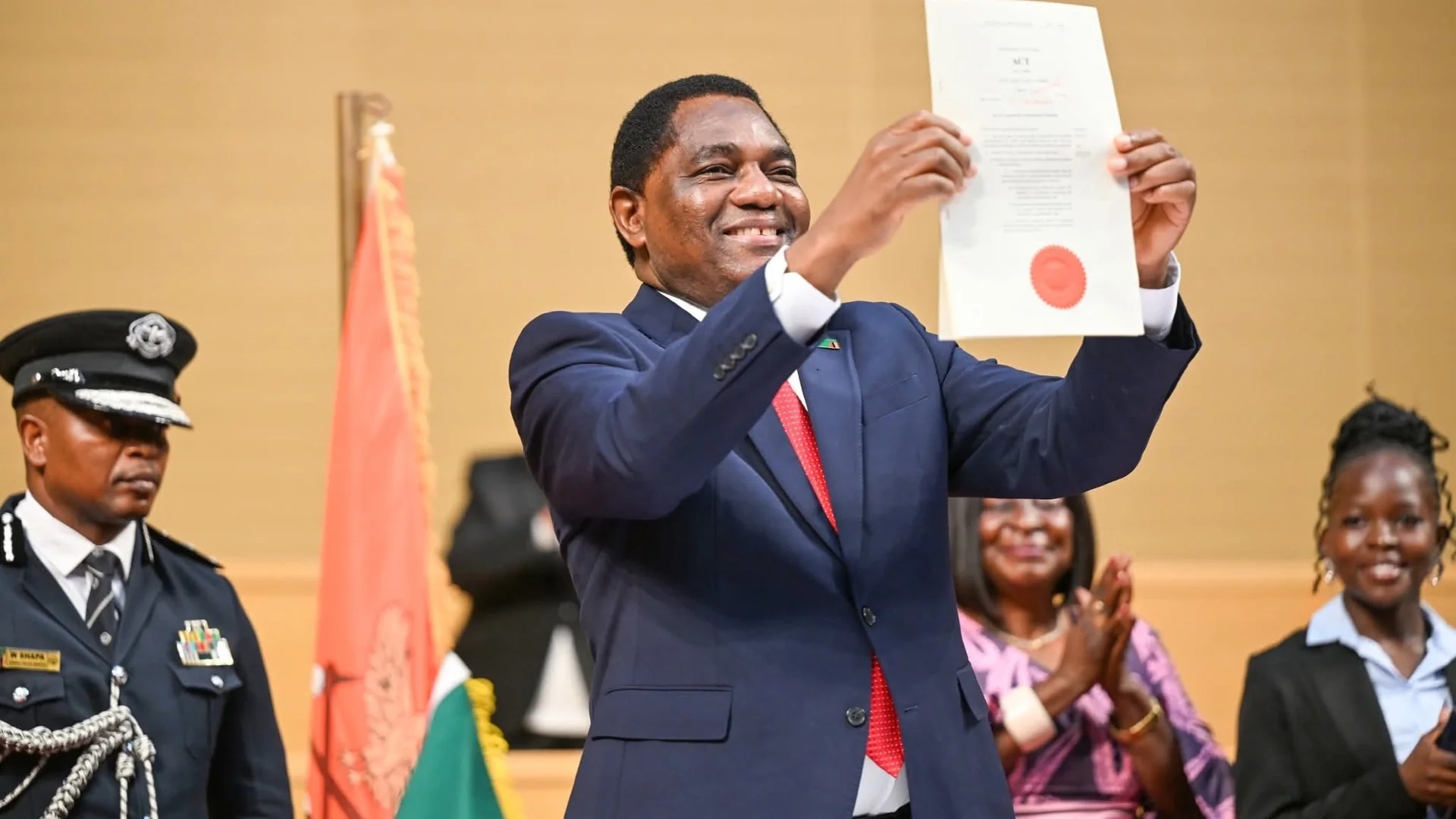
“We ALL have a responsibility to help GROW ZAMBIA. Working late this evening, thinking about every person living with a disability in Zambia, every young person with leadership ambition, every woman working to improve the lives of others; They are now represented in Parliament more than ever before so let’s all work hard and smart to GROW ZAMBIA TOGETHER!”
President Hakainde Hichilema
The Zambia Agency for Persons with Disabilities welcomed the disability seats. Student unions and civic groups that received the new members in September urged them to champion the Grow Zambia agenda rather than settle quietly into the chamber.
The citizen test: laws, budgets and follow through
A seat changes little on its own. Three tests will show whether representation is working.
Can the five disability members move money? The Persons with Disabilities Act of 2022 promises accessible public services on paper. Ministry budget lines, not statements, decide whether a rural clinic gets a ramp or a sign language interpreter. If the disability bloc cannot defend those allocations through the budget cycle, the seats will have been ceremonial.
Can the youth members touch the credit system? The test is whether they shift practical levers: apprenticeship funding, procurement set-asides for small firms, and the terms on which young Zambians can borrow to start a business.
Can the women members get committee power? Legislation lives in committees. The Public Accounts Committee, whose interrogation of Auditor General findings we track in our AG Reports hub, is where ministry spending is questioned line by line. Chairmanships and membership matter as much as headcounts.
The business and investor read
For employers and investors, a broader chamber should produce workable rules. Members who have run market stalls, managed disability services or searched for their first job tend to write procurement, licensing and credit rules that smaller firms can actually follow.
The cost is real too. The House has grown from 164 members in the last term to 266 constituency and list members before nominations, with salaries, gratuities and constituency offices to match. As our analysis of the Emoluments Commission set out, the bill for public office should be judged against the output it buys. Citizens will be entitled to ask what the larger Parliament delivered by 2028.
Legislative stability is the other variable investors price. The Speaker election on 9 October and the handling of the first legislative programme will signal whether the expanded House can process business, or whether it adds friction.
What to watch from 9 October
The First Session of the 14th National Assembly opens on Friday 9 October. Watch four things: who is elected Speaker, an office Nelly Mutti held as its first woman in the last Assembly; which committees the new members chair; how the youth, women and disability blocs vote when their interests diverge from party lines; and whether their fingerprints appear in the 2027 Budget, the first spending plan of the new term, which we have argued should put jobs and productive investment first.
The seats are won. Zambia will judge its most representative Parliament by what leaves the chamber: laws, budgets and oversight that citizens can feel.
Sources and related reading
- Electoral Commission of Zambia: 2026 general election results
- National Assembly of Zambia
- IPU Parline: Zambia, women in parliament data
- Lusaka Times: NGOs, students hail 40 new MPs as Parliament widens under MMPR, 21 September 2026
- IFES Election Guide: Zambian National Assembly 2026 general
- Zambia’s 2026 Election Is a Major Economic Event
- Zambia After the Oath: The Economic and Diplomatic Tests of Hichilema’s Second Term
- Zambia to Launch 2027-2031 Revenue Strategy Consultations
- Youth and Women Empowerment coverage
WARNING! All rights reserved. This material and all other digital content on this website may not be reproduced, published, broadcast, rewritten, or redistributed, in whole or in part, without the prior express permission of The Zambian Economist. Where permission is granted, the content must be clearly credited to “The Zambian Economist,” with “www.zambianeconomist.com” prominently displayed.
WhatsApp: +260775574228 | Email: info@zambianeconomist.com
© 2026 The Zambian Economist.