
Zambia wants to more than double its economy and hit eight production targets by 2031. Five years of stabilisation have given it a base to build on. The growth rates needed to get there are well above anything the economy has managed recently.
KEY TAKEAWAYS
- Doubling real GDP between 2026 and 2031 would need average growth of about 14.9% a year. Even a steady 10% a year would leave the economy only 61% larger.
- Measured from 2021, when the current administration took office, the target is closer but still steep: our calculation puts the required pace at roughly 9.7% a year from 2027 to 2031.
- Near-term forecasts sit far below that. The IMF projects 5.6% growth for 2026 and the 2027 Budget targets at least 4.9%.
- Copper output must rise about 3.4 times, from 890,346 tonnes in 2025 to 3 million tonnes, and maize must roughly double from the 4.94 million tonnes forecast for 2025/2026.
- Government should state the baseline year, end year and measure (real or nominal GDP) behind the doubling pledge, and publish regular delivery reports against the 2031 targets.
The Grow Zambia Agenda cannot double the size of Zambia’s economy between 2026 and 2031 at any growth rate the country has recorded in recent years. Doubling real output in five years needs average growth of about 14.9% a year. The IMF expects 5.6% this year, and the 2027 Budget aims for at least 4.9% next year.
That gap does not make the agenda wrong. It does mean the public deserves a clearer statement of what is being promised, and a plan that matches the arithmetic.
The agenda, which runs from 2026 to 2031, is anchored on the 10-10-5-3-3-1-1-1 framework. Its aim is to raise production, expand exports, attract investment and more than double the economy from the time the current administration took office in 2021. This article asks whether Zambia’s fundamentals, productive capacity and investment pipeline can carry that ambition.
Where was Zambia’s economy in 2021?
When the administration took office in August 2021, Zambia had defaulted on its external debt nine months earlier, in November 2020. Inflation was high, the kwacha was under pressure and investors had grown wary. Fiscal space was thin and foreign exchange was scarce.
Real GDP grew by about 6.2% in 2021 as the economy bounced back from its COVID-19 contraction, according to the International Monetary Fund. End-of-year inflation stood at 16.4%.
The priorities were plain: restore macroeconomic stability, restructure public debt, rebuild reserves and make room for private investment. The Eighth National Development Plan (8NDP), covering 2022 to 2026, set out how.
Five years on, much of that has been done. The debt restructuring is largely complete. IMF figures put inflation at 6.1% in September 2026, with gross international reserves of about US$6.1 billion in the same month.
Stability is the foundation, though, not the building. The test now is whether it turns into higher productivity, more jobs, rising household incomes and better living standards.
How has the economy performed since 2021?
| Year | Real GDP growth | What drove it |
|---|---|---|
| 2021 | 6.2% | Rebound from the COVID-19 contraction |
| 2022 | 5.2% | Recovery under debt-restructuring constraints |
| 2023 | 5.4% | Services and construction |
| 2024 | 3.8% | Severe drought and electricity shortages |
| 2025 | 3.8% | Farm recovery offset by a weak fourth quarter |
| 2026 (projection) | 5.6% | Agriculture, mining and exports |
The 2024 slowdown came from the drought, which cut the maize harvest and drained the hydropower dams. Growth held at 3.8% in 2025 before picking up sharply this year. ZamStats reported growth of 7.2% in the second quarter of 2026.
One strong quarter is not a trend. What matters is whether Zambia can keep growth high for several years in a row.
History counsels caution. The World Bank’s 2025 Country Economic Memorandum for Zambia notes that past periods of fast growth did little for poverty or productive jobs. It estimates that about 60% of Zambians lived below the poverty line in 2022. Growth, on its own, has not been enough.
What does the Grow Zambia Agenda aim to achieve?
The agenda takes a production-first approach. Its eight headline targets for 2031, set out in the President’s address to the opening of the Fourteenth National Assembly, are:
| Target | 2031 ambition |
|---|---|
| Maize production | 10 million tonnes |
| Electricity generation capacity | 10,000 MW |
| International tourist arrivals | 5 million a year |
| Copper production | 3 million tonnes |
| Soya bean production | 3 million tonnes |
| Wheat production | 1 million tonnes |
| Sugar production | 1 million tonnes |
| Beef exports | US$1 billion a year |
Government has also spoken of annual growth of 7% to 10%, with the wider goal of more than doubling the economy from when it took office. Agriculture, mining, energy, tourism, livestock and manufacturing are the named engines. For a fuller breakdown of each number, see our explainer, Grow Zambia Agenda: The Eight Numbers Behind the Plan.
The choice of sectors makes sense for a country with Zambia’s land, minerals, water and wildlife. Setting a target is the easy part. The harder work is lining up the investment, infrastructure, institutions and markets that each one needs.
Can Zambia double its economy by 2031?
Not on current forecasts. In October 2026 the IMF projected real growth of about 5.6% for 2026. The 2027 National Budget, presented in November, targets growth of at least 4.9% next year. Both sit well below the 7% to 10% range in the longer-term ambition.
The table below shows how big the economy would be in 2031 at different constant growth rates, starting from a 2026 index of 100.
| Annual real GDP growth | 2026 index | 2031 index | Cumulative growth, 2026 to 2031 |
|---|---|---|---|
| 4% | 100 | 121.67 | 21.7% |
| 5% | 100 | 127.63 | 27.6% |
| 6% | 100 | 133.82 | 33.8% |
| 7% | 100 | 140.26 | 40.3% |
| 8% | 100 | 146.93 | 46.9% |
| 9% | 100 | 153.86 | 53.9% |
| 10% | 100 | 161.05 | 61.1% |
At 4% a year, the economy would be about 22% bigger by 2031. At 6% it would grow by about a third. Even an unbroken run of 10% a year, a pace Zambia has not sustained in modern times, would leave it 61% larger. Doubling from 2026 needs about 14.9% a year. Over ten years, the required rate falls to about 7.2%.
The baseline matters a great deal. Government’s stated ambition is to double the economy from the time it took office, which points to 2021. On the growth rates in the first table, real GDP will be roughly 26% larger at the end of 2026 than it was in 2021. To reach double the 2021 level by 2031, the economy would then need to grow by about 9.7% a year from 2027 to 2031, according to a Zambian Economist calculation from the same figures. That is still almost twice the 2027 Budget target.
Government should therefore say which baseline year and end year it is using, and whether the target is in real or nominal terms. The difference is large. Nominal GDP rises with prices, and when it is quoted in US dollars it also moves with the exchange rate. A doubling in nominal kwacha terms could happen with far less growth in the actual volume of goods and services.
The better yardsticks are real GDP and real GDP per capita. The first strips out inflation. The second shows whether growth is keeping ahead of a population rising by close to 3% a year. In the end, the agenda should be judged on incomes, jobs, productivity and living standards, not on the size of the headline number.
Can agriculture deliver 10 million tonnes of maize?
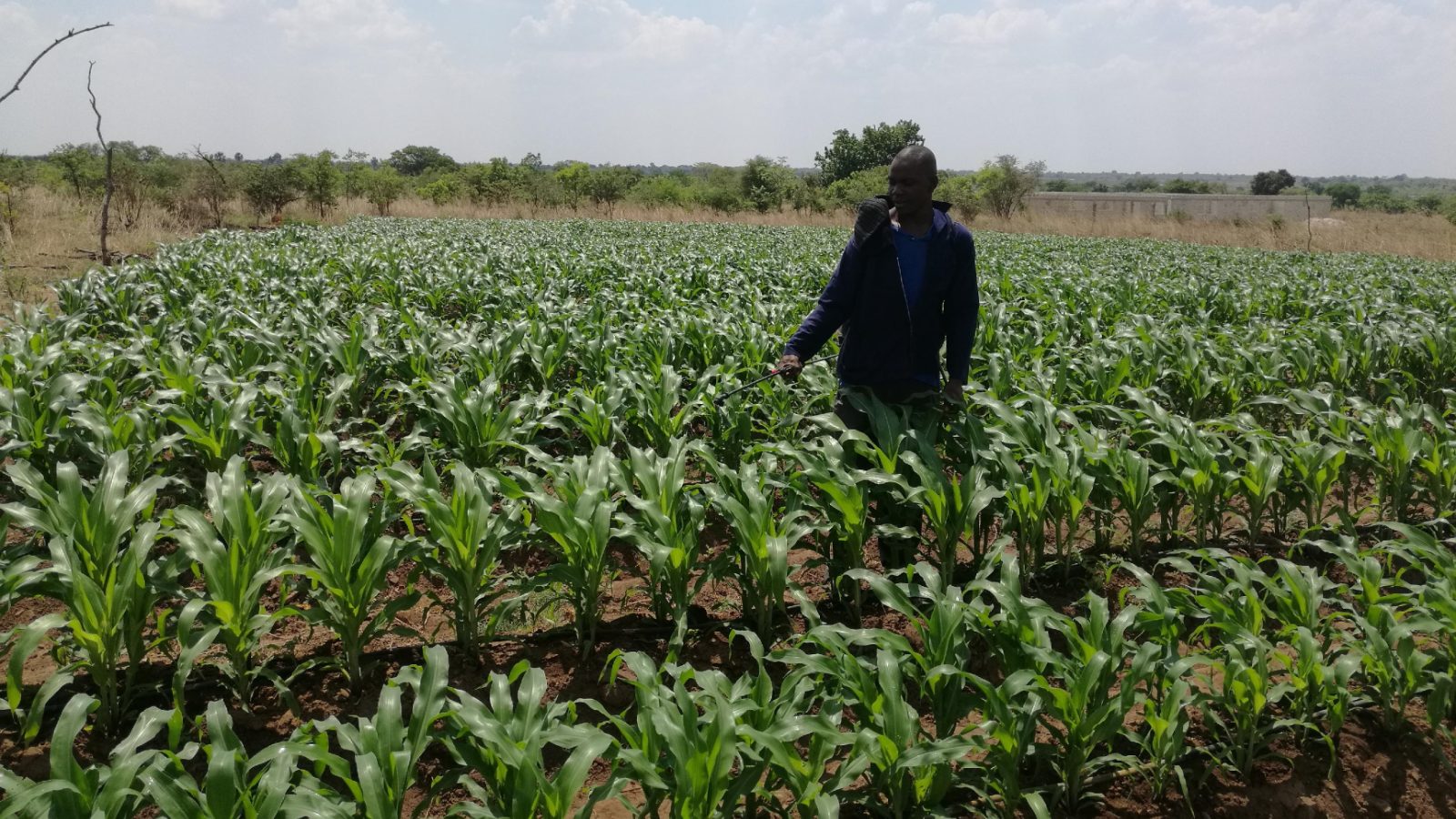
The recovery from the 2023/2024 drought shows what the sector can do in a good season. Zambia harvested about 3.66 million tonnes of maize in 2024/2025, up from about 1.51 million tonnes the season before. The 2025/2026 Crop Forecasting Survey projected a record of about 4.94 million tonnes.
Getting from 4.94 million tonnes to 10 million tonnes in five seasons means average growth of about 15% a year, every year, through good rains and bad. That will not come from handing out more fertiliser or clearing more land. Yields depend on rainfall, power, irrigation and credit, and all four have let farmers down in recent years.
The country needs more irrigation, mechanisation, agricultural research, storage and extension services. It also needs agro-processing, so that bigger harvests feed into milling, animal feed, poultry and food manufacturing. Each of those steps adds jobs and gives farmers a buyer beyond the Food Reserve Agency.
The World Bank (2025) makes the same case: higher productivity, climate resilience and a shift into higher-value crops and products. The aim should be to keep more of the value in Zambia, not only to grow more grain.
Can copper drive wider economic transformation?
Copper remains the country’s main source of export earnings, foreign exchange and mining revenue. Output rose 8% in 2025 to 890,346 tonnes, from 825,513 tonnes in 2024, according to the Ministry of Mines and Minerals Development. The 3 million tonne target means producing about 3.4 times as much copper in six years, or growth of roughly 22% a year.
That requires heavy spending on exploration, new mines, processing plants and reliable electricity, and a mining policy that investors trust to hold for the life of a mine.
More copper will not by itself spread prosperity. Zambia has to build local supply chains, mineral processing, engineering services and manufacturing around the mines. The industry should become a base for industrialisation rather than a channel for shipping out ore and concentrate. That is where most of the jobs, and most of the opportunities for Zambian businesses, would come from. The question of copper dependence is examined in more detail in Can the Grow Zambia Agenda Reduce Zambia’s Economic Dependence on Copper?
Why is the 10,000 MW energy target the foundation?
The 2024 power crisis showed how exposed Zambia is to the weather through its reliance on hydropower. Load-shedding slowed mines, disrupted factories, raised costs for businesses and cut into household earnings.
Reaching 10,000 MW will need solar, wind and other sources alongside hydro. Generation alone will not be enough. Transmission lines, distribution networks, storage and regional power trade all need investment too. Reliable, affordable electricity is an input into every other target on the list, from irrigated wheat to copper smelting.
Where do small businesses and jobs fit in?
Government has repeatedly called the private sector the engine of growth. For most small and medium-sized enterprises, that has yet to show up in the business environment. Affordable finance is hard to get. Regulation shifts, markets are hard to reach, infrastructure costs are high and payments, including from government, often arrive late.
Zambia cannot transform its economy if growth stays concentrated in a few large, capital-heavy sectors. Small firms need a real role in farm value chains, manufacturing, transport, tourism, technology and professional services. That means better SME finance, stronger business support and deliberate links between local firms and large investors.
The 2027 Budget’s proposed K5 billion credit guarantee scheme for small businesses deserves close attention. The test will be how it is run, who can get it, and whether it draws in additional lending from banks. Our earlier analysis of the place of citizens in the Grow Zambia Agenda looks at the same question from the local-content side.
The kind of jobs created matters as much as the number. The agenda should be measured by formal employment, labour productivity, real household incomes and poverty rates, not only by tonnes produced and dollars exported. The World Bank (2025) warns that Zambia’s past growth has not produced enough productive work for a fast-growing labour force. Growth that leaves households behind opens a gap between the official figures and what people experience.
How will the Grow Zambia Agenda be financed?
Every target on the list needs capital: for roads, irrigation, power plants, mines and hotels. Zambia is still living with the after-effects of its debt crisis. On 9 October 2026 the IMF announced a staff-level agreement on a new 36-month Extended Credit Facility worth about US$1.47 billion. The programme aims to protect stability, keep debt sustainable, rebuild fiscal buffers and support private-sector-led growth. It still needs approval from the IMF Executive Board and depends on agreed prior actions.
Government therefore has to chase faster growth while holding the line on spending and debt. Most of the money will need to come from private investors, foreign direct investment and public-private partnerships, with public spending made to go further. Any new borrowing should be weighed against the returns of the project it pays for. Infrastructure should be judged by how much it adds to the country’s productive capacity.
What should determine success by 2031?
In my assessment, five things will decide whether the agenda succeeds.
Implementation capacity. Each national target needs annual milestones, a named institution responsible for it, a financing plan and indicators that can be checked.
Diversification. Zambia has to become less exposed to swings in copper prices, rainfall and external shocks.
Private-sector participation. Zambian firms must take part in the expansion, not watch it from outside.
Human capital. Industrialisation needs technicians, engineers, researchers and a workforce trained for modern production.
Inclusive growth. Higher output has to show up as better jobs, higher incomes and better living standards.
Government should also publish regular delivery reports that set actual results against each 2031 target. That would let citizens, investors and development partners judge progress for themselves.
Conclusion: ambition needs a delivery plan
The Grow Zambia Agenda arrives after real progress on stability. Its focus on farming, mining, energy, tourism and manufacturing matches where the country’s opportunities lie. Whether the targets are met will depend on implementation, on the scale of productive investment, on accountability, and on fixing problems that have held Zambia back for decades.
The questions worth asking in 2031 are practical ones. Are businesses expanding? Are young people finding productive work? Are farmers earning more? Is manufacturing more competitive? Are households better off?
Zambia has no shortage of potential. Its task over the next five years is to turn that potential into higher productivity, competitive firms and rising incomes, and to show the results in numbers anyone can check.
References
- International Monetary Fund (2026). Staff-level agreement on a new Extended Credit Facility arrangement with Zambia, 9 October 2026.
- Ministry of Finance and National Planning (2026). 2027 Budget Address. Lusaka: Government of the Republic of Zambia.
- Ministry of Mines and Minerals Development (2026). 2025 copper production figures.
- Presidency of the Republic of Zambia (2026). Address to the Official Opening of the First Session of the Fourteenth National Assembly.
- World Bank (2025). Zambia Country Economic Memorandum.
- Zambia Institute for Policy Analysis and Research (2026). Analysis of the 2027 National Budget. Lusaka: ZIPAR and United Nations Zambia.
- Zambia Statistics Agency (2026). The Monthly, Volume 282: 2025 annual GDP estimates and second quarter 2026 GDP.
Related coverage
- Grow Zambia Agenda: The Eight Numbers Behind the Plan to Double Zambia’s Economy
- Can the Grow Zambia Agenda Reduce Zambia’s Economic Dependence on Copper?
- Growing Zambians, Not Just Zambia
- When National Growth Causes Household Suffering
- Musokotwane Pivots Zambia Toward Export-Led Growth
- Zambia Economic Dashboard
WARNING! All rights reserved. This material and all other digital content on this website may not be reproduced, published, broadcast, rewritten, or redistributed, in whole or in part, without the prior express permission of The Zambian Economist. Where permission is granted, the content must be clearly credited to “The Zambian Economist,” with “www.zambianeconomist.com” prominently displayed.
WhatsApp: +260775574228 | Email: info@zambianeconomist.com
© 2026 The Zambian Economist.
Work With The Zambian Economist
Related: Luanshya Copper Mine Revival: 100,000 Tonnes and 3,000 Jobs in Sight