By The Zambian Economist Analyst
Key Takeaways
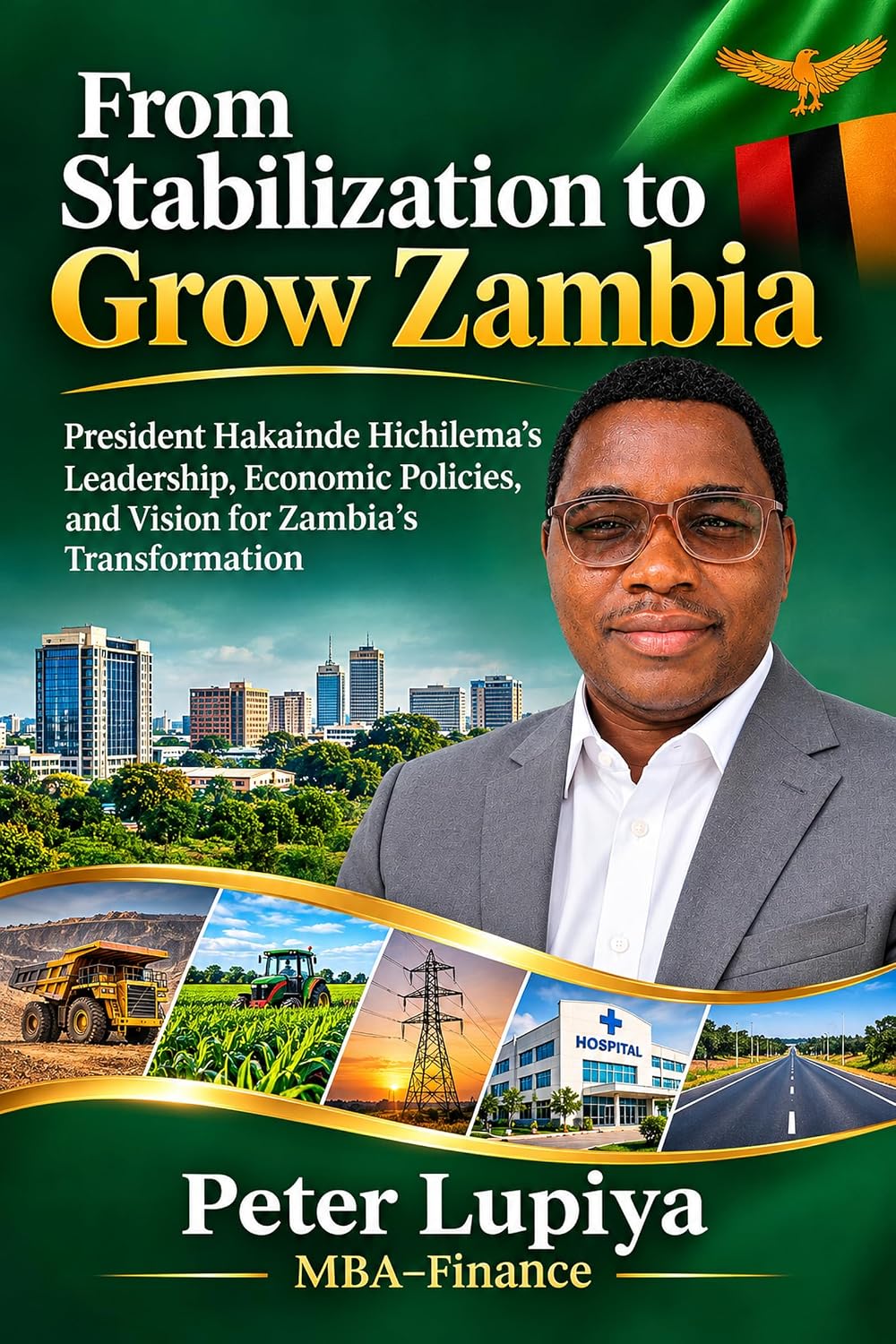
- From Stabilization to Grow Zambia, a new book by Peter Lupiya, examines President Hakainde Hichilema’s leadership, economic policies and the Grow Zambia development agenda across 50 chapters and 793 pages.
- The book covers debt restructuring, public financial management, agriculture, mining, energy, manufacturing, tourism, infrastructure, education, healthcare and employment, plus the 2027 National Budget.
- Lupiya writes from a background in public-sector auditing, accounting and finance, and says the book separates aspirations from implementation and measurable results.
- It is pitched at officials, MPs, councillors, business owners, farmers, students, the diaspora and ordinary citizens who want to follow the numbers behind the headlines.
- The book is available on Amazon in Kindle and paperback editions, published on 18 November 2026.
Where is Zambia’s economy heading, and what does it take to move from stabilisation to growth that lasts? A new book published today takes that question seriously enough to spend 50 chapters and 793 pages on it.
From Stabilization to Grow Zambia: President Hakainde Hichilema’s Leadership, Economic Policies, and Vision for Zambia’s Transformation is written by Peter Lupiya, who holds an MBA in Finance and has spent his career in public-sector auditing, accounting and finance. That background shows in the way the book is framed: less as a biography of a president and more as an audit of a development agenda, testing what has been promised against what has been delivered.
What the book covers
The starting point is the economy Zambia inherited: constrained budgets, suspended debt service and an International Monetary Fund programme negotiated in 2022. From there the book traces the stabilisation effort, including the debt restructuring that ran from 2023 and the public financial management reforms that followed, before turning to the more difficult question of what comes next.
The middle section works through the economy sector by sector. Agriculture, mining and energy get the deepest treatment, which mirrors where Zambia’s revenue and jobs actually sit, but manufacturing, tourism and infrastructure development each get their own chapters. So do education, healthcare, employment and poverty reduction.
Two chapters will interest readers who follow public finance. One examines the Grow Zambia targets and what they would mean in practice for national development. The other looks at the 2027 National Budget and its priorities, which puts the book among the first extended treatments of the budget cycle now taking shape at the Ministry of Finance. Readers who want deeper background on how public money is tracked can pair it with our Auditor General explainer series.
An auditor’s approach to a political subject
Books about sitting presidents tend to fall into two camps: tribute or attack. Lupiya says his book is neither. In the preface he describes it as an independent, evidence-based account that distinguishes between aspirations, announced commitments, implementation and measurable results, leaving readers to reach their own conclusions.
The institutional chapters point in the same direction. The book assigns a serious role to Parliament, local authorities, public institutions and the Office of the Auditor General, the accountability chain that determines whether any development agenda survives contact with the budget process. It also sets out practical opportunities for businesses, farmers, young people and the Zambian diaspora, which places it closer to a reference work than a campaign tract.
Who should read it
The author pitches the book at government officials, Members of Parliament, opposition leaders, councillors, public servants, academics, business owners, students and citizens. In practice, three groups will get the most from it. Investors and business owners who need context for decisions under the Grow Zambia agenda can start with the sector chapters. Students of economics and public policy get a structured map of the stabilisation-to-growth debate. And anyone preparing submissions on the 2027 Budget will find the fiscal chapters a useful companion. For broader context on operating in the market, see our Doing Business in Zambia hub.
From Stabilization to Grow Zambia was published on 18 November 2026 and is available in Kindle and paperback editions on Amazon.
What do you think Zambia needs more of to move from stabilisation to growth: debt discipline, copper value addition, or agriculture investment? Tell us in the comments.
WARNING! All rights reserved. This material and all other digital content on this website may not be reproduced, published, broadcast, rewritten, or redistributed, in whole or in part, without the prior express permission of The Zambian Economist. Where permission is granted, the content must be clearly credited to “The Zambian Economist,” with “www.zambianeconomist.com” prominently displayed.
WhatsApp: +260775574228 | Email: info@zambianeconomist.com © 2026 The Zambian Economist.
Work With The Zambian Economist: Advertise With Us | List With Us | Submit an Article