Key takeaways
- Zambia grew strongly between 2005 and 2013, yet national poverty fell only from 62.8 per cent in 2006 to 54.4 per cent in 2015, and climbed back to 60 per cent by 2022.
- In the first quarter of 2026, Zambian-owned firms made up 96.3 per cent of registered contractors but held only 12 per cent of construction project value, according to the National Council for Construction.
- Local content rules exist, from the 2006 Citizens Economic Empowerment Act to the 2026 mining procurement quotas, but they lack consequences in most sectors.
- A 40 per cent citizen equity requirement on major projects is workable if it is phased in, applied above a value threshold, financed through contract-backed equity, and tied to real management roles.
Spend enough time on Zambia’s large project sites and you learn that the most revealing part of any operation is not the machinery. It is the supply chain. Over more than a decade of project management and site supervision across the country, I have watched some foreign-run operations equip, staff and even feed themselves almost entirely through their own networks, down to the vegetables in the camp kitchen, while Zambian farmers and traders nearby wait for customers who seldom come.
That is the backdrop against which the Grow Zambia Agenda must be judged. Launched at President Hakainde Hichilema’s second-term inauguration on 1 September 2026, it sets targets for 2031: 10 million tonnes of maize, 10,000 megawatts of electricity, five million tourists and three million tonnes of copper, among others. It aims to more than double the size of the economy. The ambition is welcome.
The Speaker of the National Assembly, Nelly Mutti, has set Parliament a simple test: every Bill and every budget must answer one question, does it grow Zambia? It is the right question, but it is incomplete. As the 2027 National Budget, the first of the Grow Zambia era, is presented on Friday, 6 November, the question that will decide whether this agenda changes lives is a second one: does it grow Zambians?
Answering it honestly requires a lens that Zambian policy too often avoids naming: economic nationalism. Not the closed-border variety that frightens investors and protects the inefficient, but the disciplined kind, which insists that growth at home must build ownership, capability and prosperity at home.
Growth That Bypasses the Citizen
Zambia has been here before. Between 2005 and 2013 the economy grew by more than 5 per cent a year, yet national poverty fell only from 62.8 per cent in 2006 to 54.4 per cent in 2015. Rural poverty barely moved, from about 80 per cent to 77 per cent. When growth faltered after 2015, national poverty climbed back to 60 per cent by 2022: the gains of the boom years had been too shallow to hold. Growth arrived; prosperity, for most citizens, did not.
The forecasts are encouraging again, with the IMF projecting growth of about 5.6 per cent this year. Such figures matter, but they are averages, and families do not live in averages. Output produced on Zambian soil, yet owned, financed, supplied and managed from elsewhere, adds handsomely to GDP but far less to national income, the share that remains with Zambians once profits and interest are paid abroad. Territory is where growth takes place. People are who it is for.
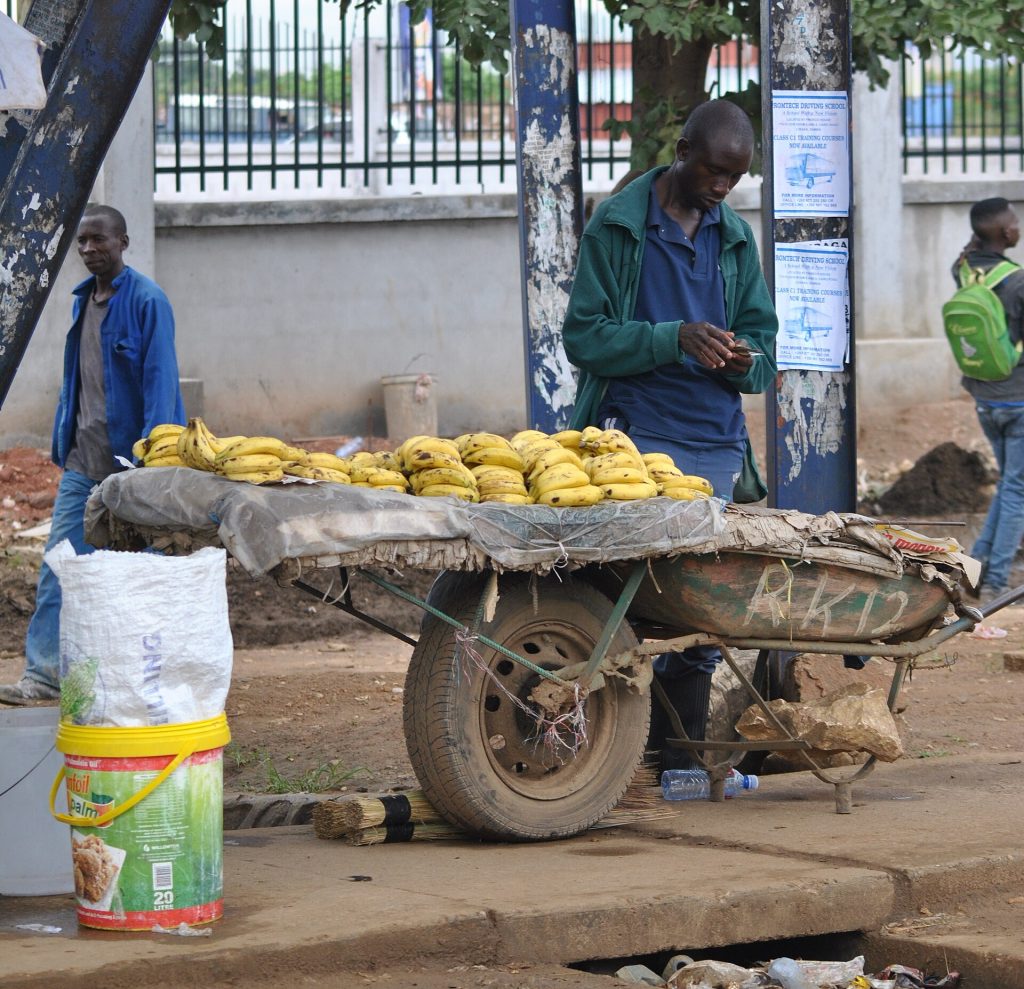
For ordinary Zambians, the test of growth is practical. A farmer in Mkushi wants a reliable buyer for her produce. A fabricator in Kitwe wants a purchase order from the mine down the road. A young engineer wants a career that rewards his qualifications. A small contractor wants to be paid on time for work already done. These are the indicators that the agenda’s own promise of “inclusive growth and opportunity for every Zambian” must be held to.
If copper production reaches three million tonnes while the local supplier base on the Copperbelt stands still, the statistics will have grown. The country will not.
Why the Gains Leak Away
Two forces explain why so much of Zambia’s growth bypasses Zambian hands. The first is an unlevel playing field. Zambian firms are routinely told simply to compete, yet their fundamental handicap is rarely technical capability. It is the cost of capital.
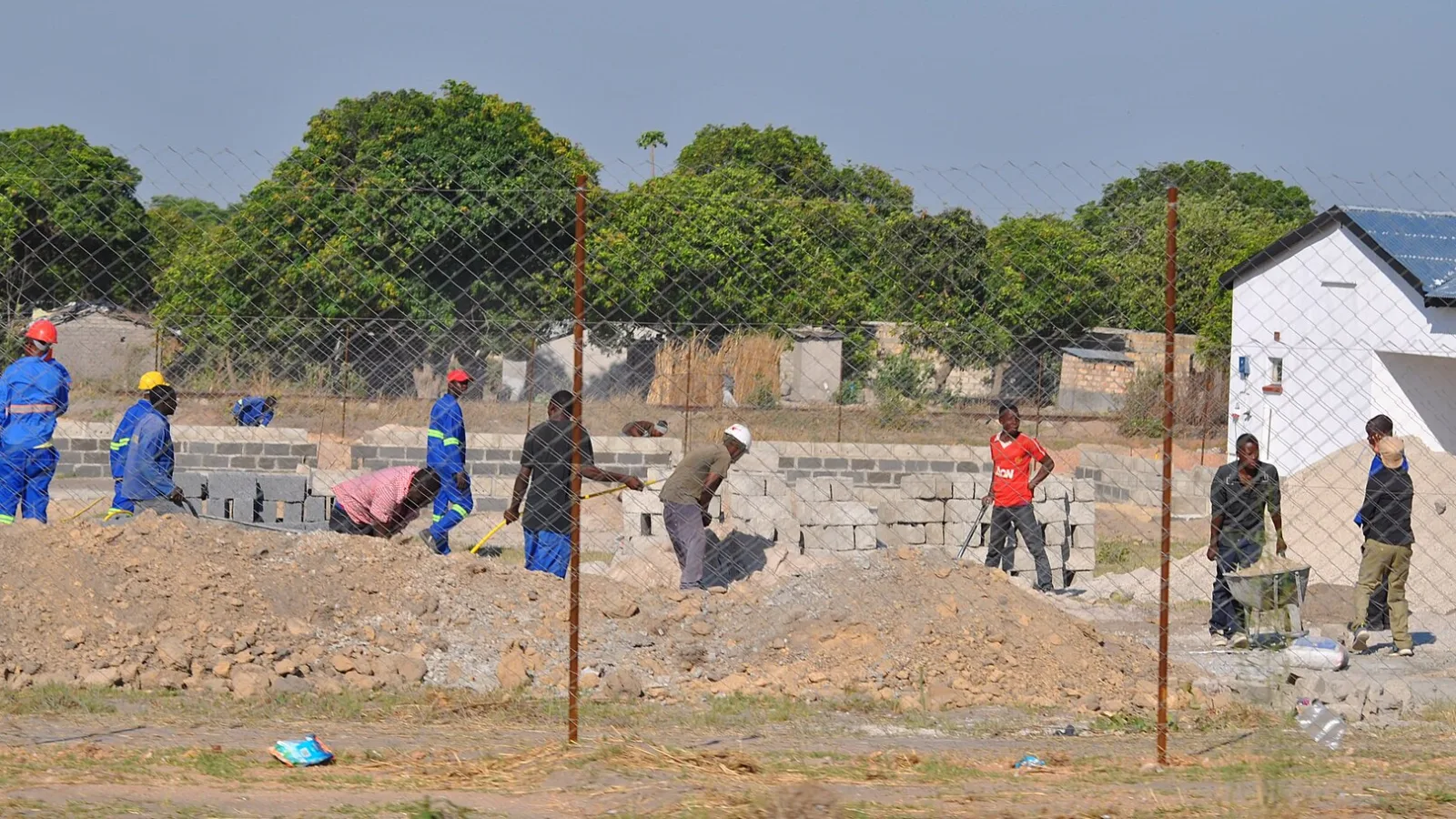
A Zambian contractor or supplier typically borrows from domestic banks at double-digit interest rates, on short tenors and against demanding collateral. Its multinational rival may draw on a parent company’s balance sheet, concessional export credit or state-backed finance from home. That difference decides many tenders before a single bid is opened, and it shows in equipment fleets, bonding capacity and the ability to survive delayed payment. According to the National Council for Construction, Zambian-owned companies made up 96.3 per cent of registered contractors in the first quarter of 2026, yet accounted for just 12 per cent of the value of construction projects. Foreign contractors held the other 88 per cent. This is not a complaint that foreign firms are well capitalised. It is a recognition that a market left to itself rewards the deepest pockets, not the partner best placed to build Zambia’s capacity.
The second force is the closed loop described at the outset. A kwacha paid to a Zambian farmer is spent again on labour, transport, school fees and the local shop, and each round adds to Zambian incomes. Economists call this the multiplier effect. A kwacha paid for imported produce through an in-house supplier enjoys no such afterlife: it leaves the economy on the first round.
This leakage is hardest to defend precisely where Zambians are already competitive. Nobody requires a technology-transfer programme to supply tomatoes, chicken, mealie meal, transport or security services. When even these basic markets are captured, the obstacle facing local suppliers is not capability.
It is access.
Rules Without Teeth
The tools already exist. The Citizens Economic Empowerment Act has defined citizen-owned and citizen-empowered companies since 2006. Since 1 January 2026, under Statutory Instrument No. 68 of 2025, mining companies have been required to direct at least 20 per cent of their procurement of core goods and services to local companies, rising to 40 per cent within five years. Road works have carried a policy requiring foreign contractors to subcontract 20 per cent of contract value to citizen-owned firms, formalised in the Road Development Agency’s 2015 subcontracting policy.
The weakness lies in enforcement and design. University of Zambia research and an ILO document prepared with the Road Development Agency both found that the subcontracting policy lacked legal backing and penalties, and left main contractors to decide, after award, what to subcontract and at what rates; local participation too often became a compliance exercise rather than a partnership. The Public Procurement Act of 2020 allowed the Minister to prescribe subcontracting to citizen bidders, but the shares, packages and penalties still need to be fixed and published. The National Local Content Strategy expired in 2022 and has yet to be replaced. Even the new mining rules accept a “local company” with as little as 25 per cent citizen ownership, a threshold that invites nominee shareholders and fronting.
Zambia does not lack policy. It lacks policy with consequences.
Putting Citizens at the Centre of Grow Zambia
The remedy is not to abandon the agenda’s targets but to give every one of them a citizen dimension. The 10-10-5-3-3-1-1-1 formula counts tonnes, megawatts and arrivals. It needs one more figure: the Zambian share, meaning the proportion of each target that citizens own, supply and process. Government should publish it every year alongside the production figures, so that Zambians can see not only how much the economy produces, but how much of it is theirs.
Four reforms would make that share grow.
- Ownership: On major projects, joint ventures with citizen-owned firms should be mandatory, with the Zambian partner holding at least 40 per cent equity and a genuine role in management rather than a silent one. Beneficial ownership should be verified through PACRA, and the strongest preferences reserved for majority citizen-owned firms, so that empowerment means control, not names on a share register.
- Procurement: Local content should carry the force of law in every Grow Zambia sector, not in mining alone. The 20 per cent subcontracting rule should be fixed in regulations, with packages unbundled at tender stage, values published and penalties for breach. Every public contract should require food, produce, catering, transport and security to be sourced from Zambian suppliers, and large private operators should report publicly on their local purchasing against published targets.
- Value addition: Tax holidays and duty waivers should follow local processing: soya into oil and stockfeed, maize into milled products, copper into rod, wire and cable. The 2026 Budget’s extension of the local content allowance to value addition on milk, raw hides and skins is a start worth widening.
- Capital: Every reform above fails if local firms cannot finance the work. The CEEC and development finance institutions should offer contract-backed credit, performance bond guarantees and equipment leasing pools. Government, for its part, must pay local contractors on time: a firm that waits months for payment cannot compete with one that never has to.
Can 40 Per Cent Work?
A 40 per cent equity floor is the most demanding of these proposals, and it should be tested rather than asserted. Three points suggest it is workable if it is designed with care.
First, it fits Zambia’s existing law. The Citizens Economic Empowerment Act already treats a company in which citizens hold between 25 and 50 per cent of equity, and take part in management, as citizen-empowered. A 40 per cent floor sits inside that band. It needs no new legal category, only a decision to apply the upper part of an existing one to large contracts.
Second, the region has done versions of this without driving investment away. Since 2018 Tanzania’s mining local content regulations have required foreign suppliers to mining companies to form joint ventures giving an indigenous Tanzanian company at least 20 per cent of the equity. South Africa’s Mining Charter sets a 30 per cent black ownership target for mining rights. Malaysia pursued a 30 per cent Bumiputera equity target for decades while becoming one of Asia’s most open manufacturing economies. Zambia’s own mining sector offers a precedent too: Mopani’s joint venture initiative has paired local contractors with established firms on mine work. A 40 per cent floor is higher than these, which is an argument for phasing, not for dropping it.
Third, the warning is just as clear. Zimbabwe’s blanket 51 per cent indigenisation rule, applied across the economy without finance or performance conditions, deterred investment and was scaled back in 2018. The lesson is that equity rules fail when they are sweeping, unfunded and political, not that they always fail.
Four design choices would keep a Zambian rule on the right side of that line:
- A threshold. Apply the requirement only to contracts and concessions above a published value, so small and specialist works are not caught.
- A phase-in. Start at a lower floor and reach 40 per cent by 2031, matching the five-year path already set for mining procurement.
- Financed equity. Few citizen firms can pay cash for a 40 per cent stake in a large venture. CEEC, ZCCM-IH or a development finance partner could fund the stake, to be repaid from the citizen partner’s share of dividends, so ownership is earned rather than gifted.
- Published waivers. Where no capable citizen partner can be found for a specialised task, a waiver should be possible, but granted openly, with reasons and a time limit, and conditioned on training or subcontracting instead.
Designed this way, the rule asks foreign partners to share ownership on terms they can price in advance. Serious investors can work with that.
Nationalism With Discipline
None of this is an argument against foreign investment. Grow Zambia depends heavily on private capital, much of it foreign, to expand mines, build power stations and finance irrigation. Zambia needs that capital and should continue to welcome it. The question is not whether foreign firms come, but on what terms they stay.
The objections to local content nonetheless deserve a straight answer. Protection without performance breeds rent-seeking, inflated prices and poor workmanship, and some local firms have sold on contracts rather than delivered them. There is a sharper danger still: citizen empowerment must not become a new channel for patronage and political favouritism. If preferences flow to the connected rather than the capable, local content will enrich a few insiders while discouraging the very firms it was meant to build.
The countries that used local preference well, above all South Korea in its industrialising decades, tied state support to hard performance targets and withdrew it from firms that failed to deliver. Zambia should do the same: clear rules, transparent awards, honest quality standards, and preferences that taper as firms grow. Serious investors value predictability more than they fear obligations. It is uncertainty, not local content, that drives them away.
The Measure That Matters
By 2031 Zambia may well be producing three million tonnes of copper and generating 10,000 megawatts of power. Those would be real achievements. But the measure that matters will be how much of that output Zambian firms supplied, financed, managed and owned, and whether the vegetables in the camp kitchen were finally grown by the Zambian farmer down the road.
Economic nationalism, properly understood, is not hostility towards outsiders. It is the conviction that a nation’s growth should build the capacity, ownership and prosperity of its own people. The Grow Zambia Agenda should therefore be judged not by how impressive its statistics appear on paper, but by the strength, independence and prosperity of the Zambians who build this nation every day.
That is growth worth pursuing: not a Zambia that grows around its citizens, but one that grows through them.
Related coverage
- The Economics of Exclusion: How Financing Asymmetry Is Squeezing Zambian Contractors Out of Their Own Market, Eng. Willings Sichalwe
- Ethics as Infrastructure: The Economic Case for Integrity in Zambia’s Engineering Sector, Eng. Willings Sichalwe
- Citizens, Not Subjects, Eng. Willings Sichalwe
- Zambia’s local content rules under SI 68 explained
- Zambia’s SME credit gap and lending rates

About the author
Eng. Willings Sichalwe
Eng. Willings Sichalwe is a Civil Engineer and Council Member of the Future Leaders under the Association of Consulting Engineers of Zambia (ACEZ). He specialises in infrastructure development, with more than a decade of project management and site supervision experience in roads, hydrology and project delivery across Zambia. He writes on ethical leadership, institutional integrity, engineers’ welfare and professional dignity through fair compensation and improved employment conditions.
WARNING! All rights reserved. This material and all other digital content on this website may not be reproduced, published, broadcast, rewritten, or redistributed, in whole or in part, without the prior express permission of The Zambian Economist. Where permission is granted, the content must be clearly credited to “The Zambian Economist,” with “www.zambianeconomist.com” prominently displayed.
WhatsApp: +260775574228 | Email: info@zambianeconomist.com
© 2026 The Zambian Economist.