By Zambian Economist Analyst
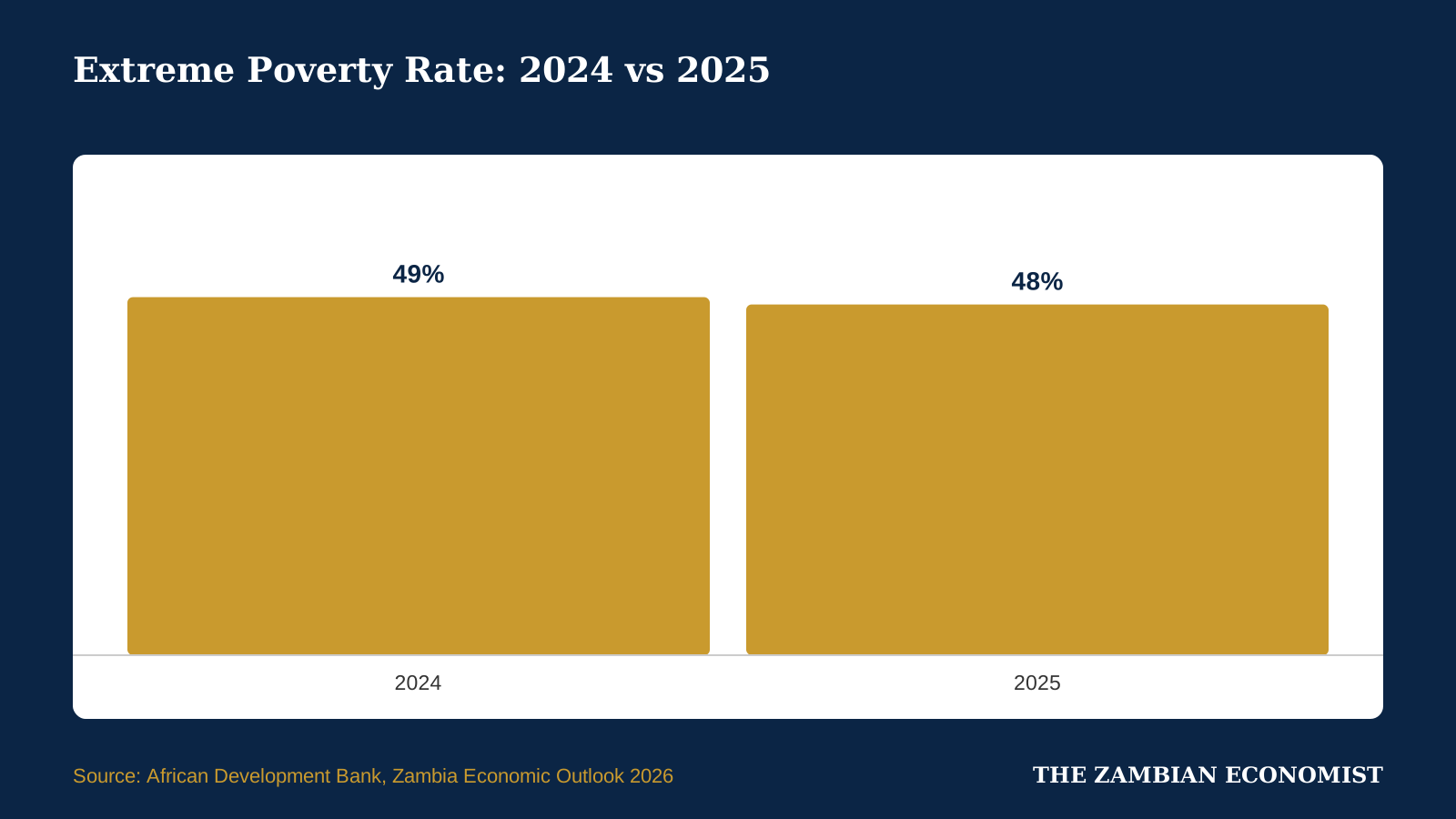
Zambia’s extreme poverty rate eased from 49% to 48% between 2024 and 2025, even as GDP per capita growth more than doubled. Here is why the two numbers are not moving together.
One Point, Two Years
Zambia’s extreme poverty rate eased from 49% in 2024 to 48% in 2025, according to the African Development Bank. Over the same period, real GDP per capita growth more than doubled, from 1.0% to 2.4%. The two numbers moving together, growth accelerating while poverty barely shifts, is the honest headline: Zambia’s recovery is real, but it is not yet fast enough to be felt broadly.
Why Growth and Poverty Can Decouple
GDP per capita is an average. It rises when mining output, agricultural harvests or services expand, even if the gains concentrate in a relatively small number of formal jobs, capital owners and urban areas. Nearly half of Zambians living below the extreme poverty line are disproportionately in rural areas, where subsistence and smallholder agriculture, rather than mining or finance, still define most household income.
What Government Is Leaning On
The African Development Bank notes that Zambia is investing in education, health, agriculture and cash transfers specifically to reduce inequality, rather than relying on aggregate growth alone to do the work. The Constituency Development Fund, which has grown from K1.6 million per constituency in 2021 to K40 million in 2026, a national total of K6.245 billion, is one of the more visible channels for that redistribution, financing local infrastructure, bursaries and community projects directly at ward level.
| Indicator | 2024 | 2025 |
|---|---|---|
| Extreme poverty rate | 49% | 48% |
| Real GDP per capita growth | 1.0% | 2.4% |
| Unemployment rate | n/a in this release | 10.3% |
| Human Development Index | — | 0.595 |
Business and Policy Implications
For consumer-facing businesses, a near-static poverty rate means the addressable market for discretionary spending is growing only slowly. For policymakers, the AfDB’s framing points toward a clear conclusion: further poverty reduction will depend on how efficiently large, fast-growing transfers such as the CDF translate into durable household income, not on GDP growth headlines alone.
Key Takeaways
- Zambia’s extreme poverty rate eased only slightly, from 49% in 2024 to 48% in 2025.
- Real GDP per capita growth more than doubled over the same period, to 2.4%.
- Education, health, agriculture and cash transfers, including the expanded CDF, are the government’s main redistribution tools.
Related reading: Zambia’s Unemployment Rate Falls to 10.3%. What the Number Doesn’t Tell You and Zambia’s 7.7% GDP Growth: Why It Doesn’t Feel Like It and Zambia’s Growth-Household Income Gap: The Economic Question Behind the 2026 Election
Related: Opinion – What a Second Hichilema Term Would Mean for Zambia’s Economy
Related: Mobile Money Has Expanded Financial Inclusion, But What Has It Changed for Users?