
By Zambian Economist Analyst
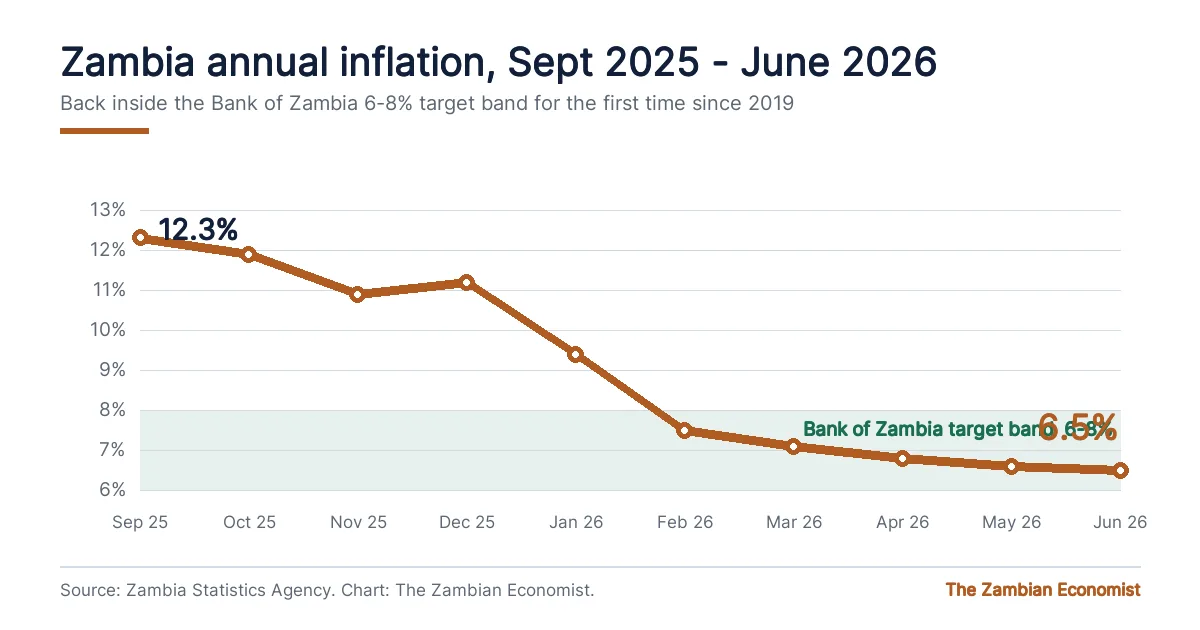
Zambia’s annual inflation was 6.5% in June 2026, down from 6.6% in May.
That single figure carries more weight than it looks. It is the lowest reading since early 2018, and it sits inside the Bank of Zambia’s 6-8% target band, a band the country had been outside of since 2019.
The next figure is published by the Zambia Statistics Agency on the last Thursday of the month.
The path down
| Month | Annual inflation |
|---|---|
| September 2025 | 12.3% |
| December 2025 | 11.2% |
| January 2026 | 9.4% |
| February 2026 | 7.5% |
| March 2026 | 7.1% |
| April 2026 | 6.8% |
| May 2026 | 6.6% |
| June 2026 | 6.5% |
Look at the shape of that column rather than any one row. Inflation did not drift down. It fell off a cliff between December and February, then flattened. Those are two different stories, and confusing them is the most common mistake in commentary on this subject.
What actually caused the fall
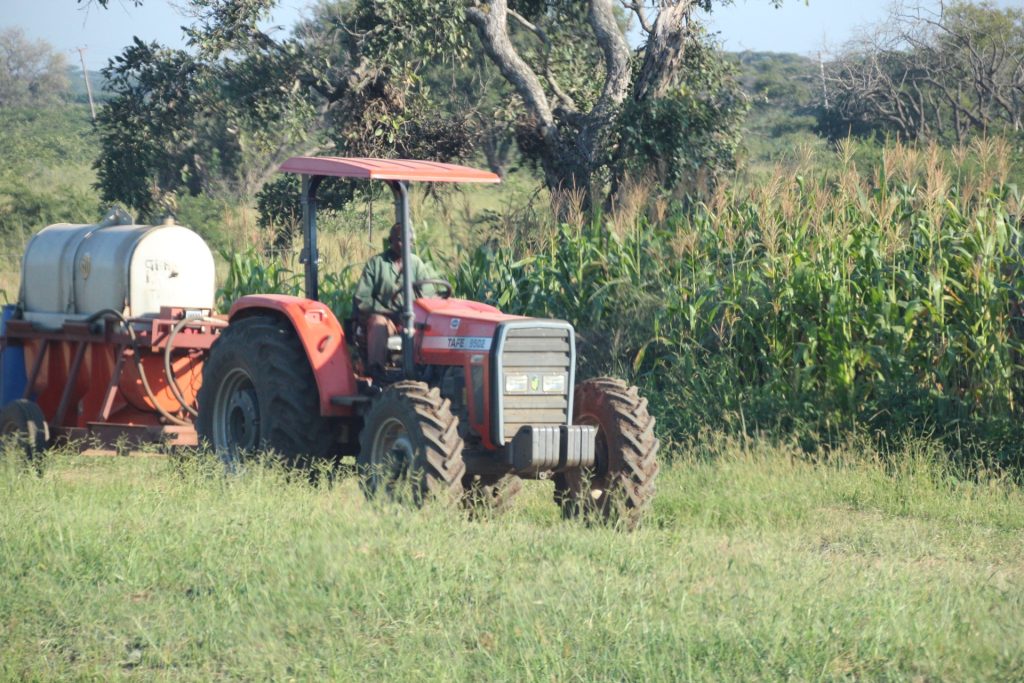
Food, first and largest. A bumper maize harvest following strong rains took the pressure off the single biggest component of the Zambian basket. Food inflation eased to 6.7% in June from 6.9% in May. In an economy where households spend a large share of income on food, this does most of the work.
The kwacha, second. The currency has strengthened close to 20% since January. Zambia imports fuel, fertiliser, medicines, vehicles, machinery and a great deal of what sits on a supermarket shelf. When the kwacha moves from K27 to K18.70, every one of those landed costs falls in local terms, with a lag of one to three months as old stock clears.
Fuel policy, third. A moratorium held fuel taxes flat through the first half of the year, keeping transport costs, which touch the price of nearly everything, from rising.
What did the least work: monetary policy. Rates have come down, not up. The Bank of Zambia has been following disinflation, not causing it.
The uncomfortable part
Two of those three drivers are not permanent.
Harvests are annual. A poor rainy season in 2026/27 would push food inflation back up within months, and Zambia has recent experience of exactly that, the 2023/24 drought was the origin of the double-digit inflation the country has spent two years unwinding.
Tax moratoria expire. They are policy choices with a fiscal cost, and they are reversed.
Only the exchange rate channel might persist, and it depends on the copper price. We explain that chain in copper and the kwacha.
So the honest reading of 6.5% is: real, welcome, and structurally fragile.
What this means for your pricing
This is where the number stops being an economic statistic and becomes a commercial decision.
If you repriced upward during 2023 and 2024, you built margins around a currency near K27 and food inflation in the teens. Neither condition holds. A competitor who is landing imported stock at K18.70 has room you may not have.
Three practical checks:
- Recost your imported inputs at today’s rate. Not last quarter’s. If the gap is more than 10%, your pricing is stale.
- Look at your own price increases over the last twelve months against 6.5%. If you have raised prices well above inflation without a quality or service change, expect resistance.
- Do not chase the currency down. Cutting prices to match a strong kwacha is dangerous, because if copper turns you cannot raise them back that fast. Take the margin now and hold the price.
Expert tip: Watch the non-food component, not the headline. Non-food inflation was 6.0% in June. It is the cleaner signal of underlying pressure, because it is not distorted by one good harvest.
What the Bank of Zambia expects
At its May meeting, the Monetary Policy Committee projected inflation averaging 6.8% in 2026 and around 6.1% in 2027, edging up to roughly 6.6% in early 2028. Those projections assume continued exchange-rate stability and lower maize prices.
Both assumptions are copper-and-rainfall assumptions wearing different clothes.
6.5% is the best inflation number Zambia has printed in eight years, and it deserves to be treated as good news.
It is also a number built on one good harvest and one strong commodity cycle. Price your business for the environment you are in today. Plan your business for the possibility that one of those two props is removed.
Figures current as at 28 July 2026. Part of our Zambia Economy 2026 series. See also: what the policy rate means for your loan and the 2026 economic calendar.
Primary sources: Zambia Statistics Agency · Bank of Zambia
Related coverage: food prices are the largest single driver of the Zambian CPI basket, see the FRA K347 maize floor price for this marketing season. For the wider picture, read Zambia’s Economy in 2026.