
By The Zambian Economist Analyst
LUSAKA, 10 August 2026: Zambia’s final campaign days should be about ballots, not blood. That is the central message in a statement from Thabo Kawana, Permanent Secretary at the Ministry of Information and Media, as the country prepares to vote on Thursday, 13 August 2026.
Kawana condemned remarks by people who have spoken of being ready to kill or be killed over the election. He described the vote as a peaceful contest of ideas and asked political parties, candidates and supporters to remain within the harmonised campaign timetable.
A peace appeal with a disputed political claim
The statement went further. Kawana alleged that unnamed political actors planned campaign activity in Lusaka and Copperbelt outside the agreed schedule, with the aim of provoking police action, arrests and claims that Zambia’s democratic space had narrowed.
No party was named. The statement did not include documentary evidence of the alleged plan or a response from those accused. The Zambian Economist has not independently verified the allegation. It should therefore be read as a claim by a senior government official, not as an established fact.
That distinction matters in the last days of a heavily watched campaign. A call for calm can lower the temperature. An accusation against unidentified opponents can also increase suspicion unless the responsible institutions quickly publish the facts on which it rests.
What the election framework requires
The Electoral Commission of Zambia’s revised roadmap fixes polling day on 13 August and included the development of the campaign timetable in May. ECZ guidance says political parties and candidates are expected to follow electoral procedures and the Electoral Code of Conduct. It assigns the police responsibility for maintaining law and order at campaign meetings and processions.
The timetable is meant to prevent rival processions from being routed into the same place at the same time. It works only if the schedule is public, authorised changes are recorded and every participant is treated by the same rule. ECZ and the Zambia Police Service should therefore identify the relevant entries for Lusaka and Copperbelt, state whether any variation was approved and explain what action follows from a breach.
Enforcement also needs restraint. The right to conduct a lawful campaign should be protected. Where an event is unauthorised, officials should communicate the restriction clearly, give lawful directions and avoid language or tactics that turn an administrative dispute into a confrontation.
Why Lusaka and Copperbelt matter to the economy
Lusaka and Copperbelt are not ordinary campaign stops. Zambia Statistics Agency figures from the 2022 census put Lusaka Province’s population at 3,093,617 and Copperbelt’s at 2,768,192. Nearly 5.9 million people live in the two provinces, which contain the capital’s service economy and the country’s main mining and industrial centres.
A rally that closes a commercial road, delays a shift change or interrupts freight movement has a cost even when nobody is injured. Retailers lose trading hours, transporters miss delivery windows and employees struggle to reach work. The Lusaka-Ndola corridor links the political capital to the Copperbelt’s mines, manufacturers and suppliers, making predictable movement especially important during election week.
The Bank of Zambia’s April 2026 Financial Stability Report said market uncertainty could rise as investors adopted a wait-and-see position before the election. Peaceful voting will not settle every fiscal or policy question, but disorder would add a risk that businesses and markets have not priced for.
For practical election-week continuity measures, see our guide on how Zambian businesses should plan for the election period.
Neutral enforcement is part of credibility
The government is entitled to urge compliance with electoral rules. Political parties are entitled to know those rules in advance and to challenge restrictions through lawful channels. Voters are entitled to see the same standard applied to the governing party and the opposition.
That places the next move with ECZ and the police, not with competing social media accounts. If there is a planned breach, publish the schedule and the notice given to organisers. If the information is wrong, correct it. If a conflict remains, use the national and district conflict-management structures established for electoral disputes.
SADC has deployed an electoral observation mission for the 13 August vote. Its presence adds scrutiny, but domestic institutions still carry the daily burden of keeping campaign space open and orderly.
The final days before voting
For citizens, the practical instruction is simple: check rally and road information against ECZ or police notices, do not circulate claims that cannot be verified and leave any area where rival groups begin to gather. Businesses should confirm staff travel arrangements, supplier routes and a clear rule for early closure if local conditions change.
For political leaders, the standard is higher. Condemn violent language from allies as readily as from opponents. Keep supporters within authorised routes. Use complaints procedures before the street becomes the forum. Zambia has held elections before and will hold them again. No ballot is worth a life, and no short-term campaign advantage is worth weakening confidence in the institutions that must still govern on 14 August.
Key takeaways
- Thabo Kawana has appealed for peace and compliance with the agreed campaign schedule before the 13 August vote.
- His allegation that unnamed political actors intend to provoke clashes in Lusaka and Copperbelt has not been independently verified.
- ECZ and the police should publish the relevant schedule, explain any approved changes and enforce the rules evenly.
- Orderly campaigning protects voters and reduces disruption to commerce, freight movement and investor confidence.
Editor’s note: This report is based on a statement supplied to The Zambian Economist and has been supplemented with official ECZ, SADC, ZamStats and Bank of Zambia material. The allegation concerning a plan to provoke clashes remains unverified.
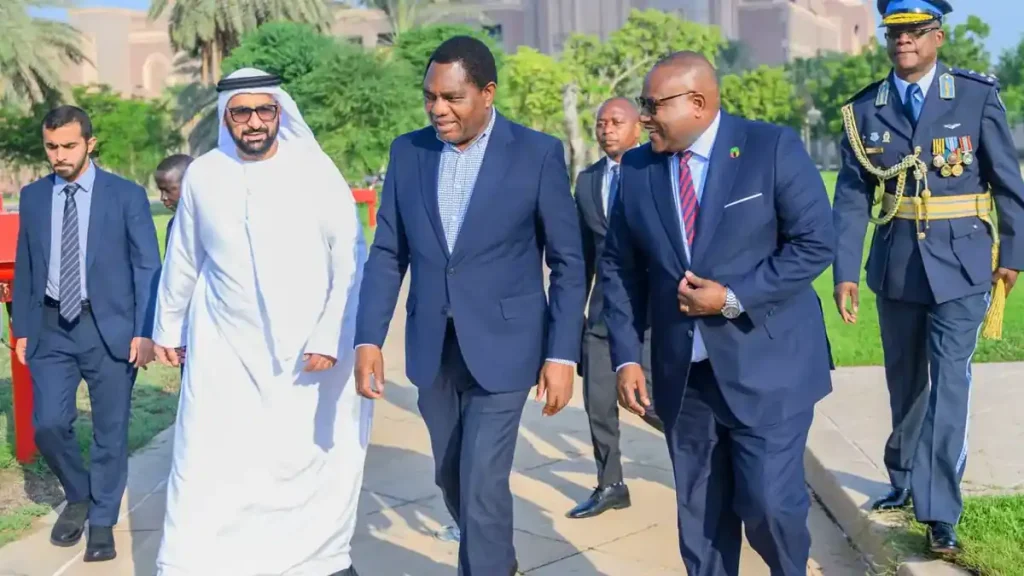
Photo credit: Thabo Kawana, Permanent Secretary, Ministry of Information and Media.
Related coverage
- The Economics of Zambia’s 2026 Election
- ZAF Prays for Peaceful Elections Ahead of Zambia’s 2026 Vote
- What Investors Are Watching as Zambia Heads to the Polls
- What the Next Government Inherits
WARNING! All rights reserved. This material and all other digital content on this website may not be reproduced, published, broadcast, rewritten, or redistributed, in whole or in part, without the prior express permission of The Zambian Economist. Where permission is granted, the content must be clearly credited to “The Zambian Economist,” with “www.zambianeconomist.com” prominently displayed.
WhatsApp: +260775574228 | Email: info@zambianeconomist.com
© 2026 The Zambian Economist.