Voter Education and Election Economics Feature | Tuesday, 11 August 2026
By The Zambian Economist Analyst
File image
Zambia is now only two days away from voting day.
On Thursday, 13 August 2026, registered voters will choose the country’s President, Members of Parliament, Mayors or Council Chairpersons, and Ward Councillors. Polling stations are scheduled to operate from 06:00 to 18:00 hours, according to the Electoral Commission of Zambia. See the official ECZ election notice.
The campaign period has given candidates and political parties an opportunity to present their promises. Voting day belongs to the voter.
Your choice is private. Your political opinion is your own. No employer, relative, traditional leader, religious leader, political party, candidate or social-media commentator should make that decision for you.
Go to your correct polling station, follow the instructions of authorised election officials, cast your ballots peacefully and leave the polling station when you have finished voting.
Do not turn the polling station into a political meeting place. Do not wear party regalia. Do not campaign, provoke other voters, spread rumours or announce results that have not been verified through the legally established electoral process.
There is life after an election. Neighbours will remain neighbours. Families will still share homes. Traders will return to the markets. Employees will return to work. Children will return to school.
Zambia must still move forward.
Voting day is Thursday, 13 August
The Electoral Commission of Zambia’s 2026 election timetable sets Thursday, 13 August 2026 as the date of the first ballot. The timetable also provides for the receipt and verification of results before the formal declaration and publication stages. Read the official ECZ 2026 election timetable.
This distinction matters.
Voting takes place on Thursday, but the verification, collation, announcement and declaration of different results follow legal procedures. A figure circulating on WhatsApp shortly after polling closes is not automatically a national result.
A result from one polling station is not the result for an entire constituency. A constituency result is not the national presidential result. A collection of figures assembled by an unknown social-media account is not an official declaration.
Citizens should allow the lawful process to work.
What to carry when going to vote
The ECZ’s voter-education information lists two principal requirements:
- Your Green National Registration Card.
- Your voter’s card.
A voter must go to the polling station shown on the voter’s card. You cannot simply choose a polling station because it is closer to your home, workplace or current location. See the ECZ voting-day requirements and procedures.
Prepare these documents on Wednesday evening. Do not wait until Thursday morning to begin looking for them.
Place them somewhere secure and easy to remember. Check the name of your polling station and plan how you will get there.
If possible, arrange transport in advance. Leave enough time for traffic, queues and unexpected delays.
Polling hours
The ECZ says the polls will take place between 06:00 and 18:00 hours.
Voters should avoid unnecessary last-minute pressure. An early start gives you time to find the correct stream, join the appropriate queue and follow the process calmly.
Large polling stations may have more than one voting stream. The streams are normally organised alphabetically, and an usher should direct voters to the correct queue.
Do not assume the longest queue is yours. Ask an election official for guidance.
What happens inside the polling station
The ECZ describes the general voting procedure as follows:
- An election official verifies the voter’s identity using the voter’s card, Green NRC and register of voters.
- The voter is marked with indelible ink.
- The voter receives the appropriate stamped ballot papers.
- The voter marks the ballots privately inside the polling booth.
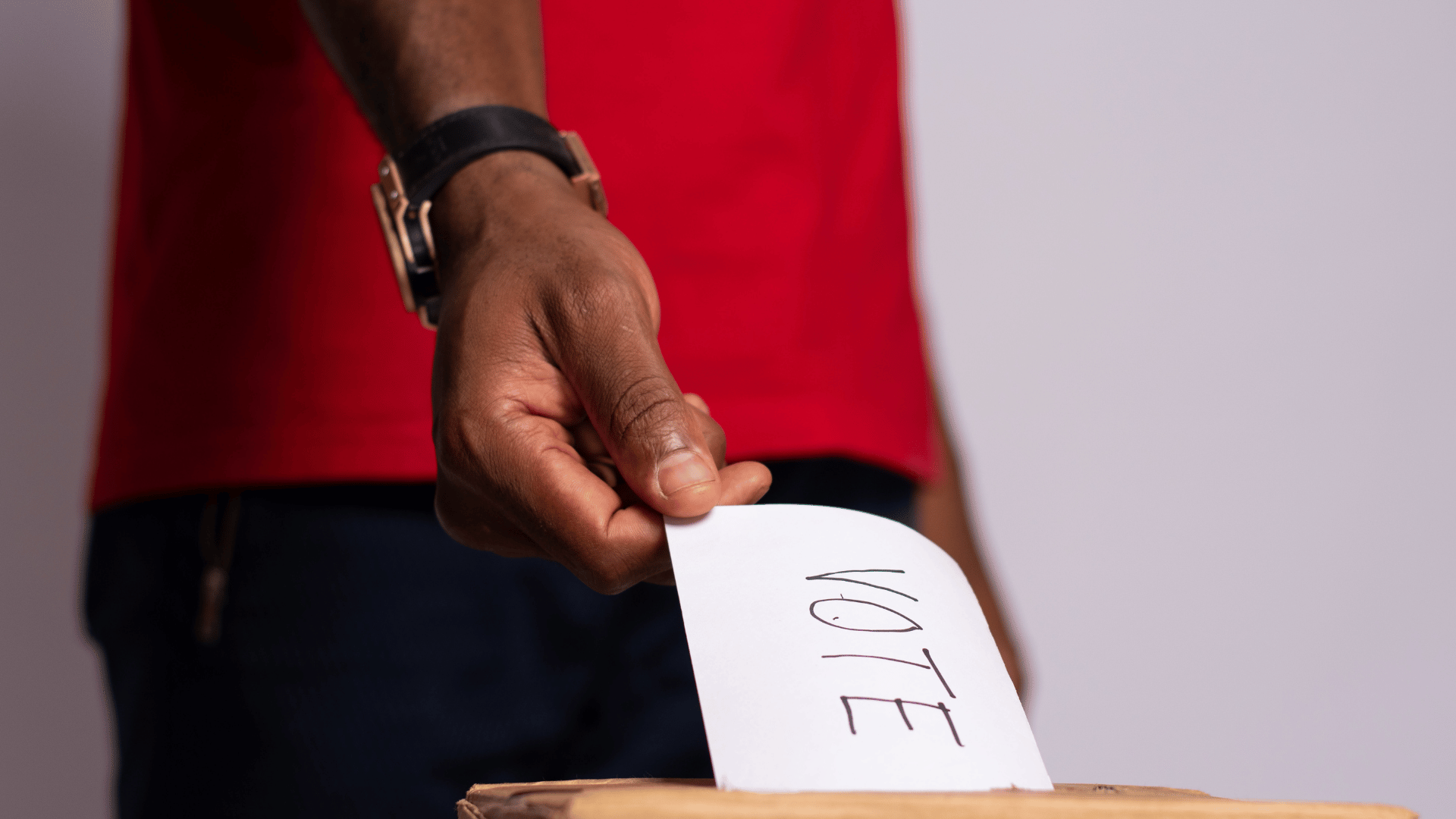
- The voter places the ballots in the correct ballot boxes.
- The voter leaves the polling station.
Follow the directions given by the presiding officer and polling assistants.
Do not rush. Confirm that you understand which ballot is being issued and which election it represents.
The ECZ advises voters to mark an “X” in the square to the right of the preferred candidate. The voter should make the choice clear and avoid writing anything that could identify them. A ballot may be rejected when it is marked for more than one candidate, left unmarked, marked unclearly or contains identifying writing. Review the ECZ ballot-marking guidance.
If you make a mistake before placing the ballot in the box, do not try to hide the problem. Speak to an authorised polling official and follow the prescribed procedure for a spoilt ballot.
Once a ballot has been placed in the ballot box, it cannot simply be removed because the voter has changed their mind.
Voting is secret
No one is entitled to enter the polling booth with you unless you qualify for assistance under the prescribed procedure.
You do not have to tell friends, relatives, party officials or social-media followers how you voted.
People who require assistance may receive it under the direction of the presiding officer. ECZ guidance says persons with disabilities, older voters, expectant mothers and other eligible voters may receive assistance or priority according to their circumstances.
A person helping another voter must respect the voter’s choice. Assistance must never become pressure.
The dos of voting day
Do vote
If you are registered, use your democratic right.
Complaining about leadership, employment, taxes, electricity, roads, agriculture, mining policy, education, healthcare or the cost of living is not a substitute for participating in the election.
The ballot is where a citizen makes a lawful choice.
Do carry the correct documents
Take your Green NRC and voter’s card. Check them before leaving home.
Do go to the correct polling station
Use the polling station connected to your registration details. If you are uncertain, consult official ECZ information rather than relying on a forwarded message.
Do arrive with enough time
Voting begins at 06:00 and is scheduled to close at 18:00. Plan for queues and transport delays.
Do dress in ordinary clothing
Wear comfortable, neutral clothing suitable for the weather and the time you expect to spend in the queue.
Leave party-branded T-shirts, chitenges, hats, scarves, badges and other campaign material at home.
Do listen to polling officials
Authorised election officers are responsible for organising the voting process. Follow queue instructions and ask questions politely if you do not understand something.
Do respect other voters
The person next to you may support a different candidate. That does not make them your enemy.
Allow older voters, expectant mothers and persons with disabilities to receive the assistance or priority provided by election officials.
Do mark the ballot clearly
Place the mark in the correct space and avoid unnecessary writing.
Do protect the secrecy of the ballot
Make your choice privately. Do not pressure another voter to reveal their choice.
Do leave after voting
Once you have completed the process, leave the polling station and its immediate surroundings.
The ECZ’s own voting procedure ends with the voter leaving the polling station. Loitering or refusing to leave after being directed by a presiding officer is listed among poll-day offences. Read the ECZ poll-day guidance.
The don’ts of voting day
Do not wear political regalia
Do not arrive at the polling station wearing party colours, campaign T-shirts, candidate clothing, badges or other recognisable political material.
The Electoral Process Act treats party or candidate T-shirts, cloth, posters, symbols and similar items as campaign material. ECZ rules also prohibit canvassing close to polling stations and restrict political notices near polling locations. The safest approach for an ordinary voter is simple: wear neutral clothing and avoid anything that can be interpreted as campaigning. See the ECZ statement on campaign regalia.
Do not campaign at the polling station
Voting day is not the time to ask people to support a party or candidate.
The ECZ lists canvassing within 400 metres of a polling station as a poll-day offence. It also prohibits political notices or signs within 100 metres of a polling station.
Do not distribute party materials. Do not chant slogans. Do not attempt to influence people standing in the queue.
Do not vote twice
Every registered voter is entitled to vote once in accordance with the law.
Do not attempt to enter another stream or polling station to obtain another ballot.
Do not vote for another person
You cannot vote on behalf of a sick relative, deceased person, friend, spouse or anyone else.
Every voter must make their own lawful application to vote.
Do not bring a ballot paper from outside
Only use ballots officially issued inside the polling station.
Do not remove a ballot paper
Do not leave the polling station carrying a ballot paper. Do not tear, destroy or deliberately deface it.
Do not put anything else in a ballot box
Only place the ballot paper issued for that election into the relevant ballot box.
Do not interfere with election materials
Do not touch, damage or attempt to remove ballot boxes, seals, registers, forms or other election material.
Do not threaten officials or voters
Disagreement is not permission to insult, intimidate or assault anyone.
If you believe an irregularity has occurred, report it through the proper channel. Do not attempt to solve it through violence.
Do not loiter
Vote and leave.
Remaining around a polling station without lawful accreditation can create tension, congestion and suspicion. Accredited party agents, observers and monitors have defined roles. An ordinary voter should complete the process and move away peacefully.
Why you should not speculate about results
After the polls close, social media will become crowded with numbers.
Some figures may come from genuine polling-station result forms. Others may be incomplete, incorrectly copied, deliberately changed or entirely invented.
Do not turn every screenshot into breaking news.
The ECZ has previously warned against treating results from individual polling streams as the final polling-station result. The official polling-station result is produced through the prescribed consolidation process and recorded on the authorised results form. See the ECZ explanation of official polling-station results.
Citizens should therefore avoid statements such as:
- “Our candidate has already won.”
- “The election has been stolen.”
- “These are the final national results.”
- “The ECZ is hiding figures.”
- “This constituency has finished counting,” when no authorised official has confirmed it.
An unverified result can travel across the country in minutes. Correcting it may take much longer.
False figures can cause panic, celebrations based on wrong information, threats against election officers or confrontation between political supporters.
Pause before forwarding.
Ask three questions:
- Who produced this figure?
- Is it a complete result or one polling station or stream?
- Has it been announced through the official electoral process?
If those questions cannot be answered, do not present the information as fact.
Who announces and declares results?
The Electoral Commission of Zambia is Zambia’s official election-management body, but the results process operates at several levels.
At polling-station level, the presiding officer counts and announces the polling-station result according to the prescribed process.
At constituency level, the returning officer adds results received from polling stations. The returning officer announces presidential results for the constituency and declares the winners of the National Assembly and relevant local-government elections.
Presidential results are transmitted to the National Results Centre. The Commission Chairperson, acting as Presidential Election Returning Officer, is responsible for the final presidential declaration.
Sections 72 and 73 of the Electoral Process Act describe the responsibilities of returning officers in announcing and declaring election results. Read the Electoral Process Act No. 35 of 2016.
For national presidential results, rely on the ECZ and its legally authorised announcements. The Commission also publishes full election results through the media and on its official website. See the ECZ explanation of the results process.
Media organisations may report figures announced by authorised officials, but a journalist, political party, Facebook page or WhatsApp administrator does not replace the ECZ’s legal declaration.
There is life after elections
Election campaigns can make political competition feel permanent. It is not.
After the election, Zambians will still trade with one another. Farmers will still need buyers. Businesses will need customers. Employers and employees will continue working together. Pupils will share classrooms. Families will attend the same churches, funerals and weddings.
A different political opinion should not destroy a relationship that existed before the campaign.
You may belong to one political party while your neighbour belongs to another. You may strongly disagree about leadership, economic policy or the direction of the country.
That disagreement should end at debate. It must not become hatred or violence.
There is life after elections, and every voter has a responsibility to protect it.
Peace is also an economic issue
Political peace is not an abstract slogan. It has direct consequences for households and businesses.
When political violence disrupts transport, workers fail to reach their workplaces. Shops close. Markets lose customers. Deliveries are delayed. Perishable goods spoil. Tourism bookings may be cancelled, and investors postpone decisions when they cannot predict what will happen next.
The people who suffer first are often those with the least financial protection: market traders, minibus operators, casual workers, small shop owners and families living from one day’s income to the next.
A peaceful election protects jobs, trade and household income.
It allows Zambia to return quickly to the work of addressing the cost of living, electricity supply, agricultural production, mining investment, public debt, education, healthcare and employment.
Political competition should produce ideas for solving these problems. It should not create new problems for the same citizens who expect development.
We all want progress for Zambia
Zambians may disagree about which party, candidate or policy can deliver development. That is normal in a democracy.
What should unite the country is the desire for a Zambia in which children can receive a good education, young people can find work, businesses can grow and public resources are used responsibly.
The election should decide who receives the authority to lead. It should not decide who qualifies to be called Zambian.
No tribe owns Zambia. No province owns Zambia. No political party owns Zambia.
One Zambia, One Nation.
Vote for your preferred candidates. Respect the choices made by other citizens. Accept that legal disputes must be handled through lawful institutions.
When the voting is finished, the work of building Zambia continues.
The Zambian Economist’s role
The Zambian Economist’s agenda is to bring economic information closer to the people and explain it in language that an ordinary citizen can understand.
Elections are economic events because governments make decisions about taxes, debt, jobs, fuel, electricity, mining, agriculture, social protection and public spending.
Voters should therefore examine more than campaign colours and slogans.
Ask what each candidate proposes to do about:
- The cost of living.
- Employment and business opportunities.
- Electricity generation and supply.
- Agriculture and food security.
- Mining taxation and investment.
- Public debt and government spending.
- Education and healthcare.
- Roads, markets and local services.
- Corruption and accountability.
A vote should be informed by what a policy means for your household, your business and Zambia’s future.
Final voting-day checklist
Before leaving home:
- Confirm that Thursday, 13 August is voting day.
- Carry your Green NRC and voter’s card.
- Go to the polling station connected to your registration.
- Wear neutral and comfortable clothing.
- Leave all political regalia at home.
- Carry water where appropriate, but follow security instructions.
- Arrange transport and leave early.
- Follow directions from authorised officials.
- Mark each ballot carefully and privately.
- Place each ballot in the correct box.
- Leave the polling station when finished.
- Do not campaign or loiter.
- Do not speculate about results.
- Do not forward unverified figures.
- Obtain official results from the ECZ and legally authorised election officers.
- Reject violence and protect Zambia’s peace.
The final message
Go and vote.
Make your decision peacefully and privately. Do not intimidate another voter. Do not wear political regalia. Do not remain around the polling station after completing the process.
When counting begins, be patient. Do not turn rumours into results or speculation into confrontation.
Remember that Zambia will still need you after the election. Your family will need you. Your community will need you. The economy will need workers, farmers, entrepreneurs and responsible citizens.
Political parties compete. Zambia remains.
One Zambia, One Nation.
Advisory and disclaimer
This feature provides general, non-partisan voter education. Election procedures may be updated through official notices. Voters should follow instructions issued by the Electoral Commission of Zambia, presiding officers and other authorised public institutions. This article does not support or oppose any political party or candidate and does not replace official ECZ guidance or legal advice.
Election update: ECZ extended voting hours at polling stations that opened late, while confirming that voters already in the closing queue must be allowed to vote.
WARNING! All rights reserved. This material and all other digital content on this website may not be reproduced, published, broadcast, rewritten, or redistributed, in whole or in part, without the prior express permission of The Zambian Economist. Where permission is granted, the content must be clearly credited to “The Zambian Economist,” with “www.zambianeconomist.com” prominently displayed.
WhatsApp: +260775574228 | Email: info@zambianeconomist.com
© 2026 The Zambian Economist.