
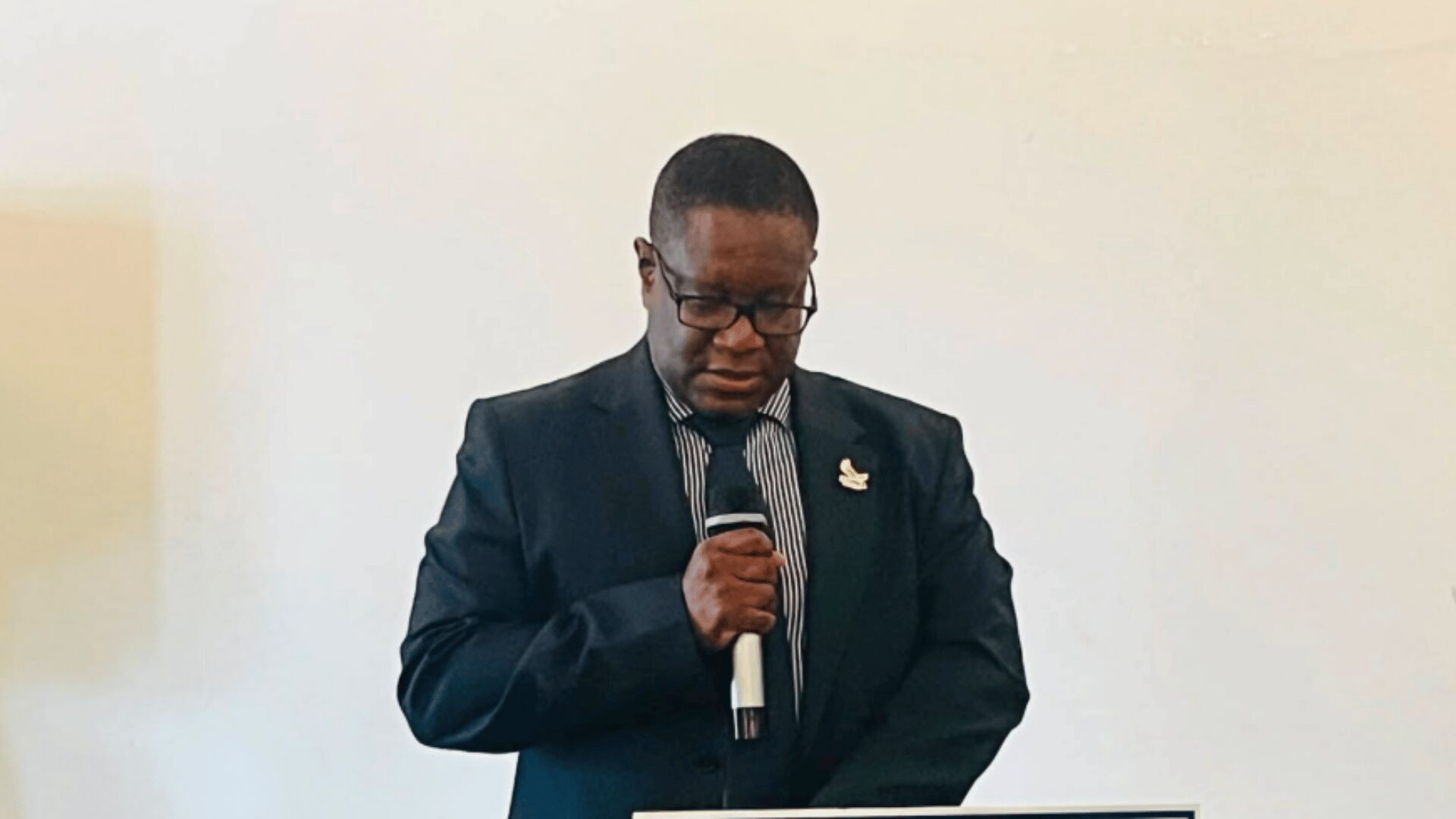
Pension Laws 2026 are moving from the statute book to payroll systems and member administration. The Emoluments Commission used meetings in Chingola, Kitwe and Ndola to explain the framework to public institutions, councils, unions and parastatals, while identifying the questions employers and workers must settle before implementation.
By The Zambian Economist Analyst
The Emoluments Commission has taken a lead role in the Government’s Copperbelt sensitisation programme on Zambia’s new pension laws. The district meetings brought together the mainstream Public Service, local authorities, trade unions, parastatal organisations and other affected institutions.
The Copperbelt engagements were led by Commission Director General Mr Chembo F. Mbula in his capacity as Chairperson of the Pension Reforms Steering Committee. Copperbelt Province Permanent Secretary Mr Lawrence Mwanza officially opened the Ndola meeting. Similar sensitisation work involved Commission representation in Southern and Western provinces.
What Zambia’s Pension Laws 2026 change
President Hakainde Hichilema assented to the pension legislation on 4 June 2026. The Copperbelt meetings focused on three Acts:
- The National Pension Scheme Act No. 72 of 2026.
- The Public Service Pensions Act No. 73 of 2026.
- The Local Authorities’ Superannuation Fund Act No. 74 of 2026.
Act No. 72 continues the National Pension Scheme Authority and the National Pension Scheme, provides for sub-schemes and retains the framework for employer and member registration, contributions and benefits. Act No. 73 continues the public-service scheme and establishes an Occupational Pension Scheme and Occupational Pension Fund. Act No. 74 does the same for local authorities through an Occupational Superannuation Scheme and its fund.
That distinction matters. The occupational arrangements add a second mandatory contributory layer for eligible workers; they do not replace the National Pension Scheme. Administration remains with the institutions named in the laws. The Emoluments Commission’s role in these meetings is to lead coordination and help institutions understand what implementation requires.

What the occupational pension scheme means for public-service workers
The Public Service Pensions Fund says eligible employees under its Occupational Pension Scheme will contribute 6.5 per cent of gross salary, split equally between the employee and Government at 3.25 per cent each. PSPF says the National Pension Scheme is intended to provide a first-tier pension, with the occupational scheme adding a second tier.
PSPF has also said accrued pension rights for existing members and pensioners remain protected. Its published explanation refers to retirement options at 55, 60 and 65, benefit portability, voluntary contributions and access to specified member finance facilities. These details relate to the PSPF-administered scheme. Workers should confirm their own eligibility and effective arrangements through formal notices from their employer and pension administrator.
Questions employees should ask
- Which scheme applies to me, and from what effective date?
- What deduction will appear on my payslip, and what amount will the employer contribute?
- How are my accrued rights, qualifying service and existing benefits treated during the transition?
- Where can I obtain a member statement, lodge a complaint or correct an employment record?
What employers should prepare
- Identify eligible employees and reconcile payroll and personnel records.
- Budget for the employer contribution and test payroll deductions before commencement.
- Confirm registration, remittance, reporting and record-keeping procedures with the relevant administrator.
- Give employees written guidance that separates confirmed rules from proposals or informal explanations.

Why district-level engagement matters
Pension legislation can fail at the point of implementation if payroll officers, human-resource teams and members receive different explanations. The Chingola, Kitwe and Ndola meetings put those groups in the same room. Participants were briefed on eligibility, contributions, benefits, governance, transitional provisions and the respective duties of employers and employees.
The meetings also gave stakeholders an opportunity to question the reform team. That feedback can expose gaps before deductions or registrations begin, including inconsistent staff records, uncertainty over scheme membership and the need for clearer transition guidance.
Mr Mbula asked participants to carry accurate information back to their institutions and communities. For the Commission, sustained visibility will depend on whether that communication continues after the meetings through written guidance, public questions and answers, and follow-up engagement.

Implementation tests to watch
Enactment is the starting point. The practical test will be whether commencement instruments, regulations and administrative guidance reach employers and members in time for payroll and registration changes. The Acts and subsequent legal instruments, rather than meeting summaries, determine enforceable rights and duties.
- Commencement: institutions need clear effective dates and enough lead time to change systems.
- Payroll readiness: deductions, employer contributions and remittances must reconcile from the first applicable pay period.
- Transition: workers need written explanations of how existing membership, accrued benefits and qualifying service will be treated.
- Governance: actuarial valuation, board oversight and transparent reporting will determine whether the schemes remain financially sound.
- Access to information: members need a reliable channel for statements, corrections, complaints and benefit questions.
These are the areas where stakeholder engagement can move from awareness to accountability. Publishing the same guidance used in district meetings would give employees, unions and employers a common reference and reduce the risk of conflicting interpretations.

Copperbelt leadership and institutional ownership
Mr Mwanza told the Ndola meeting that Government wants public-service employees to retire with greater financial security and dignity. His participation placed provincial administration behind the implementation effort and signalled that readiness is not solely a matter for pension administrators in Lusaka.
Mr Mbula said implementation will require stakeholder collaboration, communication and shared responsibility. In practice, that means each participating institution must brief its staff, correct its records, prepare its payroll processes and direct unresolved questions to the competent pension authority.

Business, investor and policy implications
For employers and institutions, the immediate issue is cost and compliance. New employer contributions must be budgeted, while payroll, registration and reporting systems need to work across different public bodies and councils.
For workers, the reform is meant to increase retirement income through a second contributory tier. The outcome will depend on contribution collection, investment performance, administrative costs and the protection of member records over many years.
For investors and policymakers, well-run pension funds can provide long-term domestic capital. That benefit is not automatic. It depends on sound governance, actuarial discipline, transparent investment rules and regular public reporting.
Key takeaways
- The Emoluments Commission led Copperbelt sensitisation meetings in Chingola, Kitwe and Ndola.
- Three 2026 Acts reorganise the national, public-service and local-authority pension framework.
- Eligible public-service and local-authority workers will have an additional mandatory occupational pension arrangement alongside the National Pension Scheme.
- Employers need firm commencement dates, payroll guidance and transition procedures before deductions begin.
- Workers should seek written confirmation of eligibility, contributions, accrued rights and benefit rules from the relevant administrator.
Related reading
- Beyond Salaries: How the Emoluments Commission Can Strengthen Zambia’s Economy
- Emoluments Commission Engages Public at the 98th Zambia Agricultural and Commercial Show
- Hichilema Warns Mopani Copper Mines Over Unpaid Pensioner Benefits
Photo credit: Emoluments Commission. Legal references: National Assembly of Zambia. Additional public-service scheme information: Public Service Pensions Fund.
NAPSA has since moved on the payment side of the reforms, disbursing K9.1 million in interest free pension advances to 565 pensioners within three days.
Related coverage
Related: Mobile Money Has Expanded Financial Inclusion, But What Has It Changed for Users?
Related reading: The Looming Fiscal Cliff: Rebuilding Zambia’s Political Retirement Architecture.
WARNING! All rights reserved. This material and all other digital content on this website may not be reproduced, published, broadcast, rewritten, or redistributed, in whole or in part, without the prior express permission of The Zambian Economist. Where permission is granted, the content must be clearly credited to “The Zambian Economist,” with “www.zambianeconomist.com” prominently displayed.
WhatsApp: +260775574228 | Email: info@zambianeconomist.com
© 2026 The Zambian Economist.