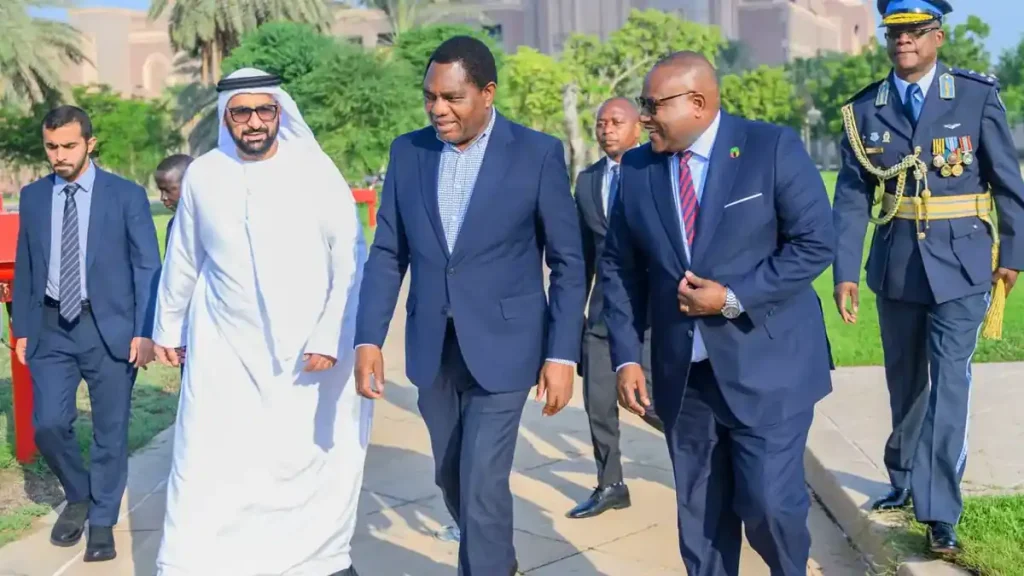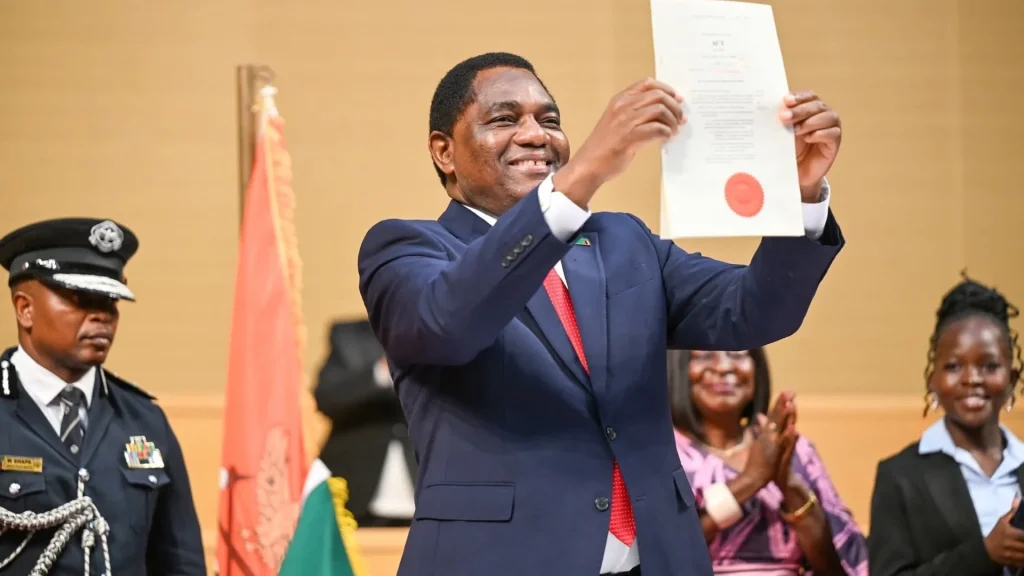
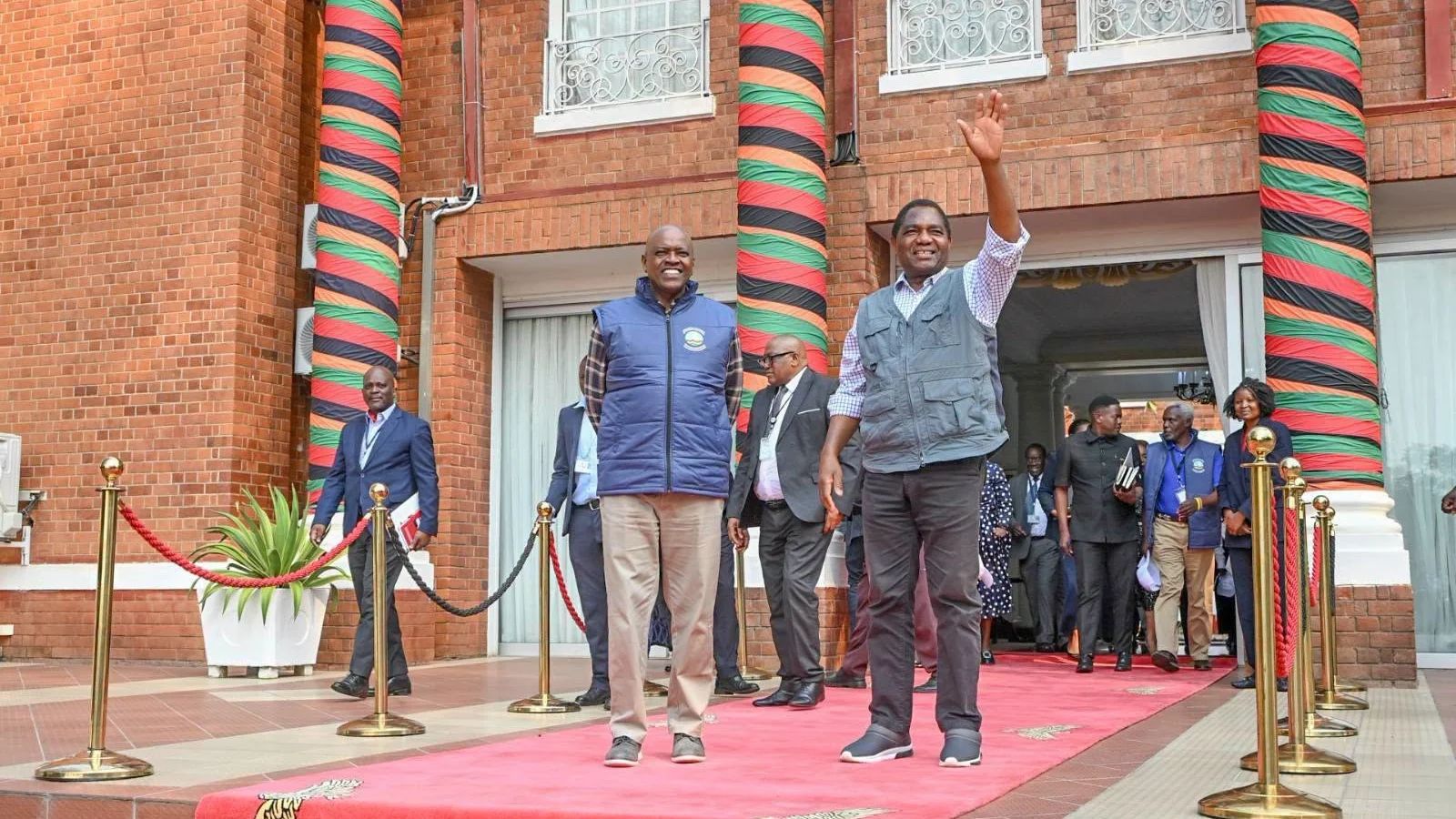
President Hakainde Hichilema has assured an ICGLR election observation mission led by former Botswana president Mokgweetsi Masisi that Zambia will hold a peaceful and credible general election on 13 August.
By The Zambian Economist Analyst
President Hakainde Hichilema met an election observation mission from the International Conference on the Great Lakes Region at State House in Lusaka on Monday.
The delegation is led by Mokgweetsi Masisi, the former president of Botswana. State House said President Hichilema assured the observers that Zambia would conduct free, peaceful and credible elections on Thursday, 13 August 2026.
The election date is set under Article 56 of Zambia’s Constitution, which provides for general elections every five years on the second Thursday of August. Polling day is a public holiday. National Assembly of Zambia.
What the ICGLR mission will assess
The meeting took place as regional and international observers prepared to assess voting, counting and other parts of the electoral process.
Under the ICGLR Protocol on Democracy and Good Governance, observer missions are expected to make an independent assessment of an election. The protocol covers transparency, access for observers and the availability of a credible mechanism for resolving electoral disputes. It also provides that observers should arrive at least 72 hours before polling. ICGLR Protocol on Democracy and Good Governance.
The President’s assurance is a political commitment. The mission will make its own assessment based on what its members observe before, during and after polling.
That distinction matters. A credible election depends on more than an orderly polling day. The counting of ballots, publication of results and handling of complaints will also shape public confidence.
Why election credibility matters to business
Businesses and investors will watch for signs that normal economic activity can continue without prolonged disruption.
An orderly election and an accepted result would reduce uncertainty over the direction of fiscal, mining, energy and agricultural policy. A disputed or delayed outcome could make companies postpone investment decisions and increase caution among lenders and foreign-exchange market participants.
The government taking office after the election will inherit decisions involving residual debt restructuring, agricultural subsidies, electricity investment and Zambia’s next engagement with the International Monetary Fund. The Zambian Economist examined those constraints in What the Next Government Inherits: Zambia’s Economic Position on 14 August 2026.
The presence of observers does not guarantee agreement among political parties. It can, however, provide an independent record of how the election was conducted and whether the process met national and regional standards.
What happens next
The ICGLR mission is expected to observe polling and counting before issuing its findings. Its assessment should be judged against the evidence gathered by observers rather than statements made by candidates or government officials before polling.
Zambians will vote in presidential, parliamentary and local government elections on Thursday.
Key takeaways
- President Hichilema met the ICGLR election observation mission at State House.
- Former Botswana president Mokgweetsi Masisi is leading the delegation.
- Zambia votes on Thursday, 13 August 2026.
- The President promised a peaceful and credible election, but observers will make an independent assessment.
- Businesses and investors will watch the conduct and acceptance of the result for signs of policy continuity and political stability.
Photo credit: State House Media
WARNING! All rights reserved. This material and all other digital content on this website may not be reproduced, published, broadcast, rewritten, or redistributed, in whole or in part, without the prior express permission of The Zambian Economist. Where permission is granted, the content must be clearly credited to “The Zambian Economist,” with “www.zambianeconomist.com” prominently displayed.
WhatsApp: +260775574228 | Email: info@zambianeconomist.com
© 2026 The Zambian Economist.