
Zambia’s debt restructuring has bought time, not relief. Steven M. Mbangu argues that the country must spend that window on MSME development, building millions of income-earning small businesses before heavier debt payments fall due from 2026.
Key takeaways
- Zambia’s restructured external debt payments are expected to climb from about US$450–650 million a year in 2026–2028 to US$700–750 million or more from 2029, so the economy must raise incomes before those obligations arrive.
- The author argues household income growth, not GDP alone, should become the central measure of economic policy, because copper royalties and repeated restructuring cannot carry the debt burden.
- Evidence from Taiwan, Germany, Japan and Kenya shows that strong economies rest on dense ecosystems of small and medium enterprises, not only a few large firms.
- Every major Zambian investment in mining, agriculture, energy or infrastructure should be judged partly on the number of local businesses created around it.
- The goal is income-led prosperity rather than debt-led consumption: households able to afford better lives because they earn more, not because they borrow more.
A recent Katondo Street Journal analysis by economist Kampamba Shula, “What Does HH’s Re-election Mean for the Zambian Economy?”, shared on the Economic Association of Zambia Facebook page, is a timely contribution to the debate on Zambia’s economic direction. It correctly identifies the next challenge as converting macroeconomic stability into jobs, stronger businesses, reliable energy, higher incomes and greater value from Zambia’s natural resources.
I would go further and name the objective that should sit beneath all these priorities. The purpose of economic development is to enable people to live comfortably, with rising and sustainable incomes, and to progressively gain access to the quality of goods, services, technology, infrastructure and opportunities enjoyed in successful economies, without being suffocated by unproductive debt. That is what economic transformation should mean for ordinary Zambians.
The debt-service train is still coming
The metaphor of an oncoming train captures the reality of Zambia’s rescheduled debt-service obligations. Without substantially higher household and national incomes before that train gathers speed, the future debt burden could once again overwhelm the economy.
The G20 Common Framework restructuring bought Zambia breathing space, but it deferred and reprofiled the burden rather than eliminating it. What we do with that space is therefore critical. It must be used to increase productivity, expand enterprise ownership, diversify the economy, deepen value addition and, above all, ensure incomes rise substantially before the heavier obligations crystallise.
The trajectory ahead requires preparation rather than complacency.
2026–2028: Escalation window. Amortisation on restructured Eurobonds begins, with coupon rates stepping up from approximately 5.75% to 7.5%. Annual external debt-service requirements are expected to move into the US$450–650 million range.
2029–2031 and beyond: Peak obligations. Principal repayments under official-creditor arrangements increasingly combine with commercial debt-servicing. Annual obligations could rise towards US$700–750 million or more.
The precise path will depend on final restructuring arrangements, economic performance and market conditions, but the direction is clear. Zambia must deliberately build the income-generating capacity of its economy before the debt-service train arrives.
Why household incomes must become a central policy objective
Relying principally on copper royalties, government borrowing or repeated debt restructuring cannot provide a sustainable long-term solution.
Economic growth becomes hollow if it does not translate into:
- more Zambians earning higher and sustainable incomes;
- greater ownership of productive enterprises;
- more businesses moving from survival into growth;
- broader participation in the tax base;
- increased domestic production; and
- greater purchasing power for households.
The ultimate measure of economic success should therefore not simply be GDP growth. We should be asking: Are households becoming more prosperous? Can families afford better housing, education, healthcare, transport, communications and other essential services? Can ordinary Zambians increasingly access the technology, products and opportunities that people in successful economies take for granted? Are Zambians building assets and productive businesses rather than accumulating debt simply to maintain the most basic standard of living?
This is the human dimension of debt sustainability. A country may have a technically sustainable debt profile while its citizens remain economically constrained. That is not the transformation we should aspire to.
The strong MSME economy we need: why MSME development must move to the centre
This is why MSME development must move from the margins of economic policy to the centre of Zambia’s transformation strategy.
A world-class economy cannot be built exclusively around a handful of large corporations, mines and government institutions. Large enterprises are indispensable; Zambia needs major investment in mining, energy, manufacturing, infrastructure and technology. But large enterprises alone cannot create the breadth of ownership and income generation required to transform the lives of the majority. A strong and resilient MSME base can.
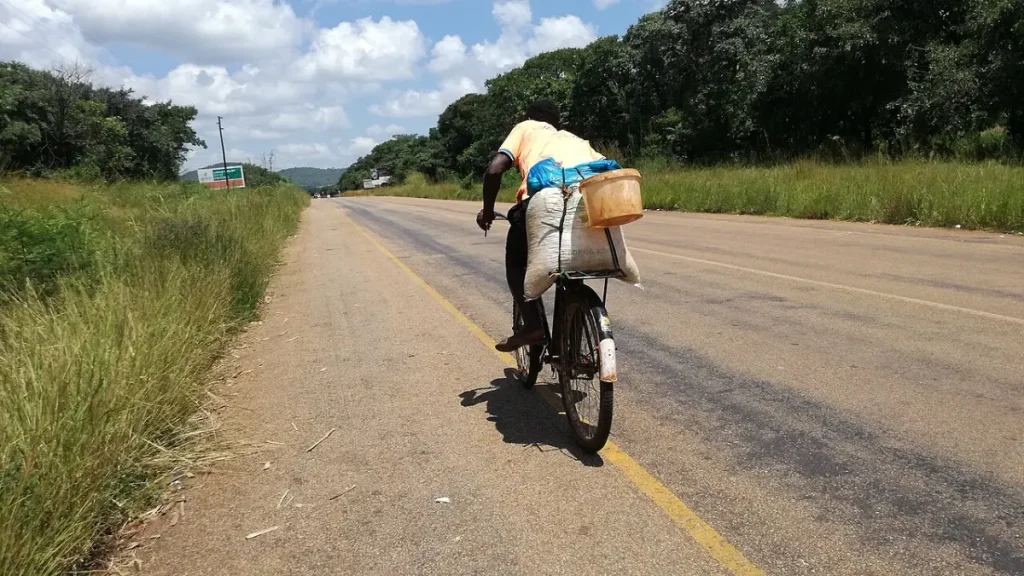
MSMEs distribute economic activity widely across communities, provinces and households. They allow ordinary citizens to become producers, suppliers, contractors, service providers, innovators and, ultimately, owners of productive assets.
The objective should not be merely to have many small businesses. It should be to build productive, resilient and scalable businesses, some of which grow into medium-sized companies and eventually into large Zambian enterprises capable of competing regionally and globally. That is how a broad-based economy develops.
The global evidence
This is not an untested proposition.
Taiwan. In 2024 Taiwan had more than 1.715 million SMEs, representing 98.87% of all enterprises, according to its official SME White Paper. They employed approximately 9.19 million people, nearly 80% of total employment, and accounted for more than half of total enterprise sales. Taiwan’s government explicitly describes SMEs as a cornerstone of economic development and competitiveness.
Germany. The Mittelstand comprises millions of small and medium-sized businesses forming an exceptionally deep industrial and services ecosystem. KfW’s SME Panel reports that Germany had approximately 3.87 million SMEs in 2024, employing 33.01 million people, or 71.6% of total employment.
Japan. Japan’s government identifies SMEs and small businesses as accounting for around 70% of total employment, with expectations that they will continue to contribute significantly to regional and national growth.
Kenya. Closer to home, Kenya’s 2025 Economic Survey reported that of the 782,300 new jobs created in 2024, 703,700 were in the informal sector, predominantly driven by MSMEs. Kenya consequently treats the transformation and formalisation of MSMEs as a core part of its employment strategy.
These countries are very different from one another, but the lesson is common: world-class economies do not depend only on a few world-class companies. They are supported by dense ecosystems of productive businesses. That is the ecosystem Zambia must deliberately build.
From small businesses to globally competitive enterprises
Our ambition should be bigger than helping people establish micro-enterprises. We should be asking how a small Zambian business can become a medium-sized company, then a large company, and ultimately a regional or global competitor.
That requires an environment in which businesses can:
- access appropriate finance;
- obtain affordable and reliable electricity;
- acquire technical and managerial skills;
- adopt modern technology;
- access markets;
- participate in public and private procurement;
- meet quality and international standards;
- access industrial and commercial infrastructure;
- integrate into domestic and international value chains; and
- progressively export their products and services.
Finance is important, but finance without markets, skills, energy, technology and productive capacity simply creates indebted businesses rather than successful ones. The objective should be to finance productive capacity, not merely consumption or survival.
Large investments must create MSME ecosystems
Every major investment in Zambia should be examined for its potential to create an ecosystem of domestic enterprises around it.
If copper production expands, we should measure not only the additional tonnes produced but the number of Zambian businesses created around that production, including enterprises in:
- engineering and fabrication;
- equipment maintenance;
- logistics and transport;
- construction;
- environmental services;
- laboratory and technical services;
- ICT;
- security and specialised services;
- catering and hospitality;
- manufacturing of mining inputs; and
- financial and professional services.
The same principle should apply to agriculture, energy, infrastructure, tourism and manufacturing. Every major investment should become an opportunity to create a constellation of Zambian enterprises.
Reliable energy is fundamental to enterprise development
Reliable and affordable energy must be regarded as an essential component of MSME policy. A manufacturing business cannot compete with persistent power interruptions. A cold-chain agricultural enterprise cannot operate without dependable electricity. A digital business cannot compete globally without reliable power and connectivity.
Energy security is therefore not merely an energy-sector objective. It is an enterprise-development objective, an employment objective and an income objective. Zambia’s investment in solar, hydro, thermal generation, transmission, distribution and storage should be understood as investment in the productive capacity of the economy.
Building beyond copper
Copper remains an enormous opportunity, particularly given global demand from electrification, renewable energy and advanced technologies. But Zambia must capture much more value from every tonne produced. The objective should be to build businesses around the mining economy, not simply to extract and export the resource.
Copper beneficiation, processing and manufacturing should be accompanied by the development of Zambian enterprises providing engineering, logistics, fabrication, maintenance, technology and specialised services.
The same philosophy applies to agriculture. Instead of exporting raw commodities, Zambia should progressively build enterprises around aggregation, storage, processing, packaging, branding, logistics and export marketing. This is how the same resource can generate multiple layers of income and employment.
Broad-based sectors for transformation
The opportunities extend well beyond mining. Particular attention should be given to:
- agriculture and agro-processing;
- food and light manufacturing;
- mineral processing and mining services;
- credible small-scale mining;
- tourism and hospitality;
- construction and allied services;
- ICT and digital services;
- renewable-energy enterprises;
- logistics and transport;
- fisheries and aquaculture; and
- creative and cultural industries.
These sectors accommodate businesses of different sizes and levels of capital intensity, making them particularly important for expanding economic participation.
The objective is prosperity without unproductive debt
This point deserves emphasis. Economic transformation should allow households to consume more because they earn more, not because they borrow more.
Zambians should be able to afford better homes, education, transport, communications, healthcare, financial services and technology because their productivity and incomes have increased.
Debt can be productive when it finances assets and productive capacity. But a society that borrows simply to maintain basic consumption, while its productive capacity remains weak, becomes vulnerable to precisely the kind of debt crisis Zambia has experienced. The objective must be income-led prosperity rather than debt-led consumption. That is why household incomes and productive enterprise ownership should sit at the heart of the next phase of Zambia’s economic policy.
What Zambia should have before the debt peak
The first priority was to stabilise the economy. The next must be to build a broad-based productive economy. By the time the heavier debt-service obligations crystallise, Zambia should have:
- a substantially stronger MSME ecosystem;
- greater Zambian ownership of productive enterprises;
- more reliable and affordable energy;
- deeper agricultural, industrial and mining value chains;
- stronger manufacturing and processing capacity;
- a broader tax-paying population;
- greater export capacity;
- more globally competitive Zambian companies; and, most importantly,
- substantially higher household and national incomes.
That is the real preparation for the debt-service train.
The real test
The next chapter of Zambia’s economic story cannot be about stabilisation alone. It must be about productivity, ownership, enterprise development and rising incomes.
The measure of success should not simply be whether inflation is lower, the exchange rate is more stable or debt ratios have improved. Those are foundations. The deeper test is whether macroeconomic stability has been translated into:
- more productive businesses;
- more jobs and higher household incomes;
- greater ownership of productive assets;
- broader access to global-quality goods and services;
- stronger domestic value chains; and
- a population that can aspire to a better standard of living without being trapped in unproductive debt.
Kampamba Shula’s article is a valuable contribution because it correctly identifies the transition that must now take place: from stabilisation to transformation.
Zambia has been given time through debt restructuring. That time must be used to build the productive and income-generating capacity of the economy before the debt-service train arrives. One of the most inclusive and powerful foundations for doing so is a strong, resilient and globally competitive MSME sector integrated into a modern industrial economy.
The ultimate ambition should be bigger than avoiding another debt crisis. It should be a Zambia in which millions of households participate productively in the economy, earn rising incomes, own productive assets and businesses, and can increasingly enjoy the quality of life available in successful economies, without mortgaging their future to finance their present.
That is the Zambia we should be preparing for.
Related coverage
- The SME Credit Gap: Why Zambian Small Businesses Still Can’t Borrow Affordably
- Hichilema’s Second Term: What It Means for Zambia’s Economy, Markets and Diplomacy
- Two Paths to Capital in Zambia’s Construction Market
- Zambia’s Post-Election Rally Is Economically Sound
WARNING! All rights reserved. This material and all other digital content on this website may not be reproduced, published, broadcast, rewritten, or redistributed, in whole or in part, without the prior express permission of The Zambian Economist. Where permission is granted, the content must be clearly credited to “The Zambian Economist,” with “www.zambianeconomist.com” prominently displayed.
WhatsApp: +260775574228 | Email: info@zambianeconomist.com
© 2026 The Zambian Economist.