
Hakainde Hichilema begins a second five-year term with inflation at its lowest reading since 2018, the 2020 sovereign default cleared from the credit markets and a kwacha that ranked among the world’s best-performing currencies this year. Whether that stability compounds into output and jobs is the question the new mandate now has to answer.
Key takeaways
- Hichilema won re-election on 18 August with 60.49% of the vote and 160 of 278 National Assembly seats, giving his economic programme five more years of runway.
- Inflation printed 6.5% in July, the lowest since February 2018, and the Bank of Zambia’s policy rate sits at 13.25% ahead of a 30 September decision.
- The IMF programme closed in January after roughly $1.7 billion of disbursements, and June’s $1.36 billion Eurobond buyback settled most of the 2020 default. Fitch rates Zambia B- with a stable outlook.
- The real economy trails the scoreboard: growth was 3.8% in 2025, below every official forecast, and first-half copper output was flat at 447,181 tonnes.
- Four markers for the months ahead: a successor IMF arrangement, the 2027 budget, the rainy season, and the conduct of a government now holding a large majority.
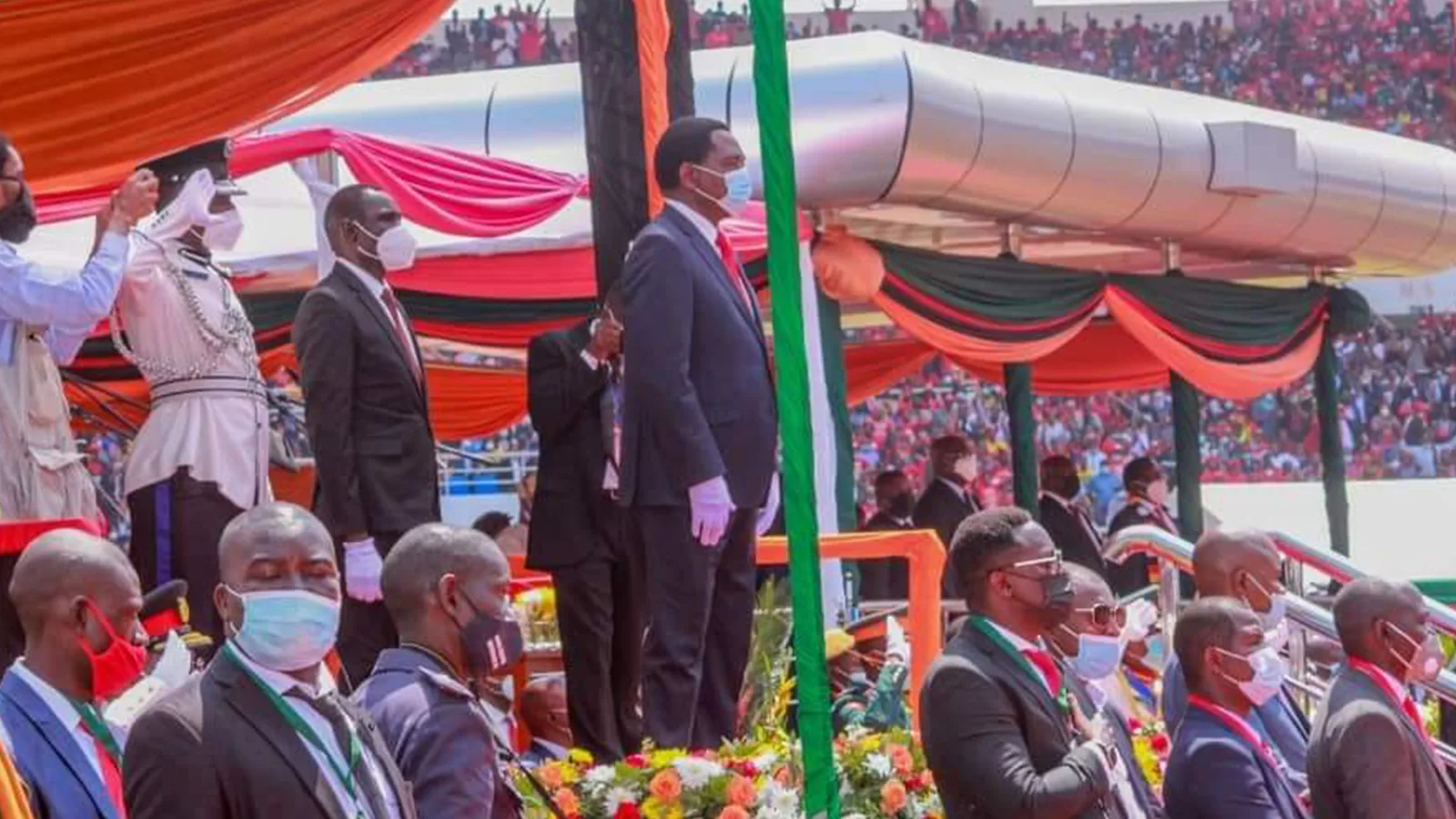
Zambia has just held the rarest of African electoral events: a referendum on austerity that the incumbent won. Official results declared by the Electoral Commission of Zambia on 18 August gave President Hakainde Hichilema 2,965,326 votes, or 60.49%, against 37.87% for Brian Mundubile of the National Reconciliation Party for Unity and Prosperity. Turnout rose to 57.23%, some thirteen points above the 2021 figure. Hichilema’s United Party for National Development took 160 of the 278 seats in a National Assembly elected for the first time through a mixed system that added 40 proportional-representation seats for women, youth and candidates with disabilities. Our election results dashboard carries the full breakdown.
The vote settles Zambia’s politics for five years. It settles far less in its economics. The country Hichilema now leads again has inflation of 6.5%, a currency near K18.75 to the dollar and two years of credit-rating upgrades behind it. It also grew just 3.8% in 2025, well under the 6.2% the statistics agency projected and the 6.6% the Treasury budgeted. Its copper mines, watching the metal trade near all-time highs above $14,000 a tonne, produced 0.45% more metal in the first half of this year than in the first half of last.
That gap, between a repaired balance sheet and an economy that has yet to accelerate, is the subject of this Zambia economic outlook assessment. It draws on data from the Bank of Zambia, the Zambia Statistics Agency, the IMF, Fitch, S&P Global and the Ministry of Finance and National Planning to set out what the second term inherits and what it must now deliver. The short version: the stabilisation project that began with the 2022 IMF arrangement is broadly finished. What remains is the part that pays.
A mandate measured in kwacha
Hichilema campaigned on the macro ledger, and the macro ledger delivered. The kwacha appreciated 14.8% against the dollar in the first quarter, Governor Denny Kalyalya told the Bank of Zambia’s quarterly briefing, extending a 2025 in which it gained about a quarter of its dollar value. Inflation, in double digits through 2023 and 2024, has now fallen for more than a year. Interest rates are coming down for the first time since 2020.
The opposition ran on the parts the averages skip: incomes, jobs and the price of mealie meal. Mundubile’s 37.87% lands within a point of the 38.71% Edgar Lungu managed in 2021, but on a much larger turnout, and Lungu himself was ruled ineligible in December 2024 and died last year. The protest vote did not shrink; it simply lost again.
Continuity is the investment case. Washington’s congratulations signalled that Zambia’s largest investment relationship will keep its footing, and the focus of the second term shifts from repair to execution, as our election economics hub has tracked all year. The European Union’s observer mission called the election competitive and the count itself transparent, while judging the broader playing field uneven and flagging misuse of state resources. That mix, a clean count on a tilted field, is the political texture investors are pricing.
The scoreboard the campaign ran on
ZamStats put annual inflation at 6.5% in July, level with June and the lowest print since February 2018. The descent has been steady: 6.8% in April, 6.6% in May, then 6.5% twice. A stronger kwacha lowered imported food costs, the central bank noted in its monetary policy report, and a strong harvest did the rest.
The Bank of Zambia has cut its policy rate three times since November, from 14.5%, where it had sat since early 2024, to 13.25% today. The February cut, at 75 basis points, was larger than markets expected; the May trim to 13.25% was a surprise in the other direction. With inflation at 6.5%, the real policy rate is close to seven percentage points, so the cutting path has room if the harvest and the kwacha hold. The next decision falls on 30 September.
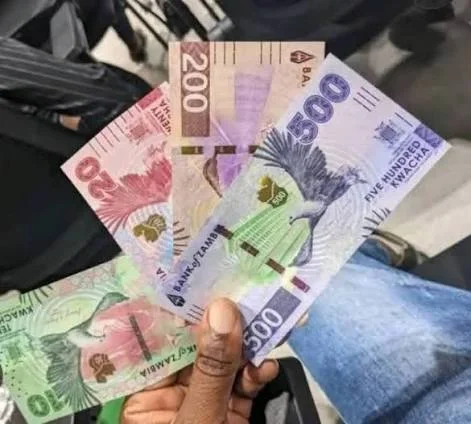
The kwacha traded at a mid-rate of K18.7529 on 19 August, the Bank of Zambia’s daily fix shows. It weakened about 2% through July as importers rebuilt dollar positions ahead of the vote, after a first half in which it was, at one stage, the world’s best-performing currency, as Firstpost’s Africa desk put it in January. Governor Kalyalya has attributed the strength to fundamentals, mining inflows and disciplined money growth rather than intervention, which is the difference between a rally and a defence.
| Indicator | Latest | Comparison | Source |
|---|---|---|---|
| Annual inflation | 6.5% (July 2026) | 6.8% in April 2026 | ZamStats |
| Policy rate | 13.25% (May 2026) | 14.5% from early 2024 | Bank of Zambia |
| Kwacha per US dollar | 18.75 mid-rate (19 Aug 2026) | Above 20 in late 2025 | Bank of Zambia |
| GDP growth | 3.8% (2025) | 3.8% (2024) | ZamStats |
| GDP growth, Q1 2026 | 7.7% | 4.5% in Q1 2025 | ZamStats |
| Copper output | 447,182 tonnes (H1 2026) | 445,177 tonnes (H1 2025) | Government figures |
| Public debt | 93% of GDP (2025) | 114% (2024); 85% forecast for 2026 | Fitch |
| IMF growth forecast | 4.3% for 2026 (April 2026) | 5.8% projected in January 2026 | IMF |
| Sovereign ratings | B- (Fitch); Caa2 (Moody’s); CCC+ (S&P) | All upgraded or affirmed since April 2025 | Rating agencies |
Out of default, into the market
Zambia became Africa’s first pandemic-era sovereign default in November 2020, when it missed a Eurobond coupon. The repair took five years and two anchors: the G20 Common Framework for creditors, and an IMF arrangement as its discipline. June 2024 brought the exchange of $3.8 billion of Eurobonds into longer-dated paper, including the 2053 bond. By the end of 2025 the government had agreement in principle on roughly 94% of the $13.34 billion of external debt under treatment.
The market’s verdict arrived in instalments. Moody’s lifted Zambia to Caa2 with a positive outlook in April 2025. S&P followed with CCC+ in November 2025, and days later Fitch went further, to B- with a stable outlook, projecting that government debt would fall from 114% of GDP in 2024 to 85% by 2026 on the strength of nominal growth and the restructuring itself.
June 2026 closed the chapter further. Using a $600 million African Development Bank loan, the Treasury ran a cash tender that repurchased $1.36 billion of the 2053 bond, settling in mid-June in what the Ministry of Finance called “a historic day”. Fitch and S&P both judged the buyback commercial rather than coerced. A creditor group has since taken the transaction to court, the last loose thread in a five-year restructuring, and the case carries precedent value well beyond Lusaka.
The relief, though, was backloaded. Coupons and principal step up through the second half of this decade, and the interest bill will claim a growing share of revenue precisely when IMF programme discipline is no longer automatic. Debt sustainability from here is a growth story, or it is nothing.
The IMF chapter closes; a harder one opens
The Extended Credit Facility approved on 31 August 2022, worth SDR 978.2 million over 38 months, ended on 27 January 2026 when the sixth and final review passed. The last disbursement of SDR 138.9 million, about $190 million, took total disbursements to SDR 1.27 billion, roughly $1.7 billion. All six reviews were passed.
What came next was a calculated risk. Reuters reported in January that Zambia had dropped plans to extend the programme by a year, and bonds sold off on the news. The Treasury said it would seek a successor arrangement focused on growth rather than consolidation, and officials indicated nothing would be signed before the election. That election is now settled, which makes the successor arrangement the first unambiguous signal of the second term’s economic character.
The money matters less than the message. Reserves have recovered and the financing gap is narrower than in 2022. What a new IMF anchor buys is discipline: an external check on the wage bill, on arrears and on the temptation that a 160-seat majority invites. Investors will read the pace and the conditionality of any new deal as a forecast of the 2027 budget.
Copper at $14,000, and output standing still
Copper has rarely been worth more. The three-month LME contract set an all-time record of $14,527.50 a tonne on 29 January, and cash prices have traded between roughly $13,900 and $14,850 through August, slipping about 3.5% on 18 August when exchange inventories jumped. For Africa’s second-largest copper producer, the incentive to produce has seldom been stronger.
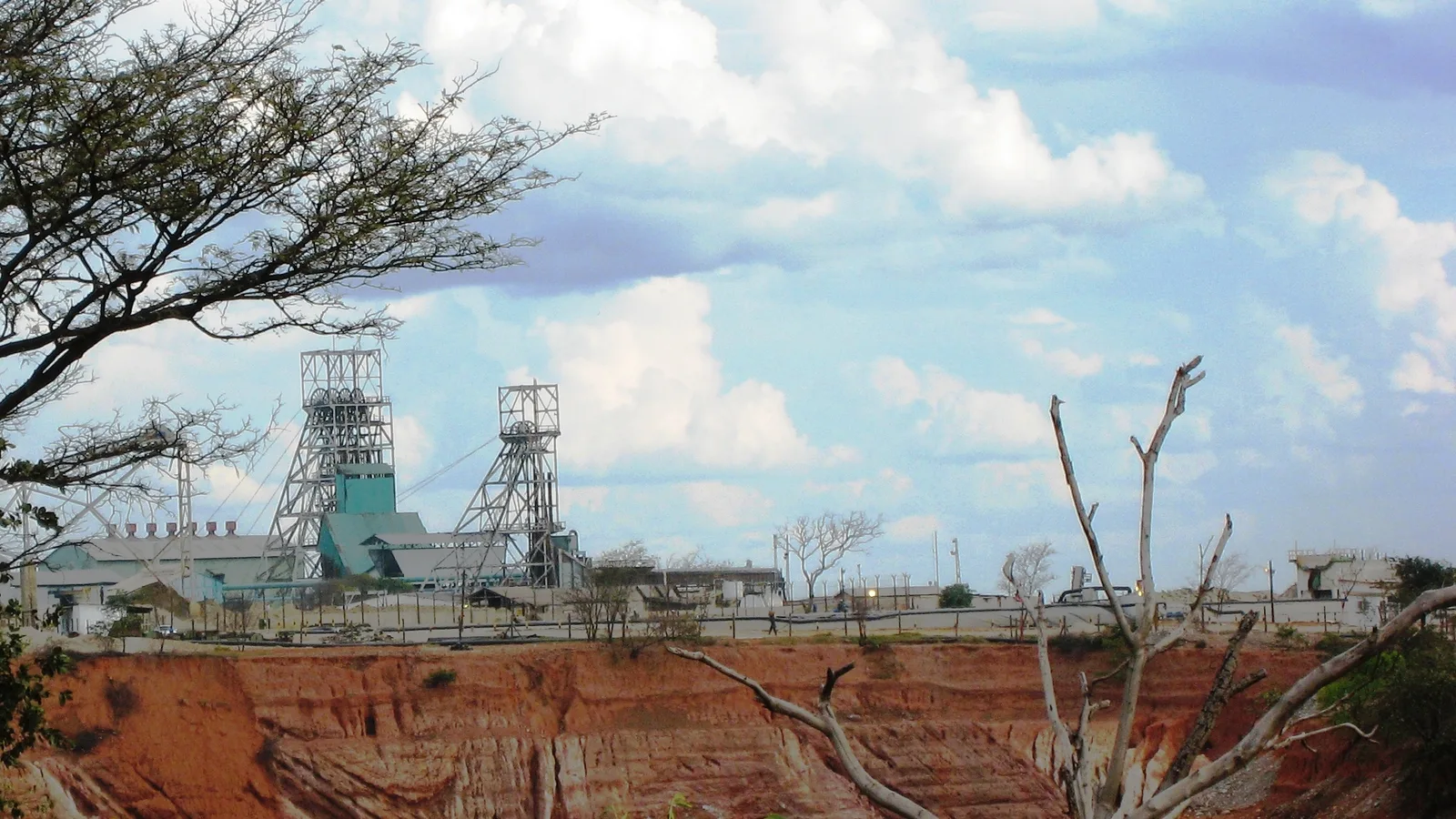
Output has barely responded. Government figures show 447,181.93 tonnes of copper in the first half of 2026, up 0.45% on the 445,177 tonnes of a year earlier. The first quarter actually fell 4.3% before a second-quarter recovery. First Quantum did most of the lifting: its Zambian output rose 5% to 184,929 tonnes on the back of Kansanshi. Full-year 2025 came in at 890,346 tonnes, a haul that lifted mining tax revenue 64.9%.
The national strategy targets three million tonnes a year by 2031. On the current run rate that requires output to more than triple inside five years. The fourth quarter of 2025 showed the downside risk in a single print: mining turned negative and quarterly GDP growth slowed to 1.6%. The pipeline is real, from Kansanshi’s S3 expansion and Barrick’s Lumwana Super Pit plan to International Resources Holding’s $1.1 billion Mopani recapitalisation and the Zambia-DRC battery-precursor initiative with its Lobito Corridor logistics. Every one of those projects buys power before it buys trucks.
The power margin is still the weather
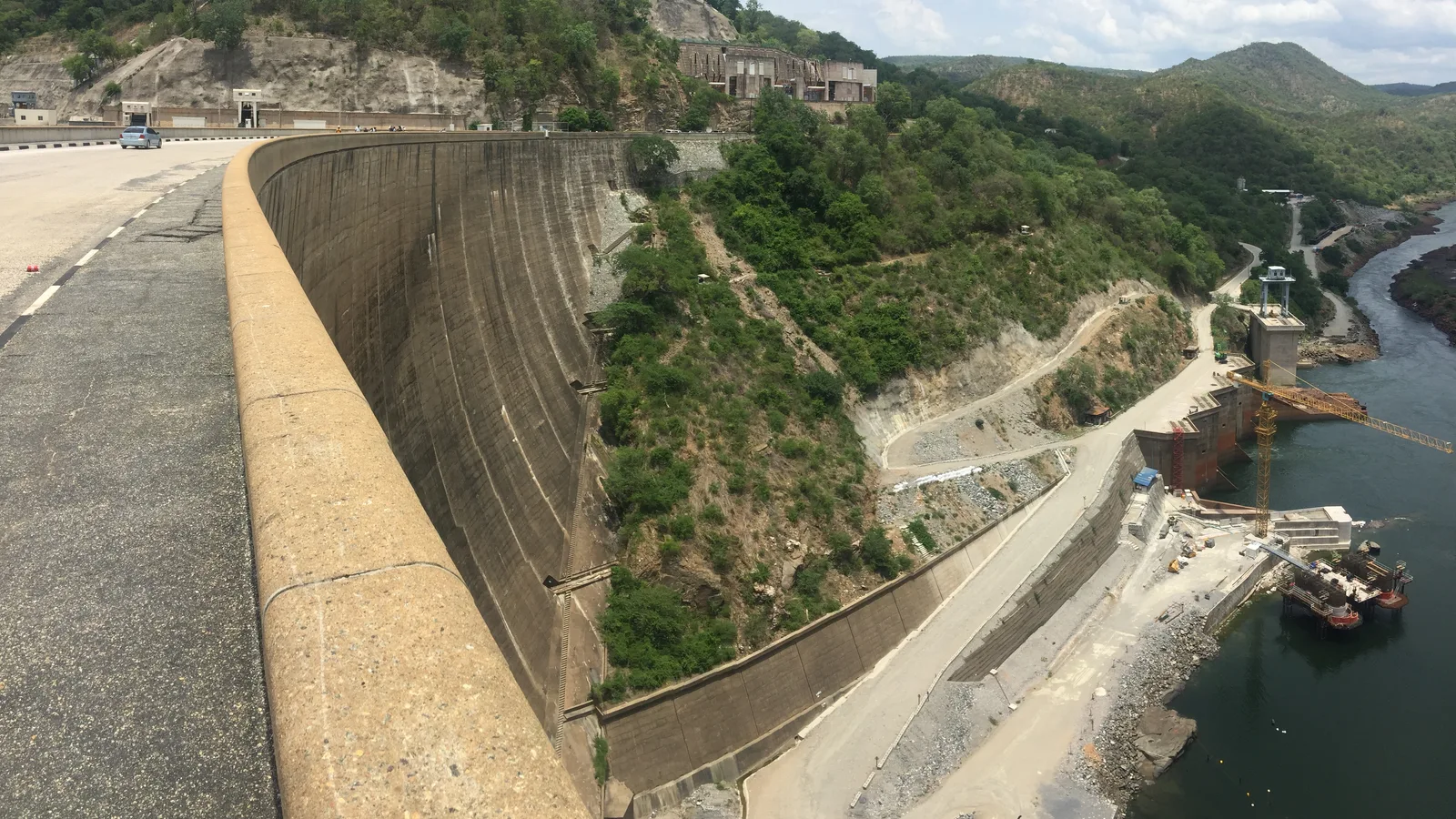
Hydropower supplies more than four-fifths of Zambia’s electricity, which means the national grid is one bad rainy season wide. The 2024 drought made the point brutally, with outages passing twenty hours a day. Recovery since has been real: ZESCO declared the end of load-shedding as Kariba refilled, and the Zambezi River Authority has allocated 30 billion cubic metres of water for 2026 generation, two billion more than in 2025, split evenly between ZESCO and Zimbabwe’s power company. Kariba North Bank alone holds about 1,080MW of installed capacity.
The build-out is accelerating. ZESCO expects 500MW to 800MW of solar to reach the grid by December. The warning that matters comes from the agencies tracking an El Niño-influenced season ahead: as we reported this week, the advice to government is to fix the power gap before the drought, not after it. For miners weighing expansion and manufacturers weighing relocation, the credibility of that fix is the biggest operational question in Zambia.
What it means for business, investors and policy
For business
The rate path is a working-capital story. Three cuts since November have taken the policy rate to 13.25%, and the question for 30 September is the size of the next cut, not its direction. A stronger kwacha compresses exporters’ kwacha receipts while cutting importers’ costs, so contracts should be priced in writing with the level stated. The quiet killer remains government supplier arrears; the MSME economy works only when the public sector pays its bills, a point we examined in depth this week. And the post-election period deserves operational care: keep logs of any disruption, dated and costed, for insurance claims.
For investors
Much of the trade has already happened; the bonds re-rated through 2025 and the upgrades are in the price. What is less priced, in our assessment, is the production story. If copper volumes simply return to their 2025 trajectory while prices hold above $13,000, the fiscal arithmetic of the second term works. The markers, in order of timing: the successor IMF arrangement, the second-half copper numbers, the Q2 GDP print that will show whether the 7.7% first quarter was harvest luck or trend, the solar additions due by December, and the 2053-bond court ruling. The doing business in Zambia conditions in the current window favour mining services, power, agro-processing and local-currency debt, where the policy rate still offers a real return close to seven percentage points over inflation.
For policy
The to-do list writes itself, which does not make it easy: hold the primary balance while debt service steps up, clear arrears to suppliers, keep the mining fiscal regime stable through the pipeline’s construction years, and treat agriculture’s 7.7% first quarter as weather rather than trend. Irrigation, storage and roads decide whether that quarter repeats. The Eighth National Development Plan already says most of this. The second term’s job is to make it boring and true.
The risks the victory conceals
The election’s clear result sits on a rough fortnight. The count was suspended for a day after attacks on Electoral Commission staff, as we reported at the time. A polling agent was killed in Matero, and nine people were detained. Mundubile was arrested with ten others on suspicion of plotting an insurrection; he denies the charge and says he was the target of an assassination attempt. Former Lunte MP Mutotwe Kafwaya died after being shot during a police raid on a house in Kabulonga, on the police’s own account. How a government holding 60% of the vote and 160 seats treats a beaten opposition will do more for Zambia’s risk premium than any communiqué.
The economic risks are older than the election. Copper prices, Kariba’s hydrology and the IMF’s patience between them write most of the forecast. And disinflation is not cheap living: prices are still 6.5% higher than a year ago, on top of four hard years. The voters who renewed the mandate did so while paying them.
The second-term test
Six years ago Zambia could not pay its coupons. It has since restructured $13.3 billion of external debt, completed an IMF programme without a missed review, bought back its longest bond on commercial terms, cut inflation from double digits to 6.5%, and re-elected the government that presided over the repair.
The mandate that repair bought is a five-year runway with no alibis. Watch the successor IMF arrangement, the 30 September rate decision, the second-half copper figures and the 2027 budget, due in the autumn. The first term bought Zambia credibility. The second will be measured in tonnes, megawatts and the ledger of jobs behind them. For weekly economic intelligence in your inbox, subscribe to The Ledger.
Sources and further reading
- ZamStats, Year-on-Year Inflation Rate for July 2026
- Bank of Zambia, daily statistics and the May 2026 Monetary Policy Committee statement
- IMF, Sixth Review under the Extended Credit Facility, 27 January 2026; staff visit concluding statement, 14 May 2026; World Economic Outlook, April 2026
- Fitch Ratings, Fitch Upgrades Zambia to ‘B-‘; Outlook Stable, 28 November 2025
- S&P Global Ratings, Zambia Foreign Currency ‘CCC+/C’ Ratings Affirmed, 8 June 2026
- Reuters, Zambian government welcomes ratings upgrade that sees country exit default status, 23 November 2025
- Reuters, Zambia to work with IMF on new programme, 8 January 2026
- Ministry of Finance and National Planning, statement on the 2053 bond settlement
- Zambia Diggers News, Copper output rises to 447,181 in H1 2026, 1 August 2026
- Electoral Commission of Zambia, presidential and parliamentary results, declared 18 August 2026
- LME and Westmetall copper price data, August 2026
Related reading: Zambia economy this week, the declaration, the court clock and the market that barely moved, in one weekly review.
nFor the week-by-week diary as the term begins, see our preview of 24 to 28 August.
nnnWARNING! All rights reserved. This material and all other digital content on this website may not be reproduced, published, broadcast, rewritten, or redistributed, in whole or in part, without the prior express permission of The Zambian Economist. Where permission is granted, the content must be clearly credited to “The Zambian Economist,” with “www.zambianeconomist.com” prominently displayed.
WhatsApp: +260775574228 | Email: info@zambianeconomist.com © 2026 The Zambian Economist.