The carrier has struck Lusaka from its future schedules after years of serving the city via Dar es Salaam. The route was only three flights a week, but what it carried, investors, tourists and trade links, is far harder to replace.
By Kelvin Chisanga | The Zambian Economist Analyst | 28 September 2026
KEY TAKEAWAYS
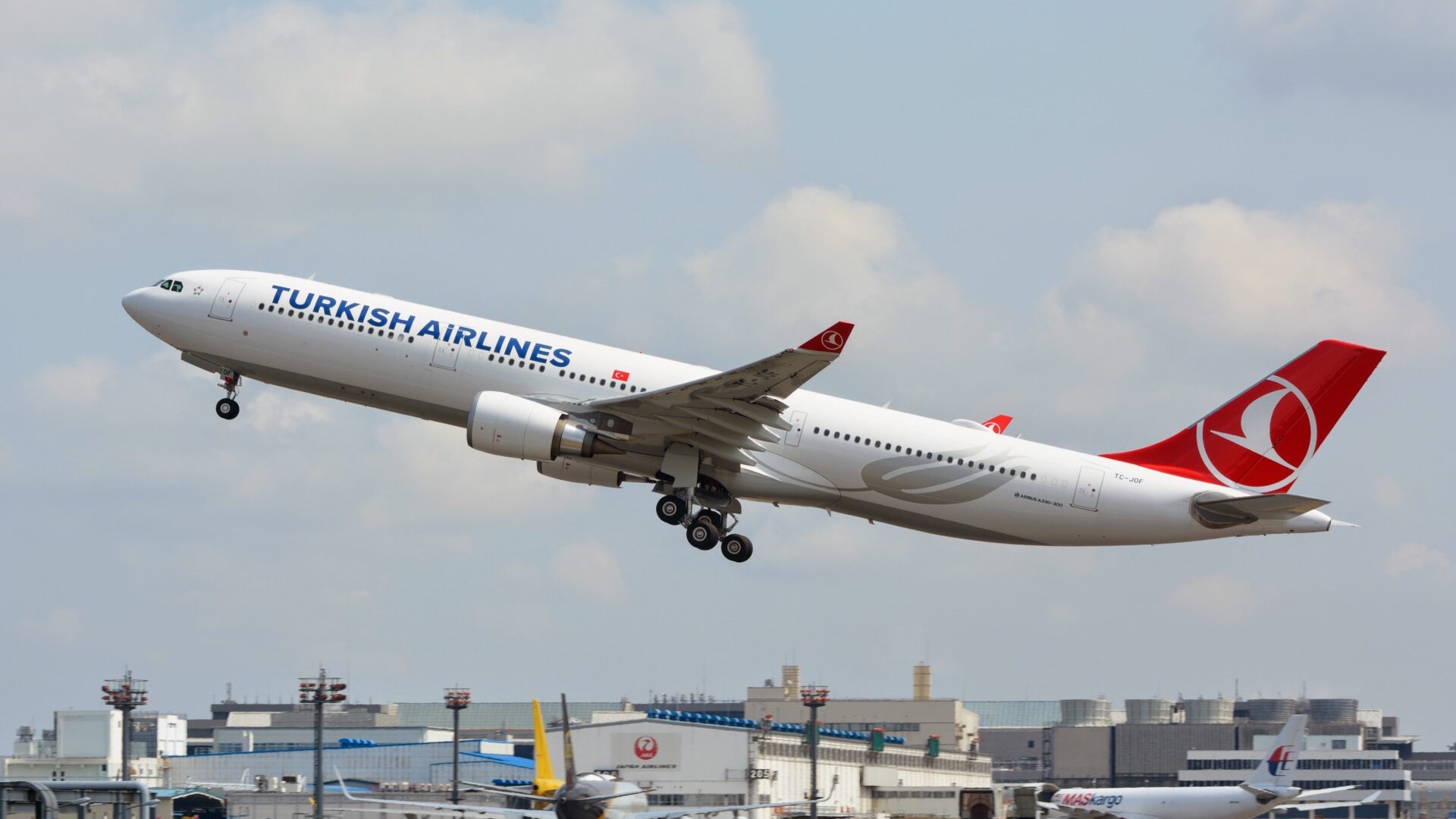
- Turkish Airlines has permanently removed Lusaka from its future schedule, ending the Lusaka–Dar es Salaam–Istanbul service that ran up to three times a week across a 6,267 km corridor.
- The exit comes as Zambia’s tourism arrivals run 6.6 percent below target, despite the country recording 2.19 million international arrivals in 2024, a 58 percent jump from 2023.
- Connectivity is economic infrastructure: it shapes the cost and convenience of reaching Zambia for investors, tourists and traders, and its loss should be read as an economic signal.
- The macro backdrop is favourable, with GDP growing 7.2 percent in the second quarter of 2026 and inflation easing to 6.2 percent in August, which makes the disconnect between stability and global demand harder to excuse.
- The policy answer is a National Air Connectivity Strategy that ties aviation to investment, tourism and trade, with priority routes, reviewed aviation costs and performance-based route incentives.
Turkish Airlines’ decision to take Lusaka off its future schedule is more than the loss of a route. It is a warning about the strength of the demand Zambia is generating for global markets, delivered by a carrier that operates one of the widest networks in Africa and knows precisely which destinations pay their way.
The Istanbul service reached Lusaka through Dar es Salaam, at up to three frequencies a week. That corridor covered roughly 6,267 km and plugged Zambia into Turkish Airlines’ global network, one stop from Europe, the Middle East and Asia. For investors scouting projects, tour operators building itineraries and traders chasing markets, it was one of the shorter paths into and out of Lusaka. Its removal closes that channel.
What the numbers say
The exit lands at an awkward moment for the tourism sector. Arrival numbers are running 6.6 percent below estimated targets, at the same time as the government pushes a billion-dollar tourism ambition built around the Holiday Yamu Loko campaign and a target of millions of visitors.
The longer arc still points up. Zambia recorded 2.19 million international tourist arrivals in 2024, a 58 percent increase on 2023. The Ministry of Tourism wants 2.5 to 3 million visitors this year and has set its sights on a billion-dollar tourism industry by 2031, as we reported in Zambia Tourism 2026: Billion-Dollar Target Meets Election. But demand that grows while connectivity shrinks is demand that leaks elsewhere. A traveller who cannot reach Lusaka conveniently spends their money in Nairobi, Addis Ababa or Johannesburg.
Why connectivity is economic infrastructure
Airlines are unforgiving accountants. A route survives only while the traffic, the fares and the cargo revenue justify the slot. When a carrier the size of Turkish Airlines writes a destination out of its future plans, it is publishing its verdict on the commercial demand that destination generates.
That verdict reaches further than aviation. For investors, connectivity determines the cost and the hassle of visiting a project site or meeting a partner. For tourism, it decides how many stops stand between a high-spending visitor and Victoria Falls. For trade, it sets the pace at which samples, contracts and cargo move. Domestic campaigns such as Holiday Yamu Loko can lift local travel, but they cannot substitute for the international gateways that bring in foreign spending.
There is also a regional lesson in the same neighbourhood. Dar es Salaam kept its place in the network; Lusaka lost it. The difference between a stopover and a destination is demand, and demand is something policy can influence.
The paradox to fix
The macroeconomic backdrop makes this easier to fix than usual. GDP grew 7.2 percent in the second quarter of 2026, and inflation fell to 6.2 percent in August. An economy growing at that pace, with prices that stable, should be an easier story to sell to foreign carriers and the investors who fly on them.
The task is converting stability into traffic: investment, tourism receipts, trade volumes, business travel and jobs.
A National Air Connectivity Strategy
The policy response should be direct: a National Air Connectivity Strategy that links aviation to investment, tourism and trade rather than treating it as a transport file. Its working parts are unglamorous.
First, identify priority routes, the corridors where investor and tourist demand is strongest, and negotiate with carriers on that evidence. Second, review airport charges, handling costs and fuel pricing at Kenneth Kaunda International Airport against regional peers, because airlines price these into every route decision. Third, strengthen tourism and conference marketing so that seat demand follows the campaigns. Fourth, develop air-cargo capacity, since horticulture, gemstones and light manufacturing all fly. Fifth, attract business travel through predictable schedules and connections. Sixth, consider targeted, performance-based route incentives, paid against delivered frequencies and carried passengers, not promised ones.
Conclusion
The objective should not be to bring Turkish Airlines back. The objective should be to build an economy in which global airlines compete to serve Lusaka because the demand is visible in their booking data.
Connectivity is not only about aircraft and airports. It is economic infrastructure, and losing it should be treated as an economic warning. Zambia has the growth numbers. The next step is making them show up at the departure gate.
WARNING! All rights reserved. This material and all other digital content on this website may not be reproduced, published, broadcast, rewritten, or redistributed, in whole or in part, without the prior express permission of The Zambian Economist. Where permission is granted, the content must be clearly credited to “The Zambian Economist,” with “www.zambianeconomist.com” prominently displayed.
WhatsApp: +260775574228 | Email: info@zambianeconomist.com © 2026 The Zambian Economist.
Work With The Zambian Economist: Advertise With Us | List With Us | Submit an Article