Half the world’s countries have degraded freshwater ecosystems, and a strengthening El Niño is about to test every major river from the Zambezi to the Nile. Dr Kelvin Kamayoyo, Technical Advisor for African Rivers, sets out what is at stake for Zambia.
By The Zambian Economist Analyst | Analysis by Dr Kelvin Kamayoyo, Technical Advisor for African Rivers | 4 October 2026
KEY TAKEAWAYS
- Freshwater ecosystems are degraded in half the world’s countries, while rivers supply drinking water to more than two billion people (UNEP, 2023; WWF, 2022).
- A strengthening El Niño threatens Zambia directly: the Zambezi, Kafue and Luangwa rivers face severe low flows that would hit hydropower generation and rural water supply at the same time.
- Artisanal and small-scale gold mining releases an estimated 1,400 tonnes of mercury into the environment every year, the largest human-made source of mercury pollution globally (UNEP, 2023).
- Mercury accumulates in fish and crosses the placenta in pregnant mothers, causing irreversible neurological damage in unborn children (WHO, 2021).
- The fix Dr Kamayoyo proposes is concrete: regulate artisanal mining, enforce effluent standards, restore floodplains and invest in early warning systems before the floods and droughts arrive.
“No river is immune,” said Dr Kelvin Kamayoyo, Technical Advisor for African Rivers. From the Congo to the Zambezi, from the Ganges to the Thames, and from the Nile to the Amazon, the world’s rivers are being poisoned by sewage, mining and toxic chemicals every day. A river that supplies drinking water to millions can also carry mercury, effluent and farm runoff in the same channel. Now a compounding threat is arriving on top of the pollution: the super El Niño.
Climate science is settled on the mechanism. The El Niño-Southern Oscillation is the main driver of year-to-year climate variability, and a strong event intensifies the extremes, devastating drought in some regions and catastrophic floods in others (IPCC, 2023; NOAA, 2023). The impact on rivers is direct. Low flows make navigation impossible and cut off remote villages for months. Floods flush stored pollution back into water intakes. This publication has already warned that the world is hotter and El Niño is stronger; this analysis extends that warning to the rivers themselves.
What a super El Niño does to Zambia’s rivers
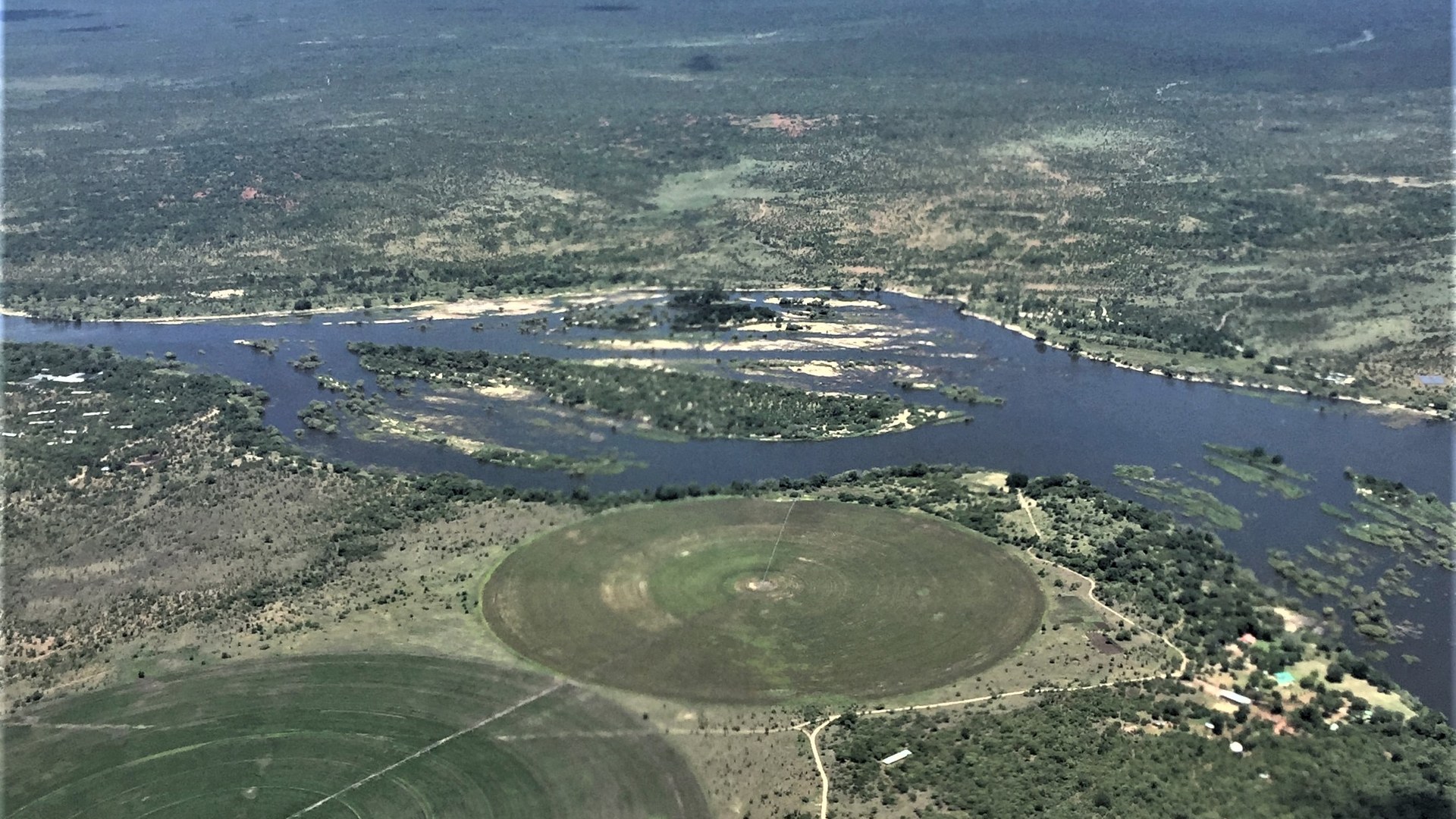
Zambia sits near the top of the exposure list. The Zambezi, Kafue and Luangwa rivers face severe low flows and drying, threatening hydropower and rural water supply. Roughly four-fifths of Zambia’s electricity is hydro-generated, most of it from the Zambezi and Kafue catchments. A sustained drop in river levels is therefore not only a water story, it is a power story and a mining story, because the Copperbelt’s mines and smelters draw on the same grid. The last major drought-induced generation shortfall, in 2024, forced nationwide load management and cut mine output.
The rest of the region reads the same way. In South Africa, the Orange and Limpopo rivers are projected to see prolonged drought and reduced recharge (IPCC, 2023). Across the Democratic Republic of Congo, Angola, Kenya, Uganda, Chad, Somalia, Algeria, Nigeria, Guinea-Bissau, Lesotho and Madagascar, the Congo, Nile tributaries and Niger rivers face a dual threat of erratic flooding followed by extended drought, disrupting fisheries and floodplain agriculture (World Bank, 2023). In Burkina Faso, Mauritania and Senegal, the Senegal and Niger rivers risk drying, which accelerates desertification. In Egypt, the Nile, the lifeline of over 100 million people, faces reduced upstream inflow and increased evaporation (UNEP, 2023).
The pattern is global. In Brazil, Peru, Bolivia and Cuba, the Amazon, Madeira and Orinoco rivers face drought severe enough to strand river-dependent communities, alternating with storms that cause destructive flooding (Marengo et al., 2021). In the United States, El Niño is expected to trigger flooding in the south of the country and drought in the north, loading more stress onto the already strained Mississippi and Colorado rivers (NOAA, 2023). In the United Kingdom, the Thames faces increased winter storm flooding, while the Rhine, Danube, Volga and Ebro are exposed to extreme high flows and pollution flushing (EEA, 2023). In Iraq, the Tigris and Euphrates face critical low flows. In South Asia and China, the Ganges, Brahmaputra, Mekong, Yangtze and Yellow rivers are expected to see intense monsoon flooding, landslides and contamination of clean water sources (IPCC, 2023).
The mercury already in the water
Before the climate stress arrives, the poison is already there. Illegal gold mining dumps tonnes of toxic mercury into rivers and water bodies each year. Artisanal and small-scale gold mining is the largest human-made source of mercury pollution globally, releasing an estimated 1,400 tonnes annually (UNEP, 2023). That mercury methylates in river sediments and concentrates in fish as it moves up the food chain, contaminating the water, the wildlife and the main protein source for communities that depend on the river (Esdaile and Chalker, 2018).
The health consequence is specific and permanent. In pregnant mothers, mercury crosses the placenta into the growing baby and causes irreversible neurological damage (WHO, 2021). For fishing communities on the Zambezi, the Kafue and the Congo, this is not an abstraction. It is the reason a mother can no longer safely eat the fish her family catches.
Industrial effluent closes the tap
Industrial waste compounds the problem. In China, India, Bangladesh, Nigeria, Indonesia, Russia, Italy, Germany and Spain, untreated industrial effluent, sewage and agricultural runoff have degraded over 50 percent of monitored river stretches (FAO, 2022; EEA, 2023). The Zambezi, Congo, Niger, Nile, Ganges, Amazon and Thames are all documented cases where industrial and urban pollution has compromised drinking water safety and aquatic life (WWF, 2022).
For Zambia, the Kafue is the clearest case. The river carries effluent from the Copperbelt and Central provinces, serves irrigation schemes that feed Lusaka, and runs through the Kafue Flats, where fisheries support thousands of households. Sugar estates, mining discharge and municipal sewage all share one channel. An El Niño that concentrates those pollutants in lower flows, then flushes them downstream in floods, tests every user at once.
What can still be done
Dr Kamayoyo’s assessment is sobering about the diagnosis but not about the prognosis. Rivers recover if they are protected. His prescription has four working parts: coordinated regulation of artisanal mining, strict enforcement of industrial effluent standards, restoration of floodplain buffers that slow and filter water, and early warning systems for El Niño-induced floods and droughts, installed before the season turns, not after.
None of this works as a solo effort, he argues. Community monitoring, satellite transparency and strict enforcement against mercury use in mining are what allow ordinary citizens to expose pollution where it happens. This runs in the same direction as his earlier argument that trees are the nerves of planet earth: catchment protection, forest cover and river health are one system, and his call for every business to plant trees is a call to protect the same watersheds that keep rivers flowing through dry years. His broader framing of Zambia’s environmental and economic positioning, including why Zambia must engage the region on its own terms, treats natural capital as a national asset rather than a background concern.
The closing argument is simple. Rivers are lifelines, food baskets, transport corridors and cultural heritage. Protecting them is protecting humanity.
For comments, contact the researcher and author on email: kamayoyokm@gmail.com
References
EEA (2023) European Rivers and Lakes Under Pressure from Pollution and Climate Change. Copenhagen: European Environment Agency. | Esdaile, L.J. and Chalker, J.M. (2018) ‘The mercury problem in artisanal and small-scale gold mining’, Chemistry – A European Journal, 24(27), pp.6905-6916. | FAO (2022) The State of the World’s Forests and Freshwater 2022. Rome: Food and Agriculture Organization. | IPCC (2023) Climate Change 2023: Synthesis Report. Geneva: Intergovernmental Panel on Climate Change. | Marengo, J.A. et al. (2021) ‘Extreme drought and flooding in the Amazon associated with ENSO’, Frontiers in Climate, 3, p.664295. | NOAA (2023) El Niño and its Impacts on Global Weather Patterns. Washington: National Oceanic and Atmospheric Administration. | UNEP (2023) Global Mercury Assessment 2023 and Global Environment Outlook. Nairobi: United Nations Environment Programme. | WHO (2021) Mercury and Health: Fact Sheet on Exposure and Maternal Risk. Geneva: World Health Organization. | World Bank (2023) Africa Water Resources and Climate Risk Report. Washington: World Bank. | WWF (2022) Living Planet Report 2022: Freshwater Systems in Crisis. Gland: WWF.
WARNING! All rights reserved. This material and all other digital content on this website may not be reproduced, published, broadcast, rewritten, or redistributed, in whole or in part, without the prior express permission of The Zambian Economist. Where permission is granted, the content must be clearly credited to “The Zambian Economist,” with “www.zambianeconomist.com” prominently displayed.
WhatsApp: +260775574228 | Email: info@zambianeconomist.com © 2026 The Zambian Economist.
Work With The Zambian Economist: Advertise With Us | List With Us | Submit an Article