
Zambia’s economic position on 14 August 2026: the ledger, the constraints, and the decisions that cannot wait.
On 14 August, whoever has won the previous day’s ballot will inherit a Zambian economy that looks very different from the one handed over in August 2021, but not in the simple, linear way either campaign will describe it.
The stabilisation is real. So is the slippage now underway. Both statements are true at the same time, and any honest account of what the next administration takes on has to hold them together. What follows is that account: the ledger as the numbers actually show it, drawn from the IMF, the African Development Bank, the Zambia Statistics Agency, the Ministry of Finance and National Planning, and the Bank of Zambia.
1. The stabilisation happened
Start with what is not in dispute.
Zambia entered this cycle in sovereign default. It exits with public external debt largely restructured. As of the IMF’s May 2026 assessment, restructuring agreements cover approximately 94 per cent of the restructuring perimeter: the near-complete resolution of a default that began in November 2020 and consumed most of the diplomatic and technical bandwidth of the last five years.
The macro indicators moved with it:
- Public debt fell to 87.6 per cent of GDP in 2025, down sharply from 101 per cent in 2024, according to the African Development Bank’s African Economic Outlook 2026.
- International reserves reached USD 6.4 billion, equivalent to about 4.4 months of import cover, against a position in 2021 where reserves were measured in weeks of anxiety.
- Inflation fell to 6.6 per cent in May 2026, the lowest reading since February 2018 and a fifth consecutive month of deceleration, landing inside the Bank of Zambia’s 6-8 per cent target band for the first time in years.
- The policy rate was cut to 13.5 per cent in February 2026, the second consecutive reduction, on a faster-than-forecast disinflation path.
- The kwacha strengthened substantially through the year, supported by copper receipts and restructuring progress.
- The current account deficit narrowed to 1.0 per cent of GDP in 2025 from 4.4 per cent in 2024, and is projected to swing into surplus on higher copper earnings.
The Extended Credit Facility that anchored this (approved in August 2022 at around USD 1.3 billion and ultimately delivering roughly USD 1.7 billion) completed its sixth and final review on 27 January 2026. Every review was passed. That is not a trivial record; a great many programmes in the region do not finish.
This is the inheritance side of the ledger that is genuinely strong. A country that could not borrow, could not price risk, and could not plan beyond the next payment now can do all three.
2. The six per cent that is not finished
Ninety-four per cent is not one hundred. The residual commercial creditors (a group that includes roughly USD 1.5 billion owed to non-Chinese private banks, plus Chinese commercial exposures outside the official framework) have not been fully resolved on comparable terms. The World Bank flagged in 2024 that final resolution required exactly this, and the IMF’s Global Sovereign Debt Roundtable progress report of April 2026 confirms Zambia sits alongside Ghana and Ethiopia in the category of cases now involving only residual commercial creditors, with full implementation of bilateral agreements under the official memoranda still incomplete in most such cases.
More consequentially: the Debt Sustainability Analysis reclassified Zambia’s debt as sustainable (a genuine upgrade from in debt distress) while simultaneously retaining a high risk of both overall and external debt distress. Those two findings are not in tension. They mean the trajectory works under the programme’s assumptions and has almost no room for a shock.
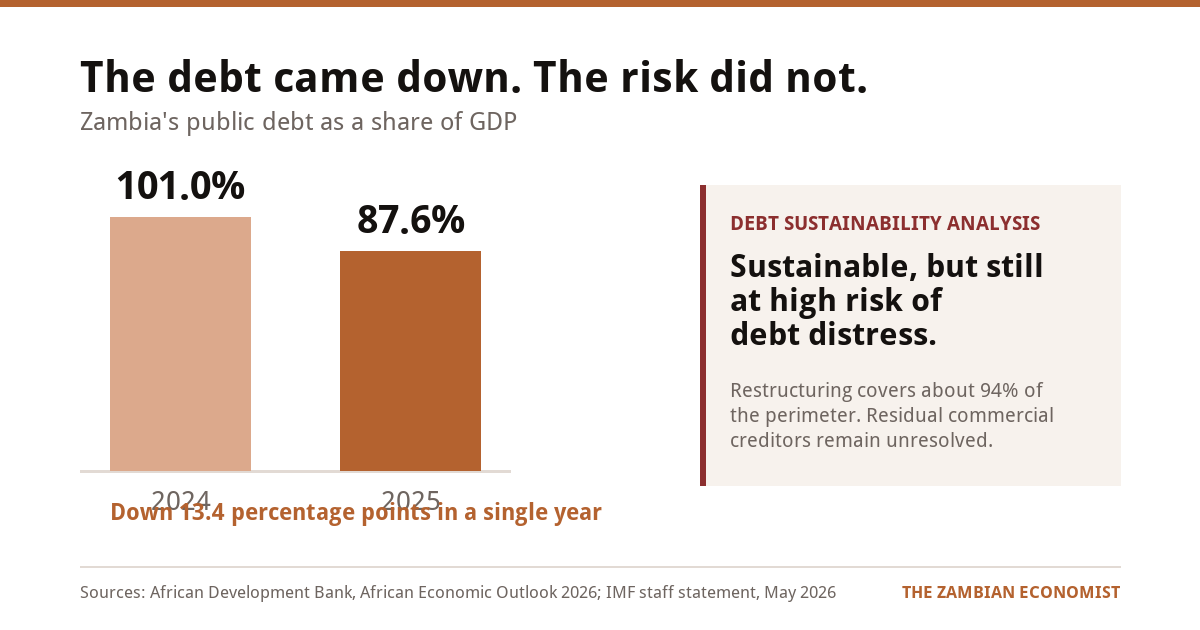
That is the operative constraint on the next government. Not the debt stock as such, but the absence of buffer.
3. Copper: the engine, and its ceiling
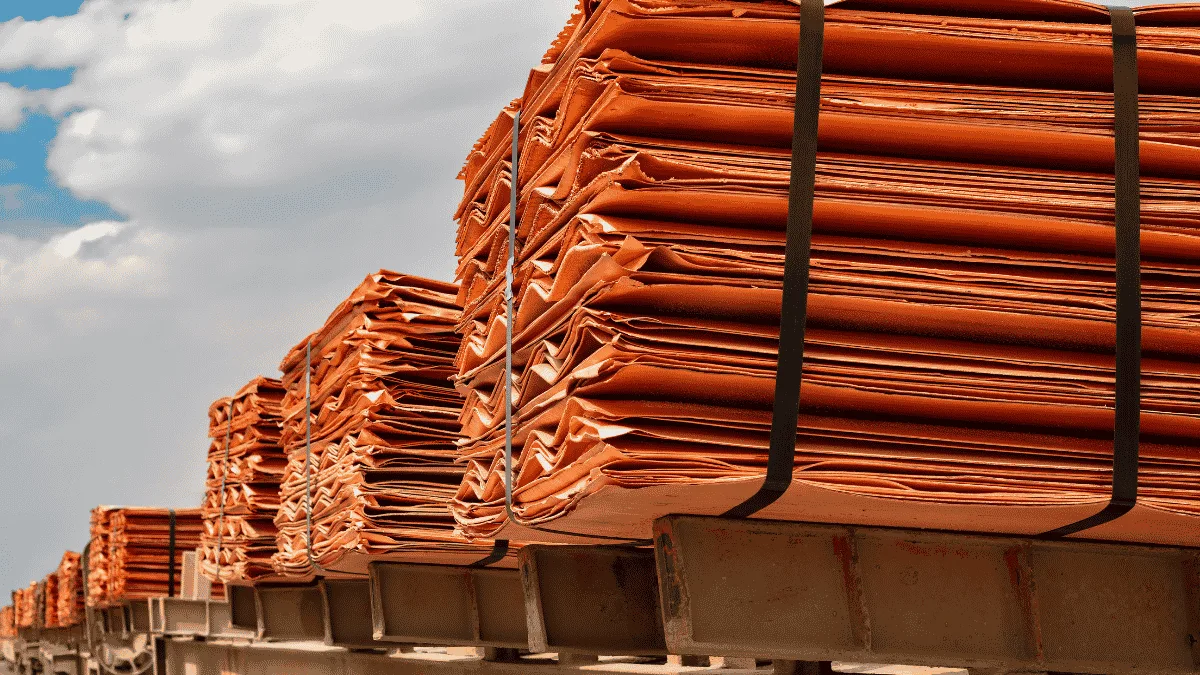
Copper delivered. Production reached 890,346 tonnes in 2025, an increase of about 8 per cent and a record, with First Quantum’s Kansanshi and Sentinel, Barrick’s Lumwana, Vedanta’s Konkola and IRH-backed Mopani as the principal contributors. Copper accounts for over 70 per cent of export earnings and is the single largest determinant of the kwacha’s direction.
The government’s stated targets are more than one million tonnes in 2026 and three million tonnes by 2031. The 2025 outturn fell roughly 110,000 tonnes short of the one-million capacity target, meaning existing operations ran at about 89 per cent of stated capacity. Global fundamentals are supportive: a projected refined copper deficit in 2026 and price forecasts reaching towards USD 11,900 per tonne.
Two cautions belong in the ledger. First, the three-million-tonne target requires greenfield capital at a scale Zambia has not previously absorbed: KoBold’s Mingomba, at a planned USD 2.3 billion and over 300,000 tonnes annually, is the flagship, and shaft construction only begins in 2026. Second, the IMF revised 2026 growth downward in part because of softer mining output. The record year is not automatically repeated.
The structural argument for reducing this dependence is set out in our earlier analysis, Beyond Copper: How Economic Diplomacy Can Drive Zambia’s Economic Diversification, and the investment-climate conditions for delivering the expansion pipeline in Politics and the Economy in Zambia: How Policy Certainty Influences Investment, Employment and Growth.
4. Agriculture: two record seasons, and a warning already issued
The 2025/26 Crop Forecasting Survey, released by ZamStats and the Ministry of Agriculture in May 2026, projects maize output of 4.94 million tonnes: the highest ever recorded, a 27.8 per cent increase on the previous season, itself a record. Small- and medium-scale farmers account for around 94 per cent of it. The national food balance sheet for the 2026/27 marketing season shows an overall cereal and tuber surplus of roughly 1.48 million tonnes.
Two qualifications the campaign coverage tends to drop. First, the surplus is not uniform: the same balance sheet records deficits in rice (57,354 tonnes), wheat (358,318 tonnes) and cassava flour (644,954 tonnes). Zambia is a maize surplus country, not a food-self-sufficient one.
Second, and more immediately: at the same dissemination event, the Secretary to the Cabinet cautioned that meteorological projections indicate a higher likelihood of below-average rainfall in the 2026/27 season. The next government’s first agricultural season may not resemble its predecessor’s last two. Given that the 2023/24 El Niño drought was the proximate cause of both the food and the electricity crises, this is the single most important forward-looking line in the survey.
5. Energy: the constraint that decides everything else
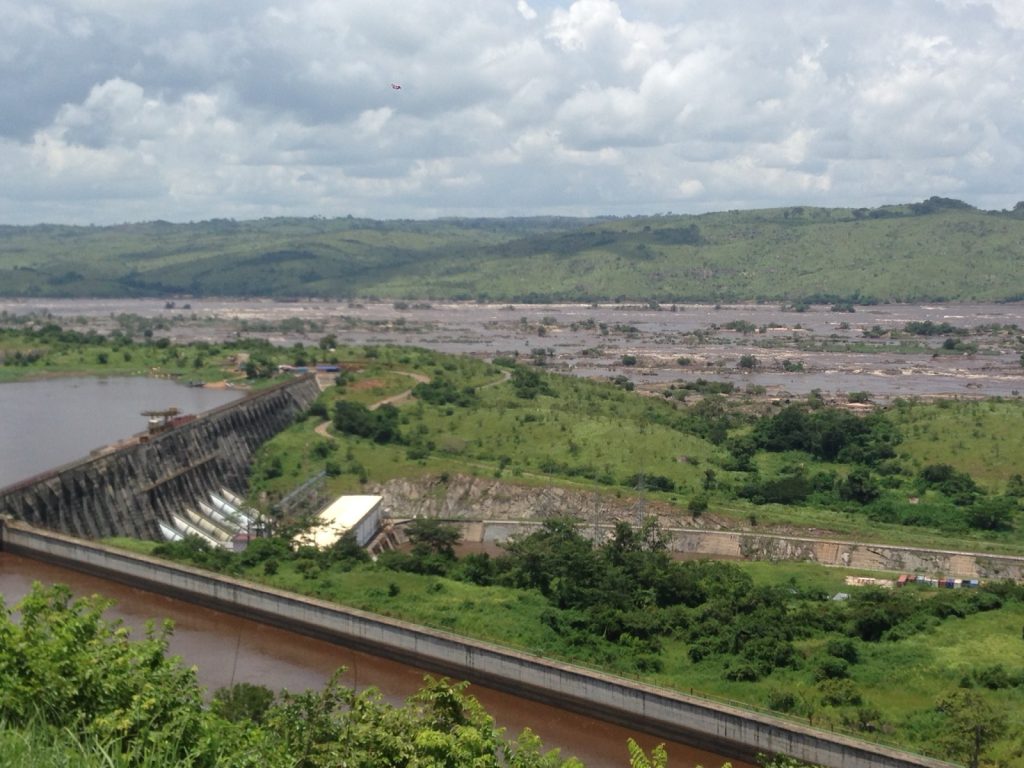
Zambia’s installed generation capacity stands at roughly 3,986 MW, of which approximately 85 per cent is hydro. That structural concentration is the country’s central economic vulnerability, and it has now been exposed twice in a decade, most severely in 2023/24, when Lake Kariba’s usable volume fell below 3 per cent of normal, producing outages of up to 21 hours a day and forcing ZESCO to ask mining companies to curtail consumption by as much as 40 per cent.
The response has been substantial. The Ministry of Energy reported 29 public and private projects totalling 2,510 MW under construction for commissioning across 2025-26, including Maamba Phase II (300 MW), CEC Itimpi II (136 MW) and ZESCO Mansa Solar (50 MW), with 347 MW already added to the grid. The move to an open-access regime ended the single-buyer model and brought independent power traders and Southern African Power Pool imports into the market. In June 2026, ZESCO’s Managing Director stated the supply situation was stable and that a return to nationwide load management was not expected.
The honest framing: the crisis was managed, and the diversification has begun, but 85 per cent hydro dependence has not been retired. It has been supplemented. A below-average rainfall season would test that distinction directly, and the mining expansion the fiscal projections depend on cannot be powered by a grid that fails in dry years.
6. Where the fiscal position is slipping
This is the part of the inheritance that has deteriorated in the last six months, and it deserves plain statement.
The 2026 budget, presented in September 2025 and approved in December, totalled K253 billion with a fiscal deficit target of 2.1 per cent of GDP, domestic revenue of 22.3 per cent of GDP, and net new domestic borrowing capped at K21.6 billion. It was, as UNDP and ZIPAR noted at the time, a consolidation budget, and one in which over 36 per cent of spending was committed to debt service and general public services before a single classroom or clinic was funded.
That framework has since weakened. The IMF’s May 2026 statement projects the primary surplus falling to 1.1 per cent of GDP in 2026, against 3.8 per cent projected at the ECF’s sixth review, and against 3.1 per cent actually delivered in 2025. The Fund attributes the deterioration to a specific and identifiable list:
- weaker tax collection, including the suspension of fuel VAT and excise duties;
- pre-election spending pressures;
- a civil service wage adjustment;
- agricultural subsidy overruns of approximately 1.3 per cent of GDP;
- significant fiscal risks originating from the Food Reserve Agency;
- persistent underperformance in domestic VAT collection, with a growing refund backlog that is itself suppressing taxpayer compliance.
Two policy decisions compound this. The fuel VAT zero-rating and excise suspension, approved by Cabinet from 1 April 2026 in response to global oil disruption, cushioned pump prices at direct cost to revenue. Separately, the suspension of the TAZAMA open-access fuel procurement framework removed a mechanism the IMF assessed had cut fuel import premiums by roughly half; the Fund has urged a return to transparent monthly auctions.
The pattern here is familiar to anyone who followed the decade to 2021: commitments made outside the budget, carried as arrears and commercial obligations, regularised later by supplementary appropriation, and ultimately settled either through debt monetisation that puts a floor under inflation or through adjustment that cuts the services the spending was meant to fund. We examined the mechanics of this in Balancing Politics and Fiscal Discipline, and the affordability of the competing platforms in The Economics of Election Promises: Can Zambia Afford Competing Political Manifestos?
The ECF anchor is gone. Successor programme discussions have been deferred until after the election. The next government therefore takes office in the window between one framework ending and another not yet negotiated, which is precisely when fiscal discipline is tested and precisely when creditors are watching for evidence that the reforms were institutionalised rather than merely externally imposed.
7. Growth without diffusion
Forecasts for 2026 have diverged noticeably, and the spread itself is informative. The Ministry of Finance targets at least 6.4 per cent. The AfDB projects 5.0 per cent. The IMF revised down to 4.3 per cent, citing softer mining, energy constraints and normalisation after an exceptional harvest. The AfDB also revised its 2025 estimate down to 3.8 per cent (the same as 2024) on underperformance in ICT, trade and finance, having initially estimated 5.2 per cent.
Against that, Q1 2026 recorded 7.7 per cent growth, driven overwhelmingly by agriculture.
The household picture moves more slowly than the headline. Extreme poverty stood at 48 per cent in 2025, against 49 per cent in 2024. Nominal GDP per capita remains around USD 1,300-1,800 depending on the source and measure. Unemployment estimates range from 10.3 per cent to nearly 13 per cent depending on the series used.
This is the gap that will decide the election and then define the term: macroeconomic recovery that is genuine at the aggregate level and thin at the household level. Restructured debt does not appear in a household budget. Reserve cover does not lower the price of mealie meal. A copper record accrues first to a small number of large, largely foreign-owned operations. The disinflation is real and is felt, but from a base that had already repriced.
Neither manifesto has yet explained convincingly how aggregate stabilisation converts into household income at speed. That is the actual policy question of this election, and it connects directly to the external strategy discussed in Repositioning Zambia in the Global Economy.
8. The ledger
Assets on 14 August 2026: Debt restructured to roughly 94 per cent of perimeter; debt sustainable under the DSA; reserves at USD 6.4 billion and 4.4 months’ cover; inflation inside the target band; policy rate easing; a completed IMF programme with a full review record; two consecutive record maize harvests and a substantial strategic carry-over stock; record copper output with a credible expansion pipeline; 347 MW added and 2,510 MW under construction; a functioning open-access power market.
Liabilities: Residual commercial creditors unresolved; high risk of debt distress retained; over a third of the budget pre-committed to debt service and general public services; primary surplus projected to fall by two-thirds in a single year; agricultural subsidy overruns at 1.3 per cent of GDP and unquantified FRA exposure; VAT administration underperforming with a growing refund backlog; fuel tax relief and TAZAMA suspension both eroding revenue; 85 per cent hydro dependence intact; below-average rainfall forecast for the coming season; no successor IMF arrangement in place; extreme poverty near half the population.
The binding constraint: there is no buffer. The DSA says as much explicitly. A copper price correction, a poor rain season, or an unfunded post-election spending commitment are not independent risks: any one of them transmits directly to the exchange rate, then to inflation, then to the debt path.
What has to be decided early
Three things will not wait for a honeymoon period.
The successor IMF arrangement. Discussions were deferred to after the election by mutual agreement. The terms negotiated in the first months will set the fiscal envelope for the full term. A government that arrives with unfunded campaign commitments negotiates from a materially weaker position.
The FRA and the subsidy structure. Agricultural overruns at 1.3 per cent of GDP, arrears to agro-dealers, and a Food Reserve Agency whose purchase obligations for the 2026/27 season are not yet priced represent the clearest identified fiscal risk on the books. This is a solvable problem that becomes unsolvable if deferred.
Revenue administration. Domestic revenue at 22.3 per cent of GDP with structural weakness at the ZRA and a VAT refund backlog suppressing compliance is the quietest item on this list and the most consequential. Every other ambition (social spending, capital investment, debt reduction) is downstream of it.
Zambia’s last five years produced one of the more consequential economic recoveries on the continent. That is a defensible statement and the data supports it. It is also true that the recovery was built on an external anchor that no longer exists, that its gains are concentrated where they are hardest for households to feel, and that its margin for error is close to zero.
Whoever governs from 14 August inherits both facts. The question is not whether they acknowledge the first. It is whether they have a plan for the second.
The Zambian Economist publishes independent economic analysis. Figures in this article are drawn from the IMF (May 2026 staff statement and Global Sovereign Debt Roundtable progress report, April 2026), the African Development Bank African Economic Outlook 2026, the Zambia Statistics Agency and Ministry of Agriculture 2025/26 Crop Forecasting Survey, the Ministry of Finance and National Planning, the Bank of Zambia, and the 2026 Annual Borrowing Plan. Where sources differ, the divergence is noted in the text.
Further reading: our Zambia Economy 2026 series unpacks the numbers behind this analysis – inflation, copper and the kwacha, the debt-for-energy swap and the power deficit.
Primary sources: Bank of Zambia · Zambia Statistics Agency
Related coverage: on the campaign trail, the President’s Siavonga rally on development gains and cost of living; on social spending, the school health programme reaching 1.2 million learners.
This piece is part of our series on the economics of Zambia’s 2026 election.