By Zambian Economist Analyst
Three very different foreign investors are driving Zambia’s copper recovery, and they grew at very different speeds in 2025. Here is what each is betting on, and why the mix matters for the 3-million-tonne target.
Three Names, Three Different Stories
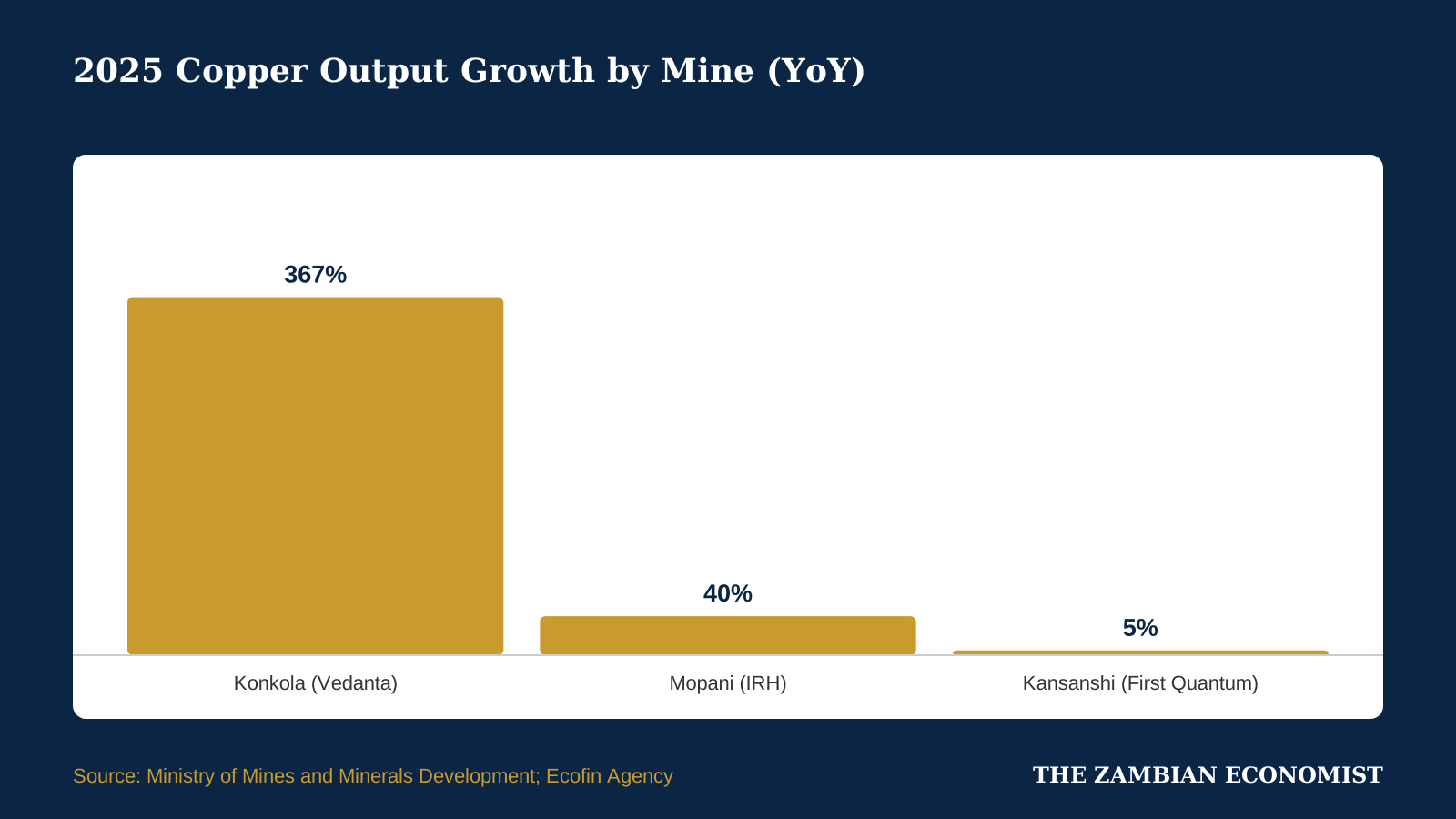
Zambia’s 2025 copper growth was not evenly spread. Vedanta’s Konkola Copper Mines recorded a fourfold increase, output up 367% year on year to 80,215 tonnes, as the operation continued recovering from years of underinvestment following Vedanta’s return to control of the asset. Mopani Copper Mines, majority-owned by the United Arab Emirates’ International Resources Holding, grew 40%. Kansanshi, run by Canada’s First Quantum Minerals, the company whose Zambian assets account for roughly half the country’s total copper output, grew a comparatively modest 5%.
Why the Ownership Map Matters
Investors watching the 13 August election are tracking whether a second Hichilema term can convert FDI commitments into actual production gains. Zambia’s copper sector is unusually internationalised: foreign currency inflows tied to FDI are coming from Canada, Australia, the UK, China and the US simultaneously, each bringing a different operating model and risk appetite to the Copperbelt.
What Each Investor Is Betting On
Vedanta’s bet is a turnaround story: Konkola had been starved of capital for years before the group regained operational control, and the 2025 numbers are the clearest evidence yet that the recovery is real. First Quantum’s bet is scale and continuity, expanding Kansanshi and its Sentinel mine, which alone produced roughly 396,000 tonnes in 2025, rather than chasing a rapid turnaround. Barrick’s presence in the wider region and continued interest in Zambian exploration adds a third profile: a major diversified miner treating Zambia as part of a longer-dated portfolio play rather than a single-asset bet.
| Operation | Owner | 2025 output | YoY change |
|---|---|---|---|
| Konkola | Vedanta Resources (UK/India) | 80,215 tonnes | +367% |
| Mopani | International Resources Holding (UAE) | — | +40% |
| Kansanshi | First Quantum Minerals (Canada) | — | +5% |
| Sentinel | First Quantum Minerals (Canada) | ~396,000 tonnes | — |
Investor and Policy Implications
Government has said it has no plans to change mining tax rates, which keeps the fiscal environment predictable for all three investor profiles. The more consequential variable is implementation of the local-content bill and, above all, power supply, which industry sources put at the centre of whether Zambia can convert its FDI pipeline into the tripled output it has promised by 2031.
Key Takeaways
- Konkola (Vedanta), Mopani (IRH) and Kansanshi (First Quantum) posted very different 2025 growth rates: 367%, 40% and 5% respectively.
- First Quantum’s Zambian assets, including Sentinel and Kansanshi, account for roughly half of national copper output.
- Zambia’s copper FDI is drawing capital from Canada, the UK, the UAE, Australia, China and the US simultaneously.
Related reading: Zambia’s Copper Engine: From 890,000 Tonnes to a 3-Million-Tonne Ambition and Beyond Copper: How Economic Diplomacy Can Drive Zambia Economic Diversification
See also: What Investors Are Watching as Zambia Heads to the Polls.