The Non-governmental Gender Organisations’ Coordinating Council has welcomed the reopening of the refurbished Radiotherapy and Imaging Section at the Cancer Diseases Hospital in Lusaka, describing it as a major gain for women and low-income patients who have struggled to obtain timely cancer treatment.
NGOCC Board Chairperson Beauty Katebe said the recommissioned facility ends a closure of more than five years that left many patients facing lengthy treatment delays, expensive referrals abroad or no access to potentially life-saving radiotherapy.
Restored cancer unit can treat 60 patients daily
According to NGOCC, the restored unit can treat up to 60 patients each day. Ms Katebe said the capacity should improve access to specialised cancer care while reducing the financial burden on patients and their families.
For households, the cost of cancer extends beyond hospital bills. Families can lose income while caring for patients, pay for transport and accommodation in Lusaka, or incur substantial costs when treatment is sought outside Zambia. Restoring local radiotherapy therefore has both a health and household-economy benefit.
Why the reopening matters particularly for women
Ms Katebe said women account for more than 60 per cent of cancer patients in Zambia, with cervical and breast cancers continuing to claim many lives. NGOCC has previously highlighted the high share of women among patients at the Cancer Diseases Hospital.
The organisation said access to radiotherapy and imaging services within Zambia removes a major barrier to timely treatment, particularly for women with low incomes and those travelling from outside Lusaka.
Ms Katebe noted that the first patient treated using the restored equipment was a woman with cervical cancer. She described this as an immediate demonstration of the investment’s importance.
NGOCC calls for staffing, maintenance and affordable care
While welcoming the investment, NGOCC urged the Government to protect it through adequate staffing, routine maintenance of specialised equipment, affordable treatment and stronger patient-referral systems.
These safeguards are critical because advanced cancer equipment requires trained oncologists, radiographers, medical physicists, engineers and reliable supplies. A modern facility can only deliver sustained value when equipment uptime, staffing and patient pathways are managed together.
NGOCC also called for wider cervical and breast cancer screening services across Zambia. Screening can identify disease earlier, when treatment may be more effective and less costly, but access remains uneven for women in rural and low-income communities.
“No woman should be denied timely and quality healthcare because of her location or economic status,” Ms Katebe said in the statement.
US$31 million refurbishment financed locally
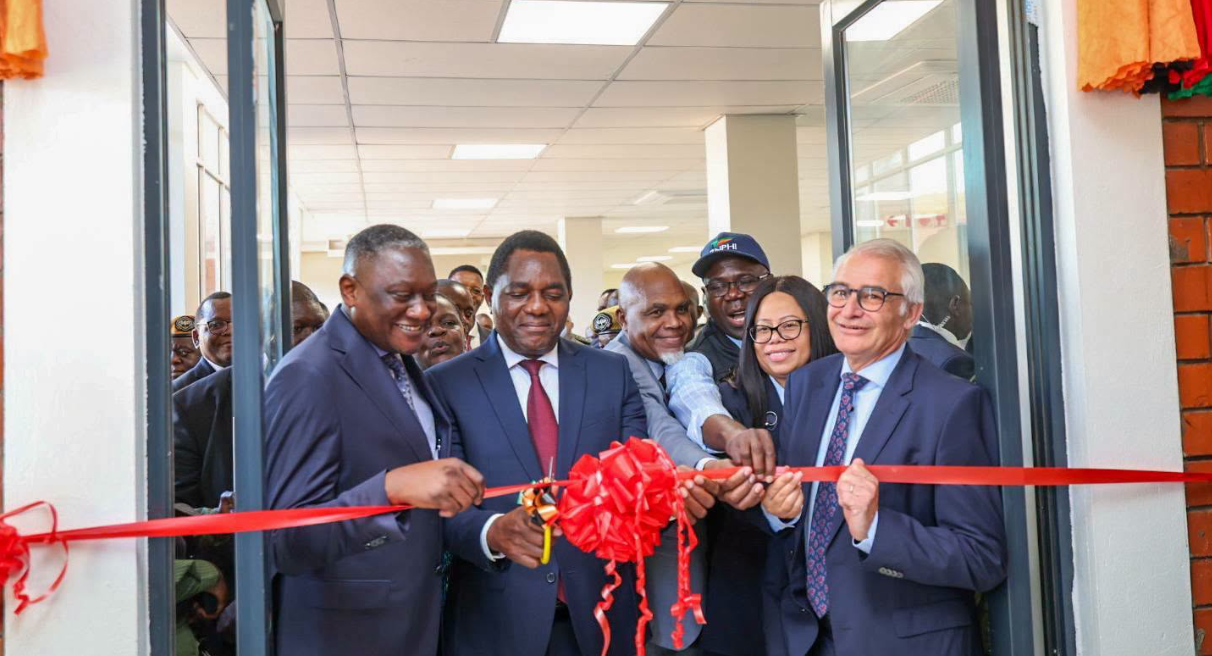
President Hakainde Hichilema commissioned the advanced cancer-treatment equipment at the Cancer Diseases Hospital, saying the refurbished radiotherapy and imaging unit cost US$31 million and was financed entirely from local resources.
The President said the development would reduce the need for patients to travel abroad, including to India, for specialised treatment. He described Zambia as the third African country, after South Africa and Egypt, to install the advanced equipment. That ranking was presented by the President at the commissioning.
The refurbishment follows an earlier agreement valued at about US$30 million to rehabilitate, re-equip and expand the hospital’s radiotherapy and imaging capacity, including a maintenance component.
Ndola and Livingstone cancer hospitals planned
President Hichilema said the Government is constructing two additional Cancer Diseases Hospitals in Ndola and Livingstone. If completed and adequately staffed, the facilities could reduce the distance patients must travel and ease pressure on the Lusaka hospital.
The President also referred to plans for a Medical Tourism City near Kenneth Kaunda International Airport, intended to accommodate specialised treatment centres and support Zambia’s ambition to become a regional healthcare destination within the Southern African Development Community.
That ambition will depend on more than equipment. Zambia will need dependable maintenance, specialist retention, transparent pricing, strong clinical governance and referral systems capable of serving both local and regional patients without displacing domestic access.
Whether the US$31 million was well spent will show up in fairly ordinary numbers over the next few years: shorter waiting times, more completed treatment cycles, fewer patients forced abroad, and machines that stay running rather than breaking down. Publishing those figures regularly would do more to prove the investment’s worth than any commissioning ceremony.
Read our main report on how Zambia’s Cancer Diseases Hospital reopened its radiotherapy wing after a five-year closure. Explore more public-health reporting in our Health & Lifestyle silo and related institutional coverage under Leadership & Governance.
Source: NGOCC statement and remarks attributed to President Hakainde Hichilema at the commissioning. Image supplied to The Zambian Economist.
Grow with The Zambian Economist
Put your organisation, opportunity or expertise in front of Zambia’s business and policy audience:
- List your company in our business directory.
- Advertise with us and reach decision-makers, investors and entrepreneurs.
- Discover business events or submit your event for listing.
- Become a contributor by submitting an original article.