By Zambian Economist Analyst
The National Road Fund Agency (NRFA) collected K2.1 billion in toll revenue between January and June 2026, funding road construction, rehabilitation and maintenance across the country, the Agency has said.
NRFA Public Relations Manager Alphonsius Hamachila told ZNBC News that the funds collected in the first half of the year have since been disbursed towards road projects and related activities nationwide.
Where the money came from
Of the K2.1 billion collected, K1.3 billion came from the Agency’s 26 toll gates, while K874 million was collected from ports of entry, the border posts where cross-border traffic pays to use Zambia’s road network. A further K4.8 million came through the Agency’s newly introduced mobile money toll payment platform, still a small share of total collections but a signal of where NRFA wants the payment mix to move.
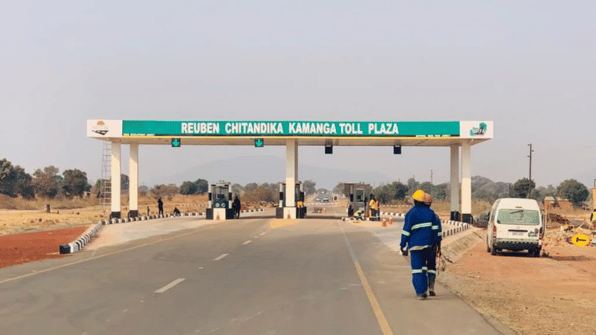
Toll gates remain the dominant revenue stream, generating roughly six in every ten kwacha collected, with ports of entry accounting for most of the balance. Mobile money, though promising, still represents a fraction of a percent of total collections, a reminder that Zambia’s shift to cashless road financing is only just beginning.
Why the collection mix matters for planning
The split between toll gates and ports of entry is not just an accounting detail. Toll gate revenue tracks Zambia’s own economic activity, commuting, freight movement between provinces, and domestic trade. Ports of entry revenue, by contrast, is more closely tied to regional trade volumes and the performance of neighbouring economies. A road financing model built on both streams gives the NRFA some insulation if either domestic activity or cross-border trade slows in a given period, though it also means the Agency’s revenue outlook is tied to factors well beyond its own control, from fuel prices to the strength of the kwacha and regional demand for transit routes through Zambia, all of which sit within the wider Zambia Economy 2026 picture.
Pushing cashless payments
Mr Hamachila encouraged motorists to embrace cashless payment systems, saying digital platforms offer a faster, safer and more efficient way of paying toll fees while improving service delivery. For NRFA, wider mobile money adoption would mean shorter queues at toll plazas, better real-time visibility of collections, and less cash handling risk at gates. For motorists, the pitch is convenience; for the Agency, it is data and efficiency.
A decade of savings through tighter oversight
Separately, the NRFA disclosed that it has saved over K600 million on road projects from 2011 to date through strengthened monitoring and evaluation systems. The Agency said the savings have come through enhanced oversight, rigorous monitoring of road projects and improved scrutiny of interim payment certificates, the staged claims contractors submit as work progresses.
That distinction matters. Interim payment certificates are where cost overruns on public infrastructure often creep in, through disputed measurements, inflated variation orders or claims for work not yet completed to specification. Tighter scrutiny at that stage is a governance win with a direct fiscal payoff, and it fits a broader pattern this year of public bodies pointing to strengthened internal controls as a source of savings, a theme also visible in the 2026 national budget and Zambia’s wider 2026 fiscal management.
What it means for business and investors
For businesses that depend on Zambia’s road network, logistics firms, agricultural traders moving produce to market, and mining supply chains, a well-funded, well-monitored road authority is a direct input cost consideration. Reliable toll financing, if consistently reinvested in maintenance, should mean fewer unplanned detours, less vehicle wear from poor road surfaces, and more predictable transit times. Combined with the easing of fuel pump prices in August 2026, transport costs are one area of the economy where the trend lines this quarter have generally pointed in a favourable direction for haulage and logistics operators.
For investors and analysts tracking Zambia’s public finances more broadly, toll revenue performance is a useful mid-year proxy for domestic economic activity, since it captures real movement of people and goods rather than survey-based sentiment.
- Whether mobile money’s share of toll collections grows meaningfully in the second half of the year as NRFA pushes cashless adoption
- Full-year toll and ports-of-entry collection figures, to see if the pace of the first half holds
- How the reported K600 million in cumulative savings since 2011 is reflected in the Agency’s audited accounts
- Progress on road projects funded from this window of collections, particularly in provinces with active rehabilitation works
Put together, the first-half numbers say two things: the toll system is funding real road work, and the Agency’s tighter grip on contractor payments is starting to show up as savings rather than just intentions. Whether that holds will come down to how much of the second half moves onto mobile money, and whether the audited accounts back up the K600 million figure.