At 29, Imanga Wamunyima Jr became Zambia’s youngest sitting MP and the only voice from his party in Parliament. As Nalolo’s results from the 2026 election remain outstanding, his five years in office have become a test of what youth representation actually changes for one of Western Province’s most underdeveloped constituencies.
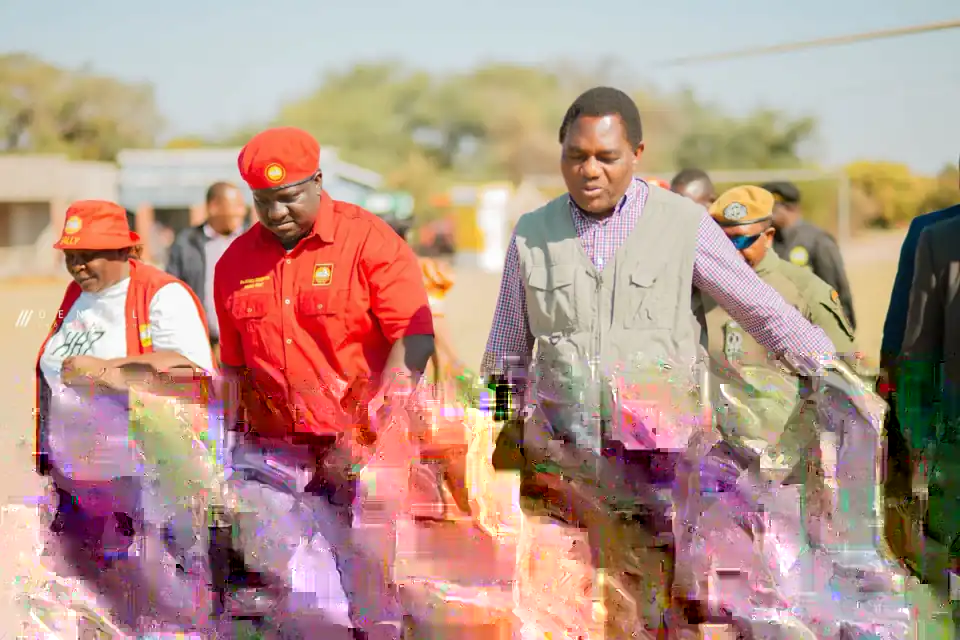
A photograph making the rounds this week shows Imanga Wamunyima Jr walking alongside President Hakainde Hichilema at a campaign event, the two men side by side in a scene that would have seemed unlikely a year ago. Wamunyima built his political career as the lone MP for the Party for National Unity and Progress (PNUP), an opposition voice representing Nalolo Constituency in Western Province. His party’s decision to back President Hichilema and join the UPND-led alliance ahead of the 2026 election reshaped that picture, and Wamunyima’s own seat is now among those awaiting official results from the Electoral Commission of Zambia.
From First-Time Candidate to Zambia’s Youngest MP
Wamunyima is a lawyer by training. He contested the Nalolo seat in 2021 under PNUP, a party headed by economist Highvie Hamududu, and won it at 29, becoming the youngest member of the National Assembly at the time. He has said he was driven to stand by the social inequalities and injustices he saw across the country, with Nalolo itself, a constituency split by the Zambezi River into an east and west bank connected only by a difficult and costly crossing, standing as a direct example of the development gap he wanted to close.
In Parliament, he became a member of the Public Accounts Committee and Vice-Chairperson of the Committee on Privileges and Absences. Being the only PNUP MP in the House meant building alliances issue by issue rather than relying on a parliamentary bloc, a position he has described as difficult but one that forced him to engage directly with the substance of each debate rather than vote along party lines.
“The Only Youth in Parliament”
Wamunyima has been one of the more vocal advocates for youth political participation in the current Parliament, describing himself publicly as the only youth sitting in the House. He has argued that youth movements sponsored by older political figures cease to be genuine movements and become projects instead, urging young people to organise independently and turn out in large numbers for elections rather than being used as instruments of others’ political ambitions.
That framing puts him in an unusual position. He has spent his term arguing that young Zambians need to build political power on their own terms, while himself depending on an older generation of PNUP leadership, and now an alliance with the governing UPND, to remain viable in a system still organised around established parties and patronage networks.
Nalolo’s Development Ledger
Wamunyima has focused his constituency work on four areas he has identified as most critical for Nalolo: healthcare, education, agriculture, and water and sanitation. He has pushed for the completion of Nalolo District Hospital and additional health posts, along with new and upgraded secondary schools for a constituency he says has been one of Zambia’s most underdeveloped.
Recent constituency activity reflects that focus. In April 2026, he handed over a newly built classroom block at Muoyo Secondary School, part of a wider push to expand school infrastructure on both banks of the Zambezi. Work has also continued on a mother’s shelter in Makoka Ward, aimed at improving maternal health outcomes in a constituency where distance to health facilities remains a significant barrier.
A New Alliance, A New Test
PNUP’s move to endorse President Hichilema for the 2026 election was not one Wamunyima was involved in deciding. He has said publicly that he was not part of the meeting where Hamududu made the call to join the UPND alliance, and that he wanted the party to weigh the alliance’s track record carefully before committing to it. That tension between a leader’s snap decision and a lone backbencher’s caution captures the position PNUP occupies in Zambian politics: a small party whose influence rests almost entirely on the judgement of its few elected representatives.
Whatever his reservations about how the alliance came together, Wamunyima has since campaigned alongside the president, and Nalolo’s 2026 result will show whether that alignment, and five years of infrastructure delivery, translated into a renewed mandate. Official results for the constituency had not yet been declared as this article was published.
Why It Matters
Zambia’s youth make up the majority of its population, yet Wamunyima’s description of himself as the only youth in Parliament points to a persistent gap between that demographic weight and actual representation. His term offers a concrete test case: whether a young, independently-minded MP from a small party can deliver visible infrastructure gains in a genuinely underdeveloped constituency, and whether voters reward that record when the same MP aligns with a larger coalition rather than standing apart from it. The answer from Nalolo, once it comes, will matter well beyond Western Province.
Related Coverage
Sunday Chanda Concedes Kanchibiya Seat, Defends His Bill 7 Vote in Farewell Statement
Zambia’s Vote Count Enters a Tense Third Day, With ECZ Still the Only Verified Source
Youth Entrepreneurship in Zambia: Grilled Ambition at Desire, Nyumba Yanga
WARNING! All rights reserved. This material and all other digital content on this website may not be reproduced, published, broadcast, rewritten, or redistributed, in whole or in part, without the prior express permission of The Zambian Economist. Where permission is granted, the content must be clearly credited to “The Zambian Economist,” with “www.zambianeconomist.com” prominently displayed.
WhatsApp: +260775574228 | Email: info@zambianeconomist.com
© 2026 The Zambian Economist.
Work With The Zambian Economist
Related: How Zambia’s Mixed-Member Proportional Representation System Works