
KEY TAKEAWAYS
- Zambia and Finland are recasting a relationship that dates to independence, moving from development cooperation towards trade, investment and technology.
- Finnfund, the Finnish state development financier, holds two direct Zambian investments, in tilapia producer Yalelo and Cavendish University Zambia, and says it is examining renewable energy opportunities “very closely”.
- Finnish-backed programmes report measurable results: a €500,000 contribution through the World Food Programme is reaching 34,000 learners, more than 100 students have received entrepreneurship training with partners including Nokia, and about 100 startups have been supported through Lusaka’s innovation ecosystem.
- Lusaka is courting Finnish capital for renewable energy, agriculture, forestry, ICT, education, mining and environmental technology, including deals tied to the Lobito Corridor.
- The Ministry of Finance says the next phase will be judged on investments realised, businesses expanded, skills transferred and jobs created.
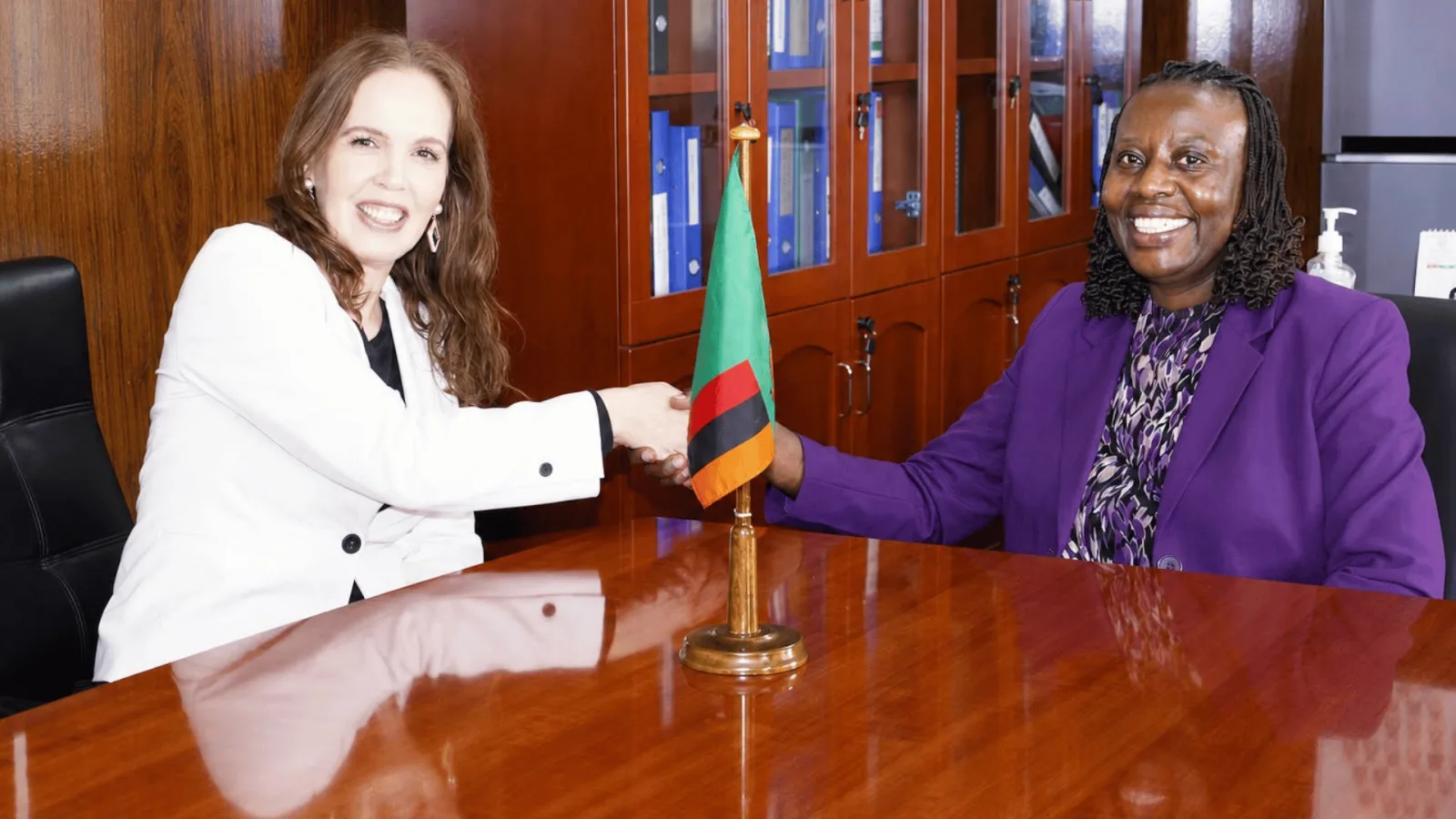
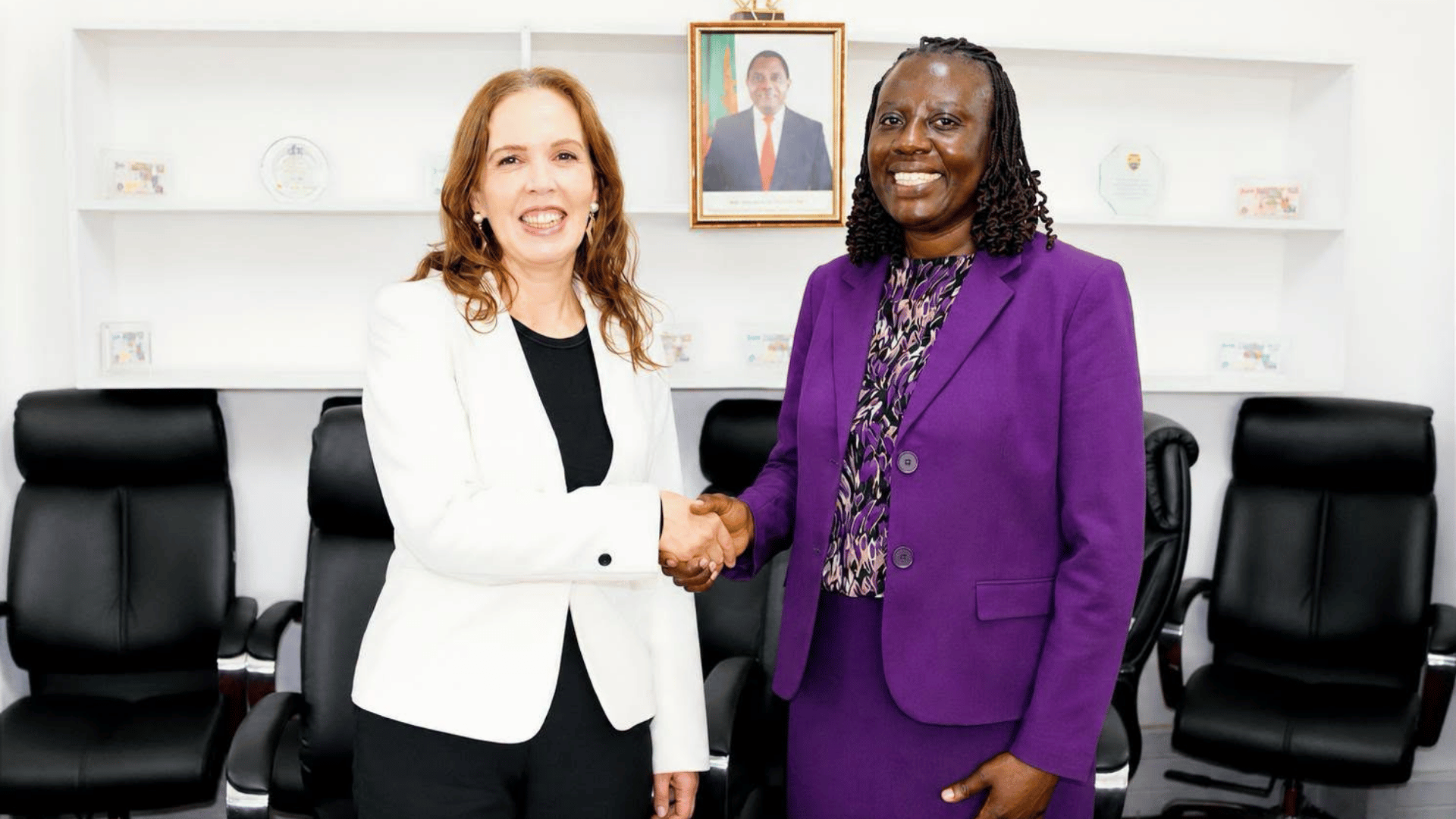
The scene at the Ministry of Finance and National Planning had the choreography of a routine diplomatic goodbye: a handshake, a Zambian flag on the table, warm words for a departing envoy. Outgoing Finnish ambassador Saana Halinen had called on Prudence Kaoma, permanent secretary for planning and administration, to close out slightly more than four years in Lusaka.
The ministry’s account of the meeting reads less like a farewell than a reshaping. Zambia and Finland, Ms Kaoma said, are moving “beyond traditional development cooperation towards trade, investment, innovation, technology, skills development and sustainable economic opportunities”. In Treasury language: the grant era is fading, and the deal era is being courted. It is a case study in economic diplomacy.
Ms Kaoma was assisted by the directors of national planning, Davison Mapizya; economic management, Akapelwa Imwiko; and human resources and administration, Nalituba Mwale.
From forestry officers to Finnfund
The relationship is old by the standards of Zambia’s European partnerships. It reaches back to the independence era, when Finnish support centred on forestry and natural-resource management. It then widened into governance, private-sector development and, most recently, innovation policy.
Ms Kaoma said Zambia “particularly appreciate[s] Finland’s continued confidence in Zambia as a stable, reliable, and forward-looking partner”, and extended an invitation with a commercial edge: Finnish businesses, she said, should view Zambia “not only as a development partner, but also as an investment destination and strategic economic partner”.
The diplomatic traffic suggests the feeling is mutual. Before Ms Halinen’s posting, eight years passed without a Finnish minister visiting Zambia. In her four years in Lusaka, the country received two Finnish ministers, a deputy minister travelling with a business delegation, two parliamentary delegations and the deputy mayor of Tampere, again accompanied by companies. The itinerary itself, the ambassador suggested, demonstrates Zambia’s attractiveness to Nordic business.

What Finnish support has delivered
The ministry’s briefing amounts to a portfolio review.
Small firms and jobs
The Accelerated Growth for Micro, Small and Medium-sized Enterprises Programme worked with Zambian MSMEs to help them expand, hire and contribute to government revenue. Ms Halinen’s observation from the same programme: Zambian enterprises that went through it have kept growing and are employing more people. That matters in an economy where small firms carry most of the employment load, and where credit remains the binding constraint for many of them.
Auditors and anti-corruption
Less commercially glamorous, more consequential. Through the EU Twinning Instrument, Finnish expertise has supported the Anti-Corruption Commission and the Office of the Auditor General. For a country that spent more than three years persuading creditors it could manage public money, the strength of those two institutions is not a side issue. It sits at the centre of the credibility Zambia now trades on.
School meals and climate-smart farming
A €500,000 Finnish contribution, channelled through the World Food Programme, supports the national School Feeding Programme. It reaches more than 34,000 learners and promotes climate-resilient agriculture. “Investment in children’s nutrition and education is an investment in Zambia’s future,” Ms Kaoma said, “and the results are there for all to see.”
Startups, coders and a first AI strategy
Lusaka Slush’D, the Zambian offshoot of Helsinki’s Slush, one of the world’s best-known startup festivals, has connected local founders with investors and development partners. One participant, Aurora Gems, went on to secure US$23,000 from the Zambia Business Angel Network. The ministry counts 17 recognised youth innovators and roughly 100 startups supported by ecosystem players.
Finnish expertise has also fed into Zambia’s first National Artificial Intelligence Strategy, and a cooperation involving Aalto University, the Maria 01 startup campus, Nokia, Omnia and Airtel delivered entrepreneurship training to more than 100 Zambian students. “Zambia is advancing its digital transformation,” Ms Kaoma said, “and is determined not to be left behind in the transition toward artificial intelligence and other emerging technologies.” Cooperation has extended to critical minerals, responsible mining, geological information and beneficiation.
| Area | Instrument | Scale | Reported result |
|---|---|---|---|
| MSME growth | Accelerated Growth for MSMEs Programme | Multi-year programme | Firms expanded, hired and added tax revenue |
| Governance | EU Twinning Instrument | Institutional support | Capacity built at the ACC and the Office of the Auditor General |
| School feeding | €500,000 via the World Food Programme | 34,000+ learners | Improved nutrition; climate-resilient agriculture promoted |
| Startups | Lusaka Slush’D and ecosystem partners | ~100 startups; 17 innovators | Aurora Gems secured US$23,000 from the Zambia Business Angel Network |
| Skills | Aalto University, Maria 01, Nokia, Omnia, Airtel | 100+ students | Entrepreneurship training delivered |
| Technology | National AI Strategy support | Technical expertise | Zambia’s first AI strategy informed |
| Direct investment | Finnfund | Two deals | Stakes in Yalelo and Cavendish University Zambia |
| Water | Groundwater mapping | Post-drought programme | Water management expertise for Zambia |
Where Finnish money could land next
Finnfund, the state-owned Finnish development financier that invests on commercial terms in emerging markets, is the clearest signal of intent. It holds two direct Zambian positions: Yalelo, the Lake Kariba tilapia producer that ranks among Africa’s largest fish farms, and Cavendish University Zambia. Renewable energy, Ms Halinen noted, attracts “considerable interest”. “Finnfund has plans and is examining the opportunities available in Zambia very closely,” she said, adding that Finland remains open to discussing concrete blended-finance proposals.
The shopping list Lusaka has prepared runs from renewable energy, agriculture and forestry to ICT, education, mining and environmental technologies, with co-financing and Finnfund instruments tied to Vision 2030 and the Ninth National Development Plan (9NDP). The Lobito Corridor, the rail-and-logistics artery being developed to move Zambian and Congolese copper to Angola’s Atlantic coast, features on it.
So does water. After the 2024 drought, which cut the maize harvest by more than a third, from about 3.3 million tonnes to under 2 million, and forced months of nationwide power rationing in a grid that draws most of its electricity from hydropower, Finland has backed groundwater mapping and water management in Zambia.
The economics behind the pleasantries
Why should a mid-sized Nordic economy of 5.6 million people command Treasury attention in Lusaka? Three reasons.
First, the quality of the capital. Finland brings patient, ESG-screened money through Finnfund and blended-finance instruments of the kind the Treasury says it wants as Zambia moves past its debt-restructuring years. Second, technology. The country that produced Nokia, runs one of the world’s most admired education systems and hosts Slush is a useful ally for Zambia’s digital and AI ambitions. Third, credibility. Nordic partnerships come with transparency expectations, and Finland’s support for the Auditor General and the Anti-Corruption Commission signals exactly the standards Zambia needs to show remaining creditors and investors.
The caution is arithmetic. Finland remains a modest shareholder in Zambia’s external financing next to the multilaterals, China and the EU. Two Finnfund deals is a thin deal sheet. Converting ministerial visits into balance-sheet entries will take bankable projects, faster approvals and policy consistency, the constraints that investor surveys and ZIPAR assessments of Zambia’s business climate have repeatedly listed.
What it means
For business. Zambian firms in agribusiness, forestry, ICT and clean energy should track Finnish partnership and procurement calls. Suppliers already in the Yalelo and Cavendish value chains now have a reference case to show Helsinki.
For investors. Finnfund’s renewed diligence in Zambian renewables is a signal for co-investors, and blended finance lowers entry risk in energy and water infrastructure. The FDI pipeline and the Lobito Corridor are where logistics capital will concentrate.
For policy. The Treasury has tied the partnership to 9NDP delivery metrics: investments realised, businesses expanded, skills transferred and jobs created. It is a standard against which other bilateral relationships could reasonably be measured too.
Questions readers are asking
What has Finnfund invested in, in Zambia?
Two direct holdings: Yalelo, the Lake Kariba fish producer, and Cavendish University Zambia. Ambassador Halinen says the financier is examining renewable energy opportunities closely, with blended finance on the table.
How much does Finland spend on Zambia?
The headline figure in the latest ministry account is €500,000 channelled through the World Food Programme for school feeding, alongside multi-year support for MSMEs, governance institutions and innovation. Finland publishes its full development-cooperation figures at um.fi.
What is Lusaka Slush’D?
An annual startup event inspired by Helsinki’s Slush festival, connecting Zambian founders with investors and development partners. Its best-known outcome so far is Aurora Gems’ US$23,000 raise from the Zambia Business Angel Network.
Which sectors is Finland interested in?
Renewable energy, agriculture, forestry, ICT, education, mining and environmental technologies, plus water management and Lobito Corridor logistics, according to the Ministry of Finance.
The next chapter, measured
Ms Halinen leaves with the relationship, in her words, “broader, more commercially oriented, and increasingly founded upon an equal partnership”. Ms Kaoma thanked her for “your service, your friendship, and your contribution to Zambia’s development”.
The measure of the next four years is already written down at the Treasury itself. Investments realised. Businesses expanded. Skills transferred. Jobs created. Courtesy calls are easy to count. Those four are not.
WARNING! All rights reserved. This material and all other digital content on this website may not be reproduced, published, broadcast, rewritten, or redistributed, in whole or in part, without the prior express permission of The Zambian Economist. Where permission is granted, the content must be clearly credited to “The Zambian Economist,” with “www.zambianeconomist.com” prominently displayed.
WhatsApp: +260775574228 | Email: info@zambianeconomist.com © 2026 The Zambian Economist.
Work With The Zambian Economist: Advertise With Us | List With Us | Submit an Article