
By Zambian Economist Analyst
Zambia’s June 2024 Eurobond restructuring triggered an 18% jump in the value of its dollar bonds. Two years on, here is what the market’s verdict says, and what is still unresolved.
Two Years On, the Market’s Verdict
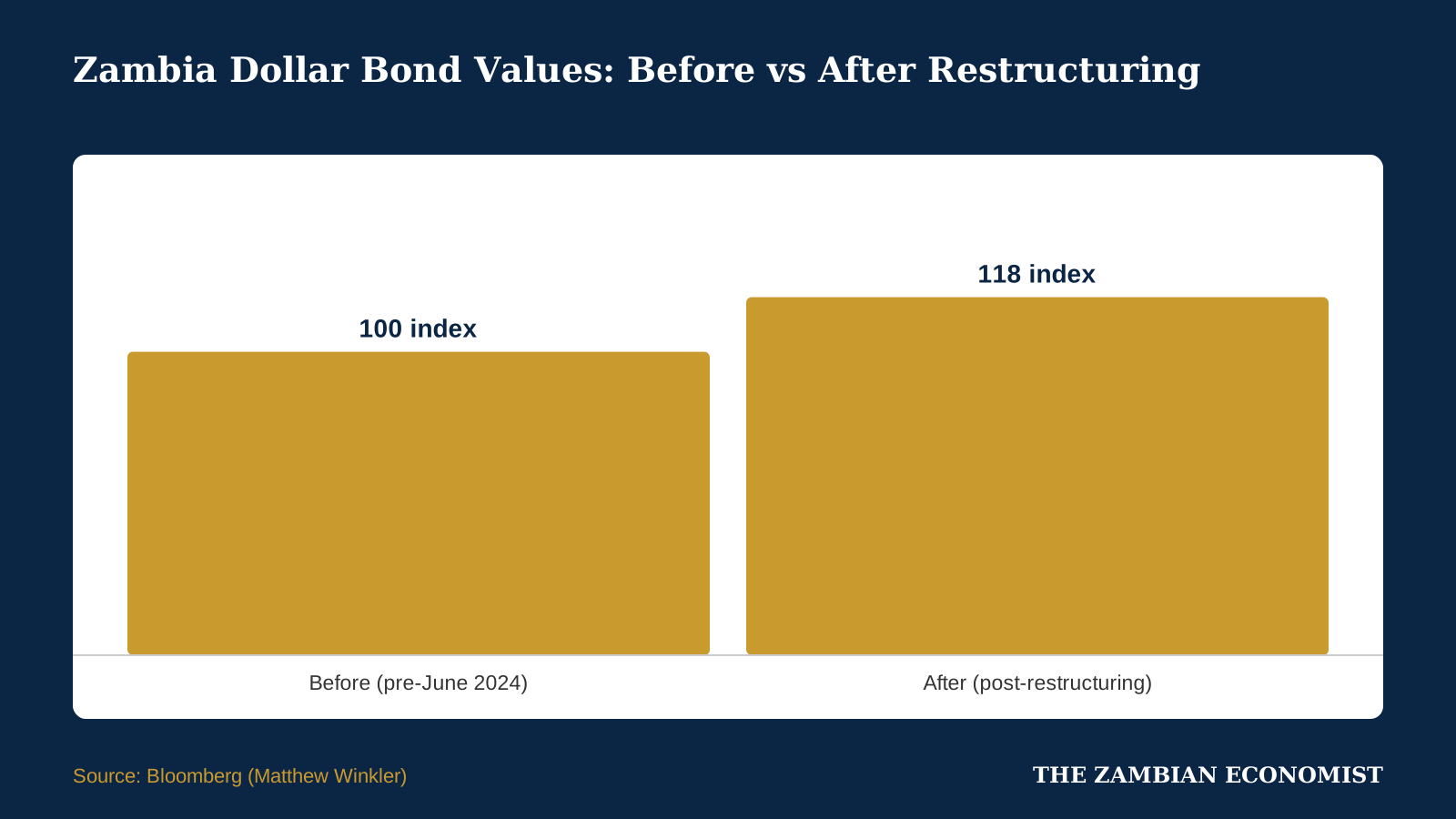
Zambia completed its Eurobond restructuring in June 2024, drawing a line under nearly four years of default that began in November 2020. Bloomberg’s Matthew Winkler has pointed to the market’s own verdict on the deal: the value of Zambia’s dollar-denominated sovereign bonds rose 18% in the aftermath of the restructuring, a direct signal that creditors judged the new terms, and the credibility of the government behind them, favourably.
What the Restructuring Actually Changed
The restructuring reset the terms on Zambia’s external commercial debt, easing near-term repayment pressure and freeing up fiscal space that the 2026 budget has since redirected toward the Constituency Development Fund, education and health. It also underpinned the $1.7 billion IMF programme that ran until January 2026 and gave Zambia a reference point for future market access.
The Unfinished Business
Not every creditor relationship was settled in the same round. Afreximbank and the Trade and Development Bank are still contesting their status as preferred creditors on loans that were originally taken out at commercial, at times very high, rates. Where that dispute lands will influence Zambia’s cost of any future borrowing well beyond the Eurobond terms already agreed.
| Milestone | Date |
|---|---|
| Zambia enters sovereign default | November 2020 |
| Eurobond restructuring completed | June 2024 |
| Dollar bond value increase post-restructuring | +18% |
| $1.7bn IMF programme concludes | January 2026 |
Business and Investor Implications
For investors, the 18% re-rating is the clearest available evidence that Zambia’s default is being priced as a resolved, rather than an ongoing, risk. For government, the practical test now is whether growth, projected at 5.0% in 2026 and 6.3% in 2027, and a widening current account surplus are enough to sustain that market confidence without a formal IMF anchor in place.
Key Takeaways
- Zambia’s Eurobond restructuring, completed in June 2024, triggered an 18% rise in the value of its dollar bonds.
- The restructuring underpinned a $1.7 billion IMF programme that has since concluded.
- Preferred-creditor disputes with Afreximbank and the Trade and Development Bank remain unresolved.
Related reading: Life After the IMF: What a New Programme Could Mean for Zambia and Zambia Domestic Financing 2026: Treasury Targets 82% of National Budget
Related: Opinion – What a Second Hichilema Term Would Mean for Zambia’s Economy
See also: What Investors Are Watching as Zambia Heads to the Polls.
See also: A New Chapter in Africa’s Financial Architecture: AfCRA and the African Monetary Institute.