
Key takeaways
- Zambia is ready in ceremony. National Heroes Stadium has passed its inspection, the public is invited free of charge, and officials expect dignitaries from the United Kingdom, the United States and Saudi Arabia alongside regional leaders on Tuesday 1 September.
- Readiness is thinner in substance. The petition window closed with the superior courts sealed, the Auditor General’s office is vacant, and the main opposition leader is under a treason investigation.
- The economy enters the new term in its best shape in years: inflation at 6.2%, first-quarter growth of 7.7%, the kwacha near K19 to the dollar and copper above $14,000 a tonne.
- The calendar is already loaded: the 2027 Budget is due within 90 days of the oath, the Bank of Zambia decides on rates on 30 September, and IMF talks on a successor programme resume only once the new government is sworn in.
- The international queue is long. Washington has reportedly offered tariff-free copper access, Beijing sent early congratulations, and the Lobito Corridor rail project would give Zambia’s copper a second route to the sea.
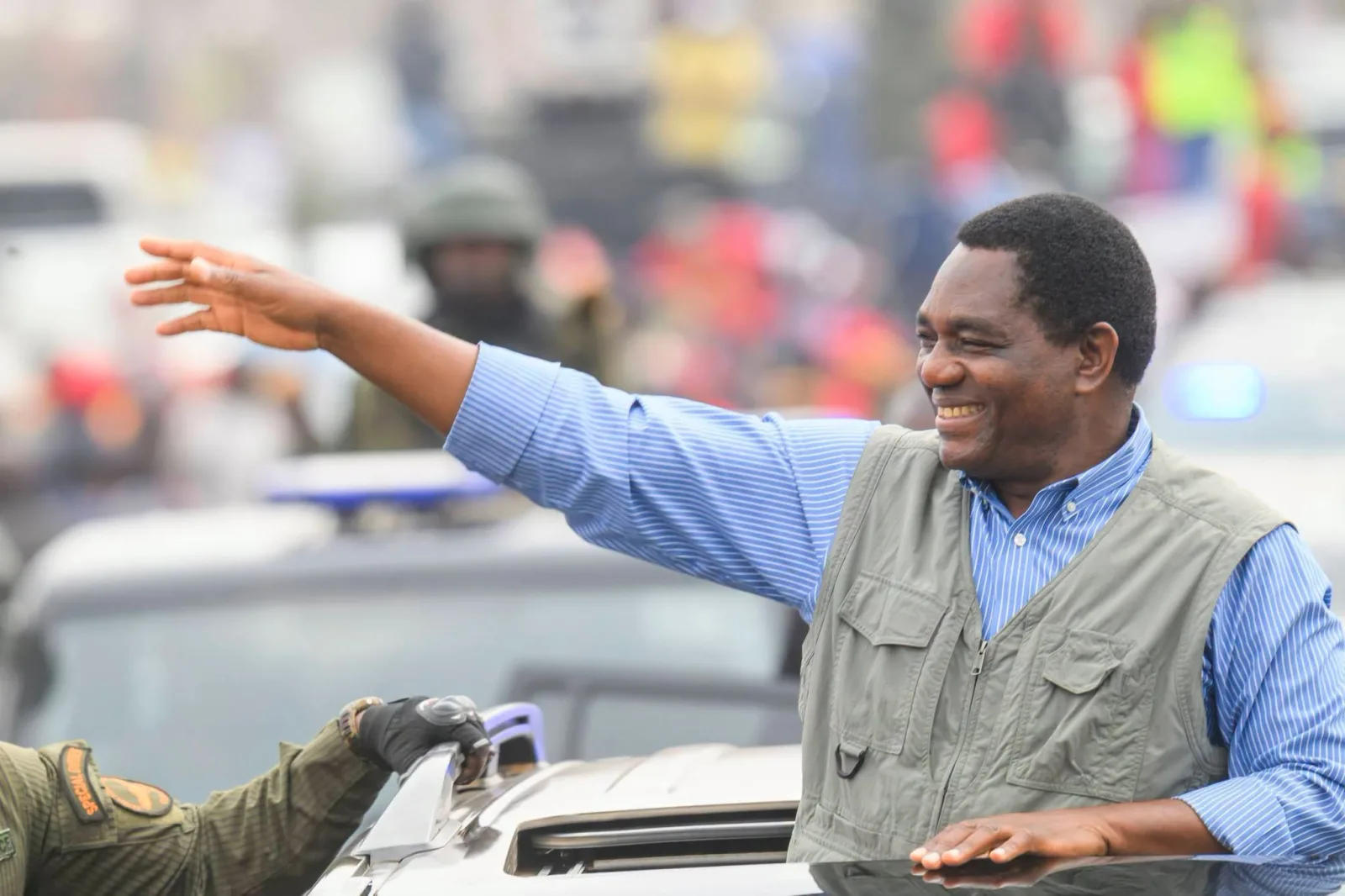
Is Zambia ready for the inauguration of its re-elected president? In ceremony, yes, and demonstrably so. In substance, the answer splits in two: the economy arrives at Tuesday’s swearing-in in its best condition in a decade, while the institutions around it are still clearing debris from the election. President Hakainde Hichilema takes the oath of office for a second term at National Heroes Stadium on 1 September with inflation falling, copper near record prices and a queue of partners from Washington to Beijing waiting to see what the new term does with the opening.
This piece takes the question seriously in all three of its parts: whether the country is ready for Tuesday, what the second term can realistically deliver economically, and which international collaborations could move Zambia to another level.
Is Zambia ready for the inauguration?
On the logistics, yes. The Cabinet Office confirmed the date a week ahead. Secretary to the Cabinet Patrick Kangwa has walked National Heroes Stadium with his delegation and declared the venue on course, and the ceremony is open to the public at no charge. Officials have said delegations from the United Kingdom, the United States and Saudi Arabia are expected, with details of the full guest list to be communicated. The 2021 precedent, when at least ten African heads of state attended Hichilema’s first swearing-in, suggests the regional bench will be full.
The harder readiness question is institutional. The window to challenge the 13 August election closed on 24 August with police sealing the Constitutional Court and the other superior courts on the final day for filing, leaving the result untested by any hearing. The office of Auditor General, the watchdog over every ministry’s spending, has been vacant since 23 August after a Constitutional Court ruling. The defeated candidate, Brian Mundubile, and his running mate have been warned and cautioned over alleged treason. The Mo Ibrahim Foundation has cautioned the re-elected president against wasting Zambia’s democratic legacy. None of this stops Tuesday’s ceremony. All of it shapes what foreign investors and lenders read into it.
There is also a commercial side to the day. Inaugurations fill Lusaka’s hotels, taxis and restaurants, and this one lands on a public holiday-scale turnout. The bigger economic fact of Tuesday is procedural: the oath starts a 90-day countdown within which the 2027 Budget must be presented, which means the policy direction of the entire second term begins revealing itself within days of the fireworks.
What the second term inherits
| Indicator | Where it stands | Why it matters now |
|---|---|---|
| Annual inflation | 6.2%, the lowest in years | Cheaper food and fuel did the work; price growth is finally tame |
| GDP growth | 7.7% in the first quarter | Copper-led; government sees 6.4% for 2026, the IMF a cooler 4.3% |
| Kwacha | About K19 per US dollar | Up roughly 31% since December 2024, among the world’s firmer currencies |
| Copper | Above $14,000 a tonne | Eight straight weekly gains as buyers front-run US tariff decisions |
| Debt service | About K15 of every K100 of tax revenue | Down from a peak near K70 at the height of the crisis |
| Policy rate | 13.25% | Next decision 30 September, with room to cut if disinflation holds |
Two warnings belong next to that table. First, the copper price is riding an American stockpiling wave, not only Zambian fundamentals. The United States has taken in nearly 885,000 tonnes of refined copper this year ahead of a possible tariff, and analysts at Goldman Sachs and elsewhere expect the London price to soften over the next six to twelve months as those stockpiles unwind. A government budgeting on $14,000 copper should stress-test its plans at $12,000. Second, the recovery has not reached everyone at the same speed. Pre-election surveys found roughly four in ten voters saying their finances had worsened over the previous year, and the margin of victory owed as much to visible progress as to patience. The new term inherits an economy healing unevenly.
What can Zambians expect economically from the new term?
The first document to watch is the 2027 Budget, due within 90 days of the oath. Finance Minister Situmbeko Musokotwane has framed the transition as one from stabilisation to expansion, and the budget will show whether that means capital spending on power, roads and irrigation, or a continued squeeze on the wage bill. The copper windfall gives the treasury room to do both at once, which is exactly the temptation the IMF will be watching.
Monetary policy should lean the same way. With inflation at 6.2% and the kwacha behaving, the Bank of Zambia’s 30 September meeting opens the door to a second quarter-point cut from 13.25%, and commercial banks passed the last one through to borrowers within weeks. For households with variable-rate loans, that is the second term’s most immediate pocket effect.
The structural agenda is bigger. Zambia will produce roughly 901,000 tonnes of copper this year, about 11% more than last, against a stated ambition of three million tonnes a year by 2031. Miners say tripling output depends less on ore than on electricity and fiscal terms, which puts power generation and investment incentives at the centre of the second term. Food is the other pillar: the gains in inflation came from harvests and cheaper fuel, and a fresh El Niño warning for the season ahead means the input programme, irrigation and grain logistics will decide whether 6.2% holds or slips back.
The world waiting at the door
No incoming Zambian government has opened a term with this many live negotiations on the desk. Each carries real money.
| Partner | What is on the table | Where it stands |
|---|---|---|
| IMF | Successor to the $1.3 billion credit facility that closed in December after disbursing about $1.7 billion | Negotiations resume with the new government; the finance minister wants signature by year-end |
| United States | Reportedly offered tariff-free access for Zambian copper and critical minerals in exchange for trade concessions; the threat is a phased 15% tariff on refined copper from 1 January 2027 | Refined copper is about 90% of Zambia’s exports to the US; ZCCM-IH is lobbying for a waiver |
| China | Creditor engagement, mining investment and infrastructure, including Chinese-backed projects such as Sinomine’s Kitumba mine | President Xi Jinping was among the first to congratulate the re-elected president |
| Lobito Corridor partners | A rail route carrying Zambian and Congolese copper to the Atlantic coast through Angola, backed by US and EU interests | Cited in the tariff debate as a reason Washington needs Zambian copper on good terms |
| Regional neighbours | Grain trade, starting with Kenyan buyers seeking Zambian maize, one trader alone chasing 10.8 million bags | Goodwill messages from Angola, Tanzania and Egypt followed the election |
| UK and Gulf states | Delegations at the inauguration, tourism and investment courtship | Saudi Arabia and the United Kingdom are expected to send representatives on Tuesday |
The American file deserves the closest attention, because it cuts both ways. Zambia’s copper has so far stayed exempt from the heaviest US tariffs, and the reported offer of tariff-free treatment would lock in that advantage for the metal that pays the bills. The alternative, a phased tariff on refined copper from the new year, would push Zambian producers to reroute cargoes while the global price softens. The inauguration matters to that file directly: trade deals of this kind are signed with governments, and until Tuesday Zambia does not formally have one.
What would taking Zambia to another level actually require?
Three things, in order of difficulty. Earning the copper windfall is done; keeping it is not, and that means value addition at home rather than shipping concentrate abroad. Powering the three-million-tonne ambition means generation projects that break ground, not ceremonies. And pricing institutions properly matters more than any single deal: the discount lenders attach to a country whose courts were sealed on a petition deadline is real money, measured in basis points on every future Eurobond and syndicated loan. The African Union’s work on a continental financial architecture, including the African Monetary Institute, is a long game in the same direction.
The bottom line
The stadium is ready. The economy is as ready as it has been in a decade, with prices tame, the currency firm and the metal that finances the state trading near records. The part of Zambia still under construction is the part that cannot be hired for a day: the institutions that turn a good term into a durable one. Tuesday gives the second term its ceremony. The budget, the IMF signature and the conduct of the treason file will give it its character.
Related coverage
- Events of the Week, 29 August 2026: Inflation at 6.2%, a Sealed Court and a Tuesday Inauguration
- Hichilema’s Second Term: What It Means for Zambia’s Economy, Markets and Diplomacy
- Zambia’s Turnaround Won the Election. Now It Has to Deliver.
- Ten Days That Tested Zambia: Hichilema’s Re-election, Sealed Courts and a Cooling Inflation Rate
- Zambia’s Post-Election Rally Is Economically Sound
- The Economics of Zambia’s 2026 Election
- Copper Nears $14,000 as US Tariff Fears Drive Stockpiling
- From K70 to K15: How Debt Restructuring Changed What Zambia’s Taxes Pay For
WARNING! All rights reserved. This material and all other digital content on this website may not be reproduced, published, broadcast, rewritten, or redistributed, in whole or in part, without the prior express permission of The Zambian Economist. Where permission is granted, the content must be clearly credited to “The Zambian Economist,” with “www.zambianeconomist.com” prominently displayed.
WhatsApp: +260775574228 | Email: info@zambianeconomist.com
© 2026 The Zambian Economist.
Work With The Zambian Economist
Related: Hichilema Sworn In for Second Term as African Leaders Gather in Lusaka.