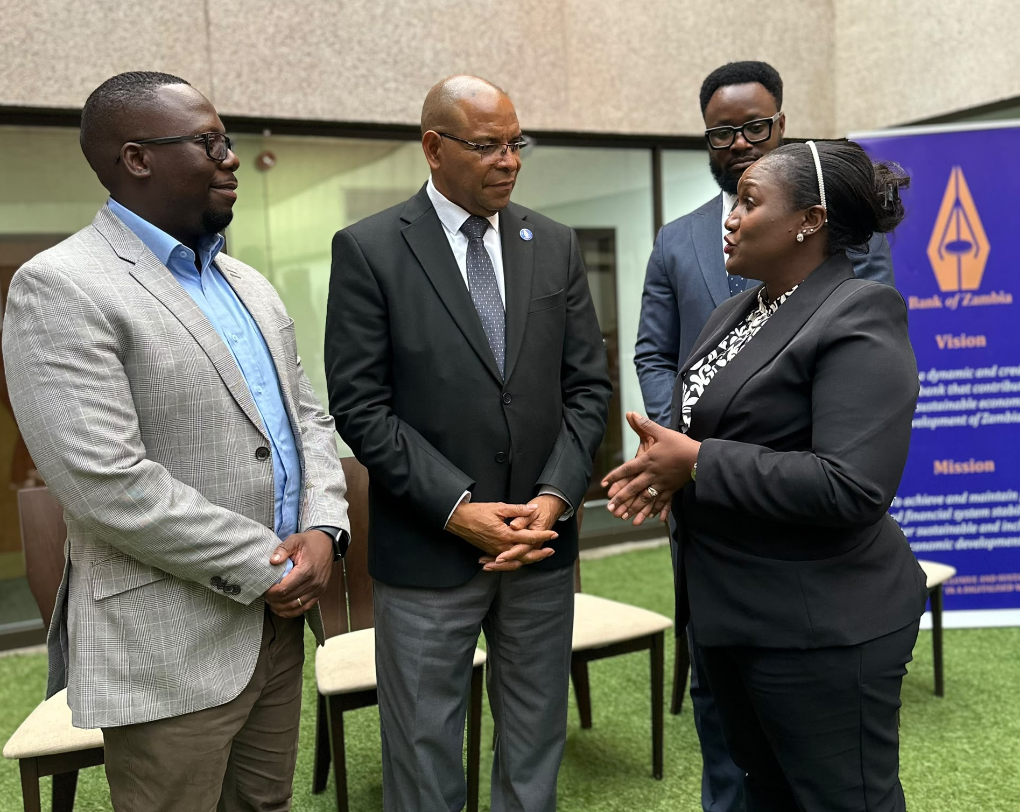
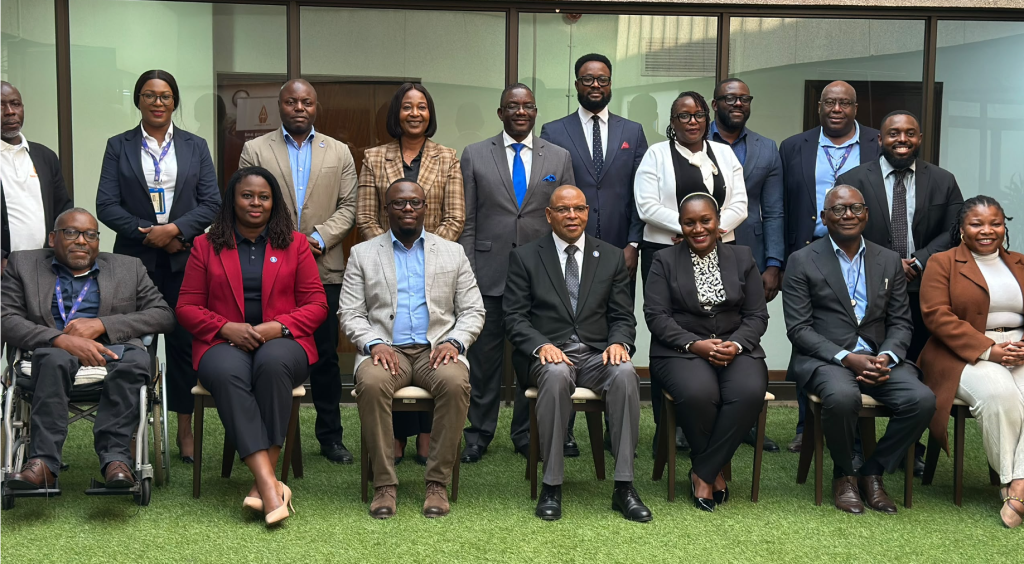
A delegation from the Economics Association of Zambia, led by President Dr Edna Kabala-Litana, met Bank of Zambia Governor Dr Denny Kalyalya and his senior team for talks that stretched from the kwacha to economic literacy in rural districts. The two institutions agreed to work together on joint research, policy dialogue and training.
By The Zambian Economist Analyst
2 October 2026 | Leadership & Governance
KEY TAKEAWAYS
- The Economics Association of Zambia (EAZ) paid a courtesy call on Bank of Zambia Governor Dr Denny Kalyalya, joined by Deputy Governors Dr Francis Chipimo (Operations) and Ms Rekha Chifuwe Mhange (Administration), Chief Operating Officer Mr Isaac Muhanga and departmental directors.
- EAZ President Dr Edna Kabala-Litana thanked the central bank for years of support and reaffirmed the Association’s role as a bridge between economists, policymakers and the public.
- Both sides agreed to pursue joint research, policy dialogue, capacity building and public economic literacy programmes.
- Governor Kalyalya pledged continued BoZ support, with macroeconomic stability and sustainable growth named as the shared goals.
When the Economics Association of Zambia (EAZ) walked into Bank of Zambia headquarters in Lusaka, it was more than a protocol visit. The Association that has spent years hosting economic debates, training young analysts and publishing policy commentary was sitting down with the institution that sets the country’s monetary policy, manages the kwacha and guards the banking system.
The EAZ delegation was led by its President, Dr Edna Kabala-Litana. On the Bank’s side, Governor Dr Denny Kalyalya headed a full receiving line: Deputy Governor Dr Francis Chipimo (Operations), Deputy Governor Ms Rekha Chifuwe Mhange (Administration), Chief Operating Officer Mr Isaac Muhanga, and directors from across the Bank’s departments.
What was on the table
The talks ranged over Zambia’s economic development agenda, the current macroeconomic outlook, and how the two institutions can work more closely together.
For EAZ, the pitch was straightforward. Dr Kabala-Litana thanked the Governor and the Bank for the support the Association has received over the years, then set out what EAZ sees as its lane: a bridge and platform for economic discourse, policy advisory and continuous professional development.
She proposed four practical areas of collaboration:
- Joint research pairing EAZ members with BoZ economists
- Policy dialogue that brings practitioners into the room when monetary and macroeconomic questions are being debated
- Capacity building for economists inside and outside government
- Public economic literacy, taking the language of inflation, interest rates and exchange rates out of seminar rooms and into reach of ordinary Zambians
The Governor’s response
Governor Kalyalya welcomed the ideas and commended EAZ for its contribution to economic discourse and policy advocacy in Zambia. He committed the Bank of Zambia to continued support for the Association and to deepening collaboration in areas of mutual interest, with macroeconomic stability and sustainable growth named as the common objectives.
The Governor’s engagement with civic institutions is consistent with the Bank’s statutory mandate on price stability, and it signals that the central bank sees value in a professional body like EAZ as a sounding board outside its own walls.
Why this matters beyond the meeting room
Central bank decisions reach every household in Zambia, from the interest rate on a bank loan to the price of mealie meal tracked through the exchange rate. Yet the reasoning behind those decisions is often locked in technical language. A partnership that includes public economic literacy is a step toward changing that.
For EAZ members, economists and young professionals, joint research and capacity building with the Bank opens a direct line to the data, the debates and the people shaping monetary policy. For policymakers, it widens the pool of informed voices contributing to the conversation.
The EAZ says it looks forward to strengthening the partnership with the Bank of Zambia in advancing economic dialogue and supporting Zambia’s development agenda.
Images: EAZ
WARNING! All rights reserved. This material and all other digital content on this website may not be reproduced, published, broadcast, rewritten, or redistributed, in whole or in part, without the prior express permission of The Zambian Economist. Where permission is granted, the content must be clearly credited to “The Zambian Economist,” with “www.zambianeconomist.com” prominently displayed.
WhatsApp: +260775574228 | Email: info@zambianeconomist.com © 2026 The Zambian Economist.
Related: EAZ Courts FNB Zambia for Post-Budget Dinner Support and a Formal Partnership.