With seven days left before Zambia votes on 13 August, the presidential contest has narrowed to two men making opposite arguments about the same economy: President Hakainde Hichilema, asking to be judged on falling inflation and rebuilt reserves, and Tonse Alliance leader Brian Mundubile, asking to be judged on what those numbers have not yet fixed.
By Zambian Economist Analyst
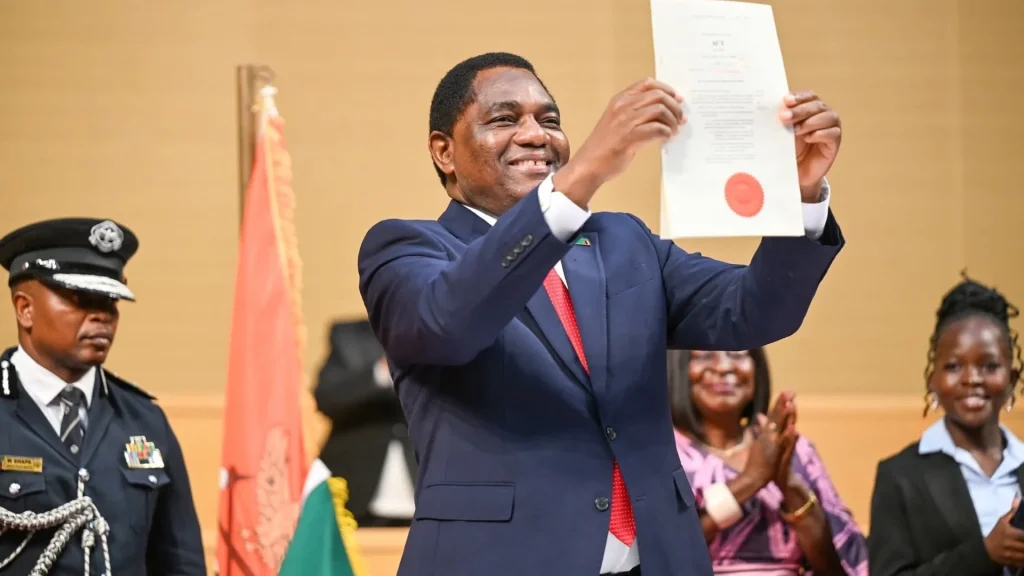
Fourteen names appear on the presidential ballot on 13 August, but the contest has effectively been between two men for months. President Hakainde Hichilema, 64, is seeking a second term on the strength of a macroeconomic turnaround. Brian Mundubile, 55, a lawyer and sitting MP before the election was called, has united a fractured opposition under the Tonse Alliance banner and is asking voters to judge that turnaround by what has reached their kitchens, not what has reached the reserve figures.
Neither man is new to Zambian politics, but neither has faced the other at the ballot box before. This is the test.
The Incumbent’s Case
Hichilema took office on 24 August 2021 after unseating the late Edgar Lungu, inheriting an economy that had defaulted on its sovereign debt the previous year. Five years on, his campaign rests on a specific set of figures. Annual inflation, which stood near 24% when he took office, had fallen to 6.5% by June 2026, the lowest reading in more than eight years. Foreign exchange reserves have climbed to roughly $6.5 billion, and the government points to about $12 billion in new mining investment as evidence that debt restructuring and policy reform have restored investor confidence in Africa’s second-largest copper producer.
Loadshedding, a recurring grievance through much of his first term, eased in the months before the election, though the improvement is recent enough that the opposition has made a point of asking whether it will hold. Hichilema has kept Mutale Nalumango as his running mate and became the first candidate this cycle to campaign in person in all ten provinces, a tour his campaign has since narrowed into a more targeted push through specific swing constituencies as the vote nears.
His own political history includes a stretch in detention: arrested and charged with treason in April 2017 under the Lungu government, a case widely seen at the time as politically motivated, before his release and the charge’s withdrawal four months later. That episode still surfaces in how his supporters frame his position today, as a leader who survived the system he now runs.
The Challenger’s Case
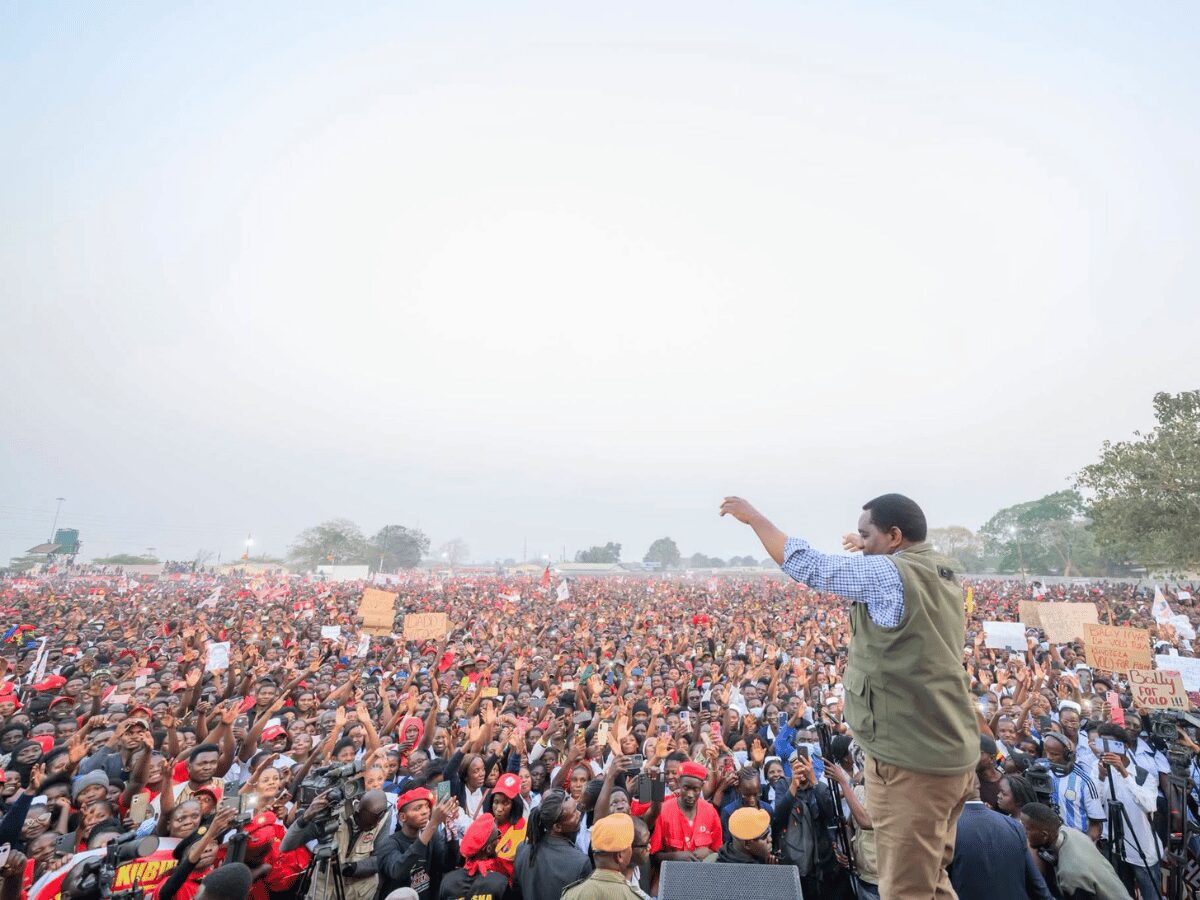
Mundubile’s route to the ballot has been shorter and less conventional. The Tonse Alliance formed in November 2024 with the explicit goal of removing the UPND from office, and it originally rallied around Lungu himself as chairperson and presidential candidate. Following Lungu’s death in South Africa in June 2025 and the bitter dispute that followed over his burial, an internal convention on 28 January 2026 chose Mundubile, until then a Patriotic Front-aligned parliamentarian, as the alliance’s standard-bearer instead. He had never previously run for president.
His argument to voters is not that the government’s numbers are false, but that they are beside the point. At the Tonse Alliance manifesto launch in April, he told supporters the country needed an economy built on jobs and dignity rather than statistics and graphs, and has since accused the government of speaking in what he calls “big English” while households go hungry. His running mate is Makebi Zulu.
The Tonse manifesto is the most interventionist economic document any opposition alliance has put forward this cycle. Its central pledges include mobilising $12 billion for solar, wind and biomass generation to close the electricity deficit; creating more than 300,000 jobs within three years through twelve government-backed farming blocks aimed at value-added agriculture; and equipping marketeers nationally with an excavator and a vehicle each to expand their trading capacity. Mundubile has also pledged to repeal the 2025 cybercrime law and has promised a government with representation drawn equally from all ten provinces.
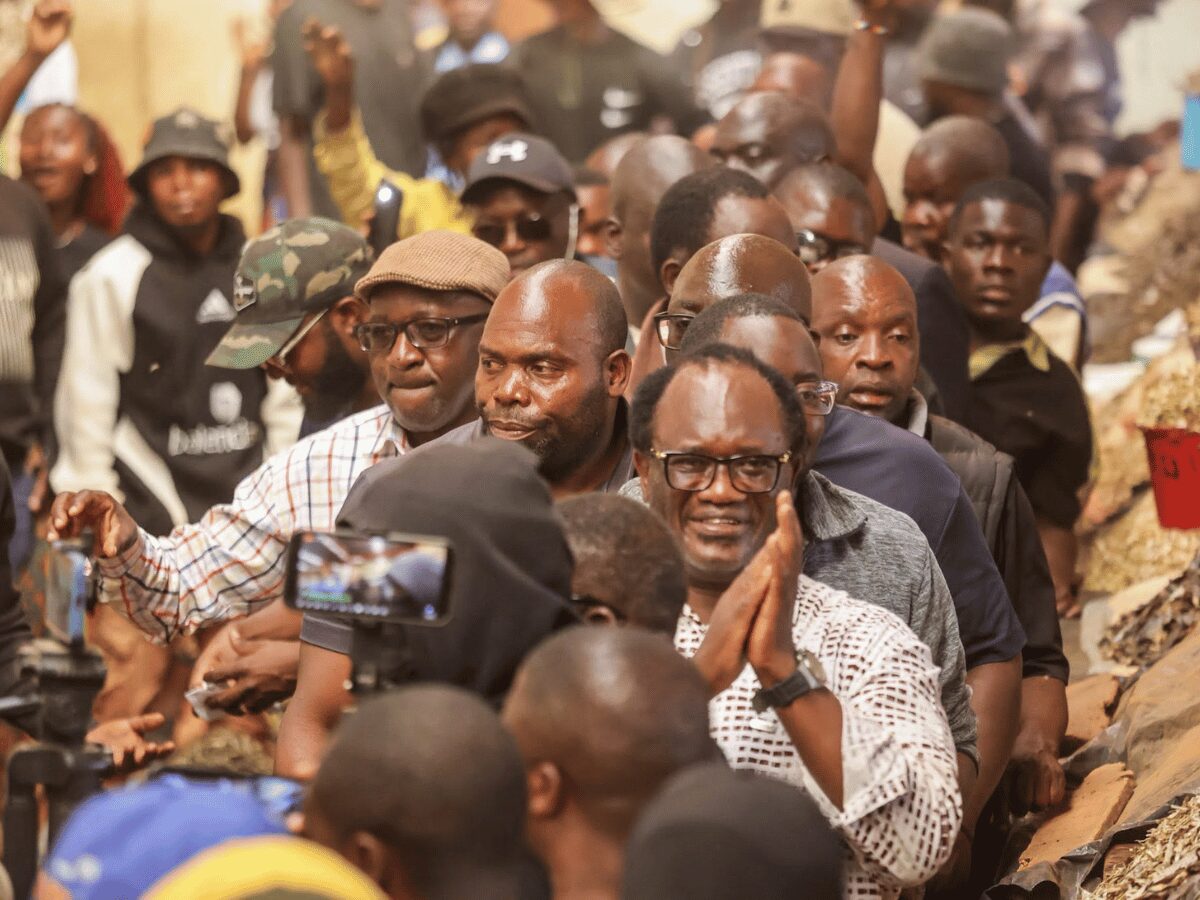
Where the Arguments Actually Clash
| Hakainde Hichilema (UPND) | Brian Mundubile (Tonse Alliance) | |
|---|---|---|
| Age / background | 64. Businessman and farmer; BA, University of Zambia; MBA, University of Birmingham | 55. Lawyer and MP; first presidential run |
| Running mate | Mutale Nalumango (incumbent VP) | Makebi Zulu |
| Core pitch | Macroeconomic recovery: inflation down, reserves up, mining investment returning | A recovery that has not reached ordinary households; government by statistics rather than by results |
| Signature pledges | Continuity: protect gains in energy, roads, education, health | $12bn energy mobilisation; 300,000+ jobs via 12 farming blocks; an excavator and vehicle per marketeer; repeal cyber law |
| Central line of attack on rival | Says the opposition campaign has lost momentum and financial resources | Says loadshedding could return once the election passes and that rule of law is applied selectively |
| Main vulnerability | Cost of living relief lagging behind macro data; opposition accusations of restricted campaigning, denied by government | No executive experience; manifesto’s financing arithmetic questioned by independent analysts; alliance formed late and around a different leader |
The Vulnerabilities Voters Are Weighing
Hichilema’s weak point is the gap between the dashboard and the doorstep. Inflation at 6.5% and $6.5 billion in reserves are real numbers, but Zambian households have told pollsters and reporters that the relief has been slow to show up in prices at the market. The government has also had to answer accusations, which it denies, that a 2025 cybercrime law and December 2025 constitutional amendments enlarging Parliament have made it harder for the opposition to organise and campaign freely.
Mundubile’s weak point is arithmetic. Independent commentary on the Tonse manifesto, including from analysts who broadly welcomed its ambition, has questioned whether a $12 billion energy programme and job creation on the scale promised can be financed and delivered inside the timelines given, since job creation at that volume typically requires sustained above-trend growth and large-scale private investment rather than public spending alone. He also carries the weight of a coalition assembled quickly around a leader other than the one it was originally built for, and enters the race with a fraction of incumbency’s institutional and financial reach; he has appealed publicly for voluntary contributions to fund the final stretch of campaigning.
What Investors and Businesses Are Watching
For business and investors, the immediate question is less about the winner than about continuity. A Hichilema win would be read as a vote for policy continuity: the existing debt restructuring framework, the mining tax and investment regime that has drawn in roughly $12 billion in new commitments, and the exchange rate stability the kwacha has enjoyed through the recovery. A Mundubile win would raise the more open question of how quickly, and how, an interventionist manifesto built around large state-backed programmes would be reconciled with a debt position still being rebuilt from a 2020 default.
Neither outcome is being priced with certainty. Pre-candidacy polling from late 2025, before Mundubile had even entered the race, put Hichilema’s support at 55%, but that data predates the very consolidation of the opposition that has made this a genuine two-horse contest, and both camps are treating the final week as live.
The Numbers That Could Decide It
| Indicator | Position |
|---|---|
| Inflation | 6.5% (June 2026), down from around 24% in August 2021 |
| Foreign exchange reserves | Approximately $6.5 billion |
| New mining investment reported | Approximately $12 billion since debt restructuring |
| Presidential candidates on the ballot | 14, with the contest concentrated on two |
| Election date | Thursday, 13 August 2026, polls open 06:00 to 18:00 |
Key Takeaways
- The election has become a referendum on whether Zambia’s macroeconomic recovery, falling inflation, rebuilt reserves and returning mining investment, has been felt by ordinary households.
- Hichilema is running on continuity and a five-year record; Mundubile is running on the argument that the record has not reached the people who need it most.
- The Tonse Alliance’s manifesto is the most interventionist opposition economic programme this cycle, and its financing has drawn scrutiny alongside its ambition.
- Businesses and investors are watching for policy continuity risk more than for the outcome itself, given Zambia’s still-recovering debt position.
- Both campaigns enter the final week claiming momentum; only the 13 August count will settle it.
Related Reading
- Ballot Papers Arrive in Livingstone Ahead of August Polls
- Hichilema Condemns Political Violence, Warns of “Full Consequences” for Offenders
- Judicial Independence Key to Fair Election Outcomes, Says Chief Justice Malila
- Hichilema Warns Mopani Copper Mines Over Unpaid Pensioner Benefits
- ZAF Prays for Peaceful Elections Ahead of Zambia’s 2026 Vote
- Chitambo’s 13 August Vote: Chembe Kunda Runs Independent
- Zambia’s Inflation Is Back in Target. Why Relief May Still Feel Slow
Read also: UPND’s Elvis Nkandu says the opposition has no alternative policies.
Related: The Viral 57% Poll Is Fake: What Zambia’s Real Economic Numbers Say
Read more: Former MMD Chairman Stan Kristafor Endorses Hichilema Ahead of 2026 Polls.
Related: Mundubile Says National Reconciliation Will Be NRPUP’s First 100-Day Priority