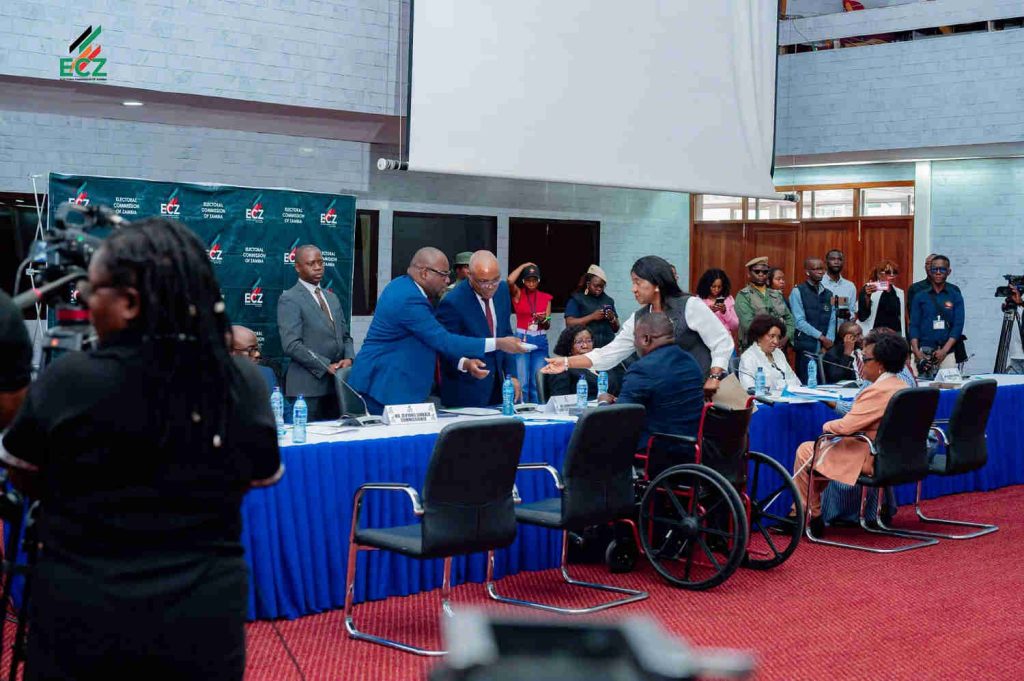
CHITAMBO, Zambia: With 11 days remaining before Zambia votes on 13 August, the contest for Chitambo Town Council chairperson is becoming as much a question of local economic management as of political affiliation. Chembe Kunda is contesting as an independent candidate, according to information supplied to The Zambian Economist, bringing the focus back to the practical choices that shape households, traders and small businesses.
The Electoral Commission of Zambia has set 13 August 2026 as polling day for the general election, which includes council-chairperson elections. In Chitambo, voters will be choosing not only a public representative but also a leader whose stewardship can affect the council’s capacity to plan, collect local revenue, prioritise services and account for public resources.

Why the council chairperson’s race matters economically
National headlines often centre on the presidency, inflation and the exchange rate. Yet the local authority is where many of the costs and opportunities of daily commerce are felt: market sanitation, trading spaces, feeder roads, licensing processes, waste collection and the maintenance of public facilities.
For households, reliable basic services reduce hidden costs: time spent seeking water, transport damage from poor access roads and losses from unsafe or congested market conditions. For small firms, predictable permits and clear local rules help determine whether a trader can invest, employ and grow.
That local lens is especially important as voters weigh the wider economy. Read our guide to why lower inflation can still feel slow at household level and our explanation of why the national budget matters before voting.
An independent candidacy: autonomy and scrutiny
An independent candidate can argue for freedom from party instructions; voters, in turn, should ask how that independence would translate into working relationships with councillors, central government agencies, traditional leaders, local businesses and community groups. Independence is not, by itself, an economic programme. Its value depends on whether it produces transparent priorities, credible delivery plans and an ability to build durable working coalitions.
For Ms Kunda, the central test will be whether her campaign offers verifiable answers on local revenue, service standards and public reporting. No detailed manifesto or costed policy platform was provided to this publication at the time of writing. That makes the campaign period an opportunity for voters and the candidate alike to move the debate from broad promises to measurable commitments.
The questions Chitambo’s economy needs answered
A useful local-election debate should distinguish between projects that a council can directly manage and those requiring national funding or private investment. The following questions would help voters assess any candidate fairly:
- Which three services would be prioritised in the first 12 months, and what would each cost?
- How would the council widen local revenue without imposing arbitrary burdens on marketeers and small enterprises?
- What public timetable would be used to report on Constituency Development Fund-linked projects, procurement and maintenance?
- How would the chairperson support farmers and traders through better market access, storage, feeder-road advocacy and transparent trading spaces?
- What mechanism would allow residents to report service failures and receive a response?
These are practical questions, not partisan ones. They matter because a council that cannot maintain assets or explain its spending risks turning every development announcement into a future repair bill.
From campaign message to investable local governance
Chitambo’s local economy depends on confidence: confidence that traders can operate without avoidable delays, that producers can reach buyers, and that public funds translate into usable infrastructure. The chairperson cannot solve every constraint alone, but can set the standard for open meetings, published priorities and follow-through.
There is a useful national parallel in the debate over the recurring cost of elections: voters are entitled to ask what they will receive for the public resources invested in governance. At council level, the answer should be visible in cleaner markets, better-maintained facilities, simpler local administration and a clearer record of where money goes.
What happens next
As election day approaches, Chitambo voters should judge Ms Kunda and every other candidate against the same economic yardstick: a costed plan, achievable timelines, transparency on funding and a willingness to be held to account after the vote. Campaign meetings are important, but the lasting measure will be whether a future council can make everyday enterprise easier and public services more dependable.
For broader coverage, follow The Economics of Zambia’s 2026 Election, explore our Agriculture and Mining coverage, or submit an article with a local business perspective. Businesses may also list their company, view upcoming events, advertise with us, or contact the editorial team.
Editorial note: This article is an economic analysis of the Chitambo council-chairperson race. Candidate status is based on information supplied to The Zambian Economist and should be read alongside official ECZ notices.
For a full side-by-side of both campaigns, see our analysis comparing Hichilema’s record with Mundubile’s Tonse Alliance platform.