Lusaka is forecast to sit at 34 to 39 degrees Celsius this week while the World Meteorological Organization warns of a super El Niño with a Niño 3.4 anomaly near plus 3.7 degrees. Dr Kelvin Kamayoyo argues the heat has found African cities defenceless because we cut down the defence ourselves.
KEY TAKEAWAYS
- The WMO reported on 8 October 2026 that the central and eastern tropical Pacific is heading for a super El Niño, with the Niño 3.4 anomaly projected near plus 3.7 degrees Celsius between October and December (WMO, 2026a).
- Operational forecasts put Lusaka and Maputo at 34 to 39 degrees Celsius this week, and southern Africa faces below-normal rainfall with drought, water shortages and food insecurity risks into early 2027 (WMO, 2026b; WMO, 2026c).
- Research cited by Dr Kelvin Kamayoyo shows deforested urban centres can run 5 to 7 degrees Celsius hotter than surrounding vegetated areas through the urban heat island effect (IPCC, 2023). Two decades of replacing canopy with concrete made African cities cook their own people.
- His four-part fix: a tree emergency tying every building permit to ten surviving indigenous trees, fifteen percent of urban land ring-fenced as green space and riverine buffers, circular waste systems, and land use plans that stop construction in wetlands.
- A nature-based economy earns continuously from living ecosystems through water, tourism, honey, carbon credits and cooler cities, instead of cutting a forest once to sell charcoal (UNEP, 2024).
Walk through Lusaka at ten in the morning this week. The minibus is a furnace, the market a sauna, the office a kiln with computers. The sun does not shine, it scorches. “The Super El Niño has found most African cities defenceless and they are now sweating,” said Dr Kelvin Kamayoyo, Technical Advisor for African Rivers, in an assessment published on 21 October 2026. His argument is that the defencelessness is not an accident of geography. We made ourselves defenceless. We cut the defence down with chainsaws and called it development.
The numbers behind the sweat are official. On 8 October 2026 the World Meteorological Organization reported that sea-surface temperatures in the central and eastern tropical Pacific are forecast to reach exceptional levels, with the Niño 3.4 anomaly projected at roughly plus 3.7 degrees Celsius between October and December (WMO, 2026a). The seasonal outlook for October to December points to below-normal rainfall across most of southern Africa, with above-normal temperatures over the same period (WMO, 2026b). The South-West Indian Ocean Climate Outlook Forum added that South Africa, southern and central Mozambique, Malawi and south-western Madagascar face drier conditions with increased risks of drought, water shortages and food insecurity (WMO, 2026c).
On the street, that forecast has already landed. Operational outlooks for the week of 21 October 2026 show daytime highs of 34 to 39 degrees Celsius in Lusaka and Maputo with prolonged extreme ultraviolet radiation, and 30 to 34 degrees in Kinshasa under high humidity. This extends the warning this publication carried earlier this month on what a super El Niño does to the world’s rivers: the same event that stresses the Zambezi and the Kafue is now baking the cities built on their banks.
Cities that cook their own people
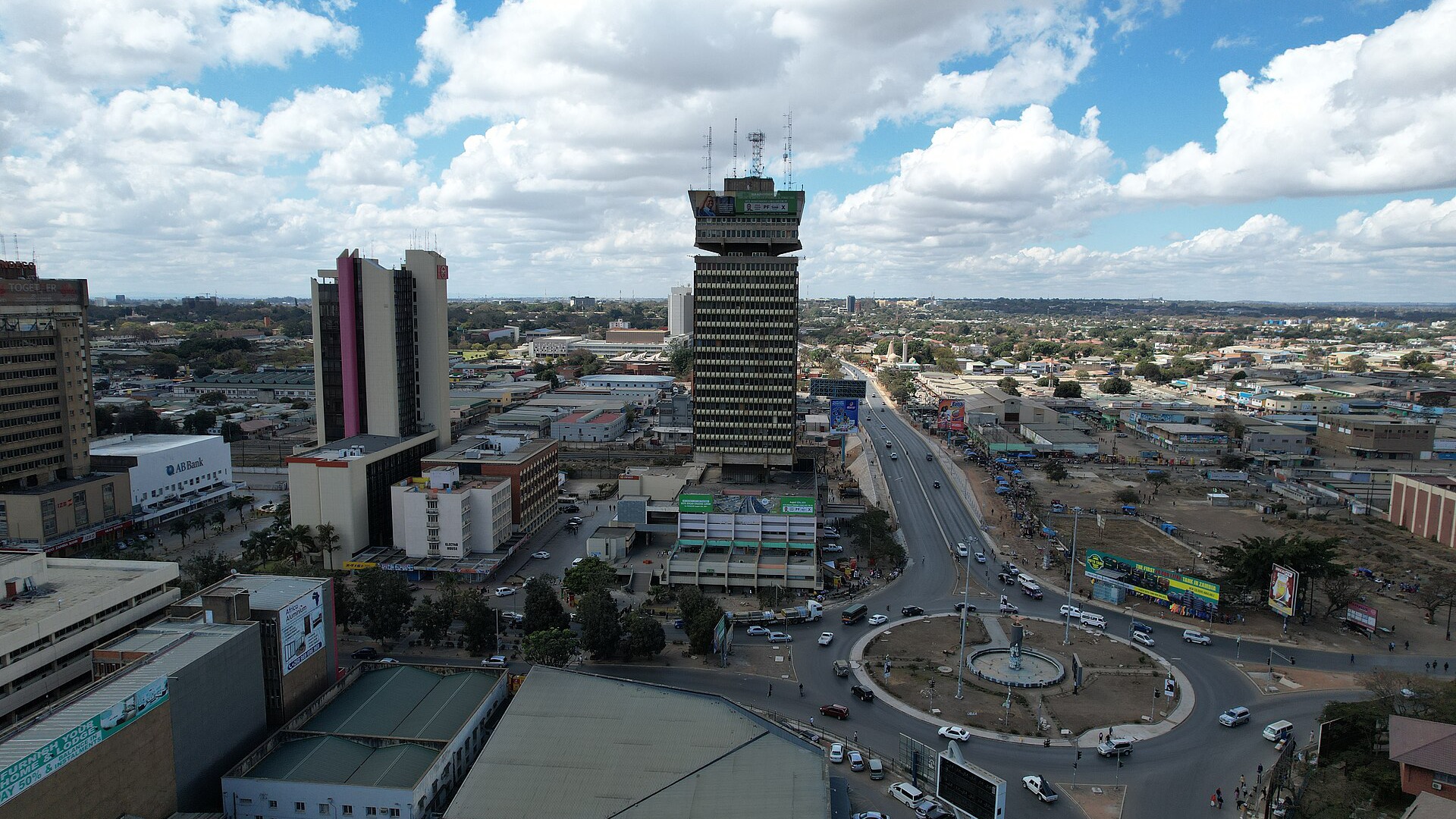
Most African cities today have fewer trees and no working conservation parks. This is visible from any taxi window in Lusaka, Harare, Nairobi, Kinshasa or Dar es Salaam. In two decades, canopy has been replaced with concrete. Trees that took forty years to grow were felled in forty minutes for a plot, a car park or a perimeter wall. Conservation parks that served as the lungs of the city have been excised, encroached or converted into housing estates. What remains is a shadeless, dusty grid that traps heat.
The size of that trap is measured. Deforested urban centres can experience temperatures 5 to 7 degrees Celsius hotter than surrounding rural vegetated areas through the urban heat island effect (IPCC, 2023). A Lusaka homeowner who cut the musamba in the yard to pave parking bought an oven. A township that lost its street trees to charcoal bought a slower one. This runs against the case this publication has made before, that trees are the nerves of planet earth, and the nerves have been cut city by city.
Dr Kamayoyo reaches for literature to explain the collective shrug. In The Great Derangement, Amitav Ghosh described modern society responding to extreme climate events with denial, distraction and disbelief, treating heat and floods as abnormal episodes rather than the new reality (Ghosh, 2016). People watch the city get hotter every year and still cut the last tree, as if the science were fiction. Rachel Carson had made the same point about removing natural buffers a half-century earlier in Silent Spring: when the ecological balance goes, nature retaliates and the urban poor suffer first (Carson, 1962).
Waste is the second stove
Heat is only half of the urban diagnosis. Most African cities also run poor waste systems, and the two problems compound. Decomposing organic waste generates methane, a greenhouse gas that traps heat, while blocked drains cause flash floods in the rainy season and stagnant contamination in the dry season (UNEP, 2024). Low river flows increase the concentration of pollutants and cut dissolved oxygen, directly threatening public health (UNEP, 2024).
Victor Hugo called the sewers the conscience of the city in Les Misérables: a city that does not clean itself, and does not provide air, light and green space for its poor, poisons itself (Hugo, 1862). Lusaka’s own experience with cholera outbreaks in dense, low-lying settlements where drains and shallow wells share the same ground is the local proof. The throwaway economy that Annie Leonard described in The Story of Stuff, which pushes waste onto the poorest neighbourhoods, is not an imported theory either (Leonard, 2010). It is the operating model of many an African dumpsite.
The economics of keeping nature alive
Dr Kamayoyo’s positive programme is a nature-based economy: an economy that makes money because nature is healthy, not in spite of it. Formally, it is an economic system that derives sustainable livelihoods, jobs and GDP from the protection, restoration and sustainable management of ecosystems, rather than from their depletion (UNEP, 2024). Instead of cutting a forest once to sell charcoal, a city keeps the forest and earns continuously from clean water, tourism, honey, fruits, carbon credits, cooler streets and fertile soils.
Vandana Shiva made the same case from Indian soil decades ago in Staying Alive: communities that kept their forests alive earned more and survived longer than those who sold the forest once (Shiva, 1988). Robert Bullard’s research on environmental justice showed the distribution problem, that the poorest communities live nearest the polluting facilities and in the most treeless parts of town (Bullard, 1990). And Ebenezer Howard’s Garden Cities of To-Morrow set out the planning answer in 1902: towns with a permanent green belt, affordable housing and integrated nature are cooler, healthier and more productive (Howard, 1902).
What African cities must do now
Dr Kamayoyo’s prescription is survival infrastructure, not decoration.
| Measure | What it requires | Who acts |
|---|---|---|
| Tree emergency | Every building permit tied to ten indigenous trees planted and surviving one year | Councils and developers |
| Green land ring-fence | At least fifteen percent of urban land held as conservation parks, plus riverine buffer zones of at least fifty metres (UNEP, 2024) | Ministry of Local Government, councils |
| Circular waste | Segregation at source, composting, recycling and energy recovery | Councils, households, private recyclers |
| Land use discipline | No construction in wetlands or on river sources; build around trees, not over them | Planning authorities |
The civic precedent exists. Wangari Maathai’s Green Belt Movement showed that ordinary people can push back desertification and urban heat by planting indigenous trees and reclaiming environmental governance, tree by tree, park by park (Maathai, 2006). Chinua Achebe’s lesson in Things Fall Apart is the warning side of the same coin: when a community abandons its own norms and institutions for land and trees, it cannot resist external shocks (Achebe, 1958).
What it means for business, investors and policy
For business: heat is already a cost. Outdoor and informal-sector workers lose productive hours, refrigeration and cooling bills rise, and a shaded premises is worth more than a paved one. Developers who plant and retain indigenous trees on new estates are selling the cheapest climate adaptation available. Waste processors, composters and recyclers have a growing raw material stream that councils currently burn or bury.
For investors: urban forestry, carbon credits from restored municipal land, eco-tourism within city catchments and circular waste ventures are all revenue lines that depend on nature staying alive, which is the definition of a nature-based economy (UNEP, 2024). El Niño years will keep pricing the alternative.
For policy: the four measures above cost less than one season of heat-related health expenditure, load shedding compensation and flood repairs. Zambia’s commitments under its climate agenda and the continental guidance on riverine buffers (UNEP, 2024) give the legal cover. What has been missing is enforcement against construction in wetlands and on river sources.
We have spent twenty years building shadeless cities. Now we are sweating inside them. Super El Niño has found us defenceless because we deforested our defence. As Maathai put it, we are called to do something, however small, and the cumulative action restores the defence (Maathai, 2006). Plant or perish. Plan or roast.
For comments, contact the researcher and author on email: kamayoyokm@gmail.com
References
Achebe, C. (1958) Things Fall Apart. London: Heinemann. | Bullard, R.D. (1990) Dumping in Dixie. Boulder: Westview Press. | Carson, R. (1962) Silent Spring. Boston: Houghton Mifflin. | Ghosh, A. (2016) The Great Derangement. Chicago: University of Chicago Press. | Howard, E. (1902) Garden Cities of To-Morrow. London: Swan Sonnenschein. | Hugo, V. (1862) Les Misérables. Paris: A. Lacroix. | IPCC (2023) Climate Change 2023: Synthesis Report. Geneva: Intergovernmental Panel on Climate Change. | Leonard, A. (2010) The Story of Stuff. New York: Free Press. | Maathai, W. (2006) Unbowed: A Memoir. New York: Alfred A. Knopf. | Shiva, V. (1988) Staying Alive. London: Zed Books. | UNEP (2024) Africa Water Quality Outlook: Rivers Under Pressure. Nairobi: United Nations Environment Programme. | Weather25 (2026) Maputo and Luanda 7 day weather forecast, 21 October 2026. | Weather.com (2026) Kinshasa Live Weather & Forecast, 21 October 2026. | WMO (2026a) WMO El Niño/La Niña Update, 8 October 2026. Geneva: World Meteorological Organization. | WMO (2026b) Seasonal Forecast Referenced in WMO Update: October-December 2026. Geneva: World Meteorological Organization. | WMO (2026c) El Niño Will Unleash Multiple Hazards in South-West Indian Ocean Region. Geneva: World Meteorological Organization.
WARNING! All rights reserved. This material and all other digital content on this website may not be reproduced, published, broadcast, rewritten, or redistributed, in whole or in part, without the prior express permission of The Zambian Economist. Where permission is granted, the content must be clearly credited to “The Zambian Economist,” with “www.zambianeconomist.com” prominently displayed.
WhatsApp: +260775574228 | Email: info@zambianeconomist.com © 2026 The Zambian Economist.
Work With The Zambian Economist: Advertise With Us | List With Us | Submit an Article