Finance Minister Situmbeko Musokotwane landed in Thailand on Sunday for the IMF and World Bank Annual Meetings, three days after signing a staff-level agreement on a new US$1.47 billion loan programme. Here is what the delegation is actually there to do, and what it could mean for your pocket.
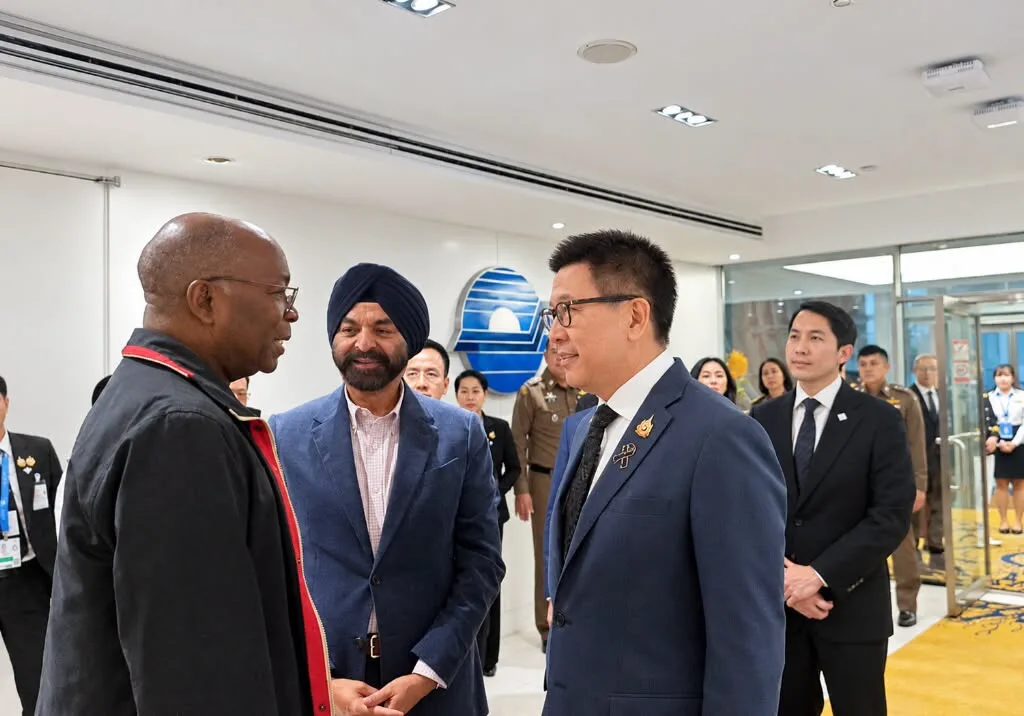
Photo: Finance Minister Dr Situmbeko Musokotwane, World Bank Group President Dr Ajay Banga, and Thailand’s Deputy Prime Minister and Minister of Finance Ekniti Nitithanprapas at Suvarnabhumi International Airport, Bangkok. Credit: Ministry of Finance and National Planning (MoFNP), #mofnp, Lusaka-Zambia.
Finance and National Planning Minister Dr Situmbeko Musokotwane arrived in Bangkok on Sunday for the 2026 IMF and World Bank Annual Meetings, running from 12 to 18 October, leading a delegation that includes Secretary to the Treasury Felix Nkulukusa, Bank of Zambia Governor Dr Denny Kalyalya, and Zambia Revenue Authority Commissioner General Dingani Banda.
At Suvarnabhumi International Airport, he was photographed with World Bank Group President Dr Ajay Banga and Thailand’s Deputy Prime Minister and Minister of Finance Ekniti Nitithanprapas. Thailand is hosting more than 15,000 delegates for the meetings.
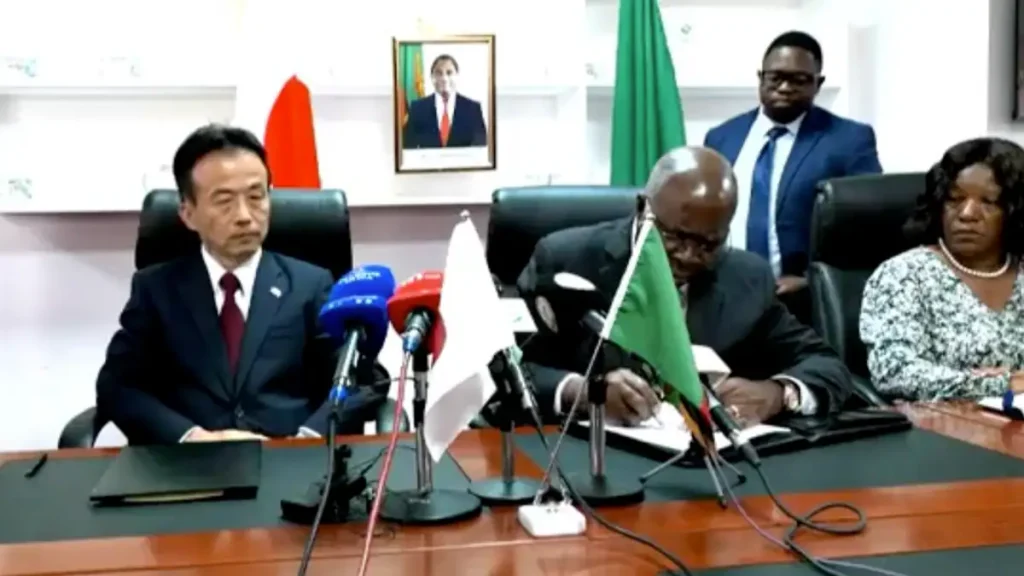
The optics matter less than the timing. Zambia arrives in Bangkok three days after reaching a staff-level agreement with the IMF on a proposed 36-month Extended Credit Facility of US$1.47 billion, equivalent to SDR 1.076 billion. A staff-level agreement is not a loan. It is a handshake on paper that still needs agreed policy reforms, prior actions, and approval from IMF Management and the Executive Board before any money moves.
What the delegation will actually do
On the IMF side, the programme is the main item. Zambia wants to move the successor ECF arrangement through the remaining steps toward Board approval. The arrangement is intended to reinforce fiscal and debt sustainability while supporting private-sector-led growth. The delegation will sit in the International Monetary and Financial Committee Plenary, meet the IMF’s African and Fiscal Affairs Departments, and join the African Caucus meeting with IMF Managing Director Kristalina Georgieva, where sovereign debt vulnerabilities, borrowing costs and domestic resource mobilisation are on the table.
With the World Bank Group, the agenda shifts to money for projects: infrastructure, energy security, private capital mobilisation and job creation. That includes the Development Committee Meeting, consultations with Dr Banga, and the International Development Association Forum, the channel through which Zambia accesses concessional financing.
The Lobito Corridor thread
The meetings build on the 5-6 October Lobito Corridor Coordination Meeting held in Lusaka with Angola and the Democratic Republic of Congo. The corridor is a transport and trade route with potential investments in mining, agriculture and manufacturing along it. For Zambia, the prize is cheaper regional trade and investment in the value chains that sit on top of it.
The delegation will also talk to Africa50 about financing the Angola-Zambia electricity interconnector, domestic power transmission, road and border infrastructure, and the Kazungula Bridge Corridor. Separate meetings with Standard Bank, Standard Chartered, Citi and J.P. Morgan will cover Zambia’s macroeconomic outlook and investment prospects.
Why this matters to an ordinary Zambian
All of it feeds into what President Hakainde Hichilema called the Grow Zambia Agenda in his 9 October address to Parliament: production, investment, exports, employment and household incomes. An IMF programme that holds keeps the Kwacha steadier and borrowing costs lower, which feeds through to prices. Power transmission deals matter because load-shedding has a cost. Mining and corridor investment matters because copper still pays most of the bills.
Musokotwane put the test himself: Zambia’s participation must be judged by progress in mobilising investment, advancing infrastructure, and translating economic gains into employment, stronger household incomes and improved living standards.
That is the standard. The meetings end on 18 October.
Related: EAZ Backs US$1.5 Billion IMF Deal, Wants Treasury to Leave Room for Private Borrowers.