By Zambian Economist Analyst
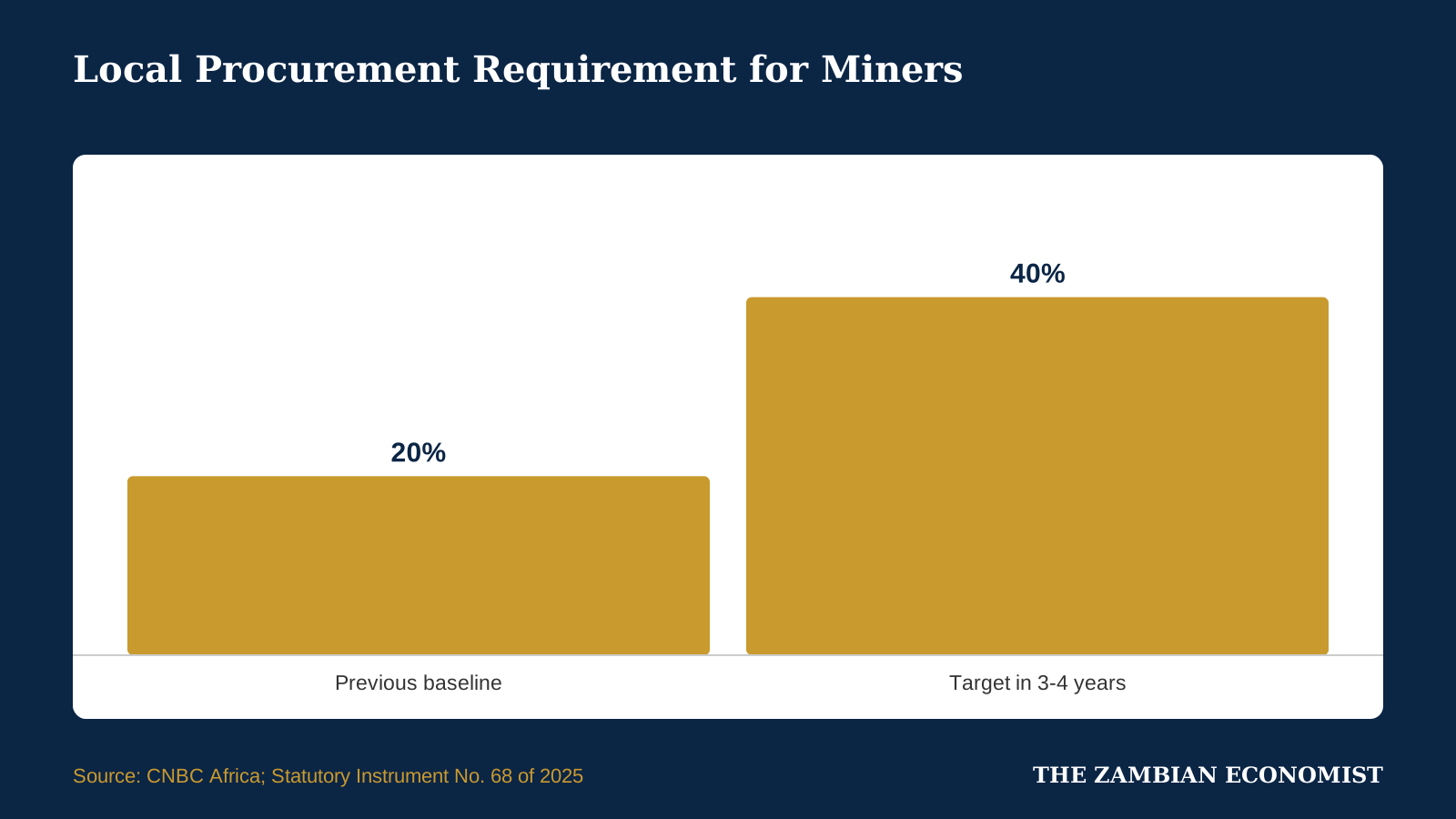
From 1 January 2026, large-scale miners must lift local procurement from around 20% toward a 40% target within three to four years. Here is what the rule requires and who carries the adjustment cost.
What SI 68 Actually Requires
Local Content Regulations under Statutory Instrument No. 68 of 2025 took effect on 1 January 2026, formalising a push that mining executives had been anticipating for two years. The rules require large-scale miners to lift the share of goods and services they buy from Zambian-owned suppliers from roughly 20% toward a target of 40%, phased in over three to four years.
The regulations sit alongside Zambia’s broader Three Million Tonnes Copper Production Strategy, which targets annual copper output of 3 million tonnes by 2031, up from 890,346 tonnes in 2025. Government has paired the production ambition with a domestic-participation requirement so that a bigger mining sector also means a bigger local supplier base, not just bigger export volumes.
Why It Matters Now
More than 8 million Zambians are registered to vote on 13 August, and mining executives have used the campaign period to press candidates on what they need to hit the tripling target: stronger incentives for mineral processing, faster exploration licensing and, above all, more power. Signal Risk lead analyst Menzi Ndhlovu has flagged power shortages and labour pressures as the two biggest threats to the expansion, alongside the practical challenge of building a supplier base that can actually meet mine-site quality and volume standards.
Who Carries the Adjustment Cost
For mining houses, the rule adds a compliance layer on procurement that previously ran on cost and reliability alone. For Zambian suppliers, from engineering workshops to transport and catering firms, it is the clearest policy signal yet that scaling up to serve the Copperbelt is now a stated national priority rather than an aspiration. The gap between the two groups is capacity: many domestic firms have never had to meet the volume, safety and quality-assurance standards that mine sites demand.
| Metric | 2024 | 2025 | 2031 target |
|---|---|---|---|
| Copper output (tonnes) | 825,513 | 890,346 | 3,000,000 |
| Local procurement share | ~20% | ~20% | 40% (phased) |
Business Implications
Zambian SMEs in engineering, logistics, catering and maintenance services have a widening addressable market, provided they can meet mine-site procurement standards. Trade associations and chambers of commerce have an opening to run supplier-readiness programmes tied directly to the 40% target.
Investor and Policy Implications
Investors have been told to expect limited changes to Zambia’s mining fiscal regime after the election, which keeps the tax environment predictable. Local-content compliance is the newer variable mining houses are now pricing into procurement planning, alongside the power supply question that industry figures say could do more than any single policy to determine whether the 3-million-tonne target is reachable.
Key Takeaways
- SI No. 68 of 2025 took effect on 1 January 2026, requiring miners to lift local procurement from around 20% toward 40% within three to four years.
- The rule is designed to run alongside Zambia’s target of tripling copper output to 3 million tonnes by 2031.
- Power supply and supplier readiness, not the tax regime, are the constraints industry figures flag most often.
Related reading: Zambia Copper Production 2026: Can Copper Deliver Jobs, Growth and Lasting Prosperity? and Why the World Is Watching Zambia’s Copper on 13 August
Related: Construction is facing the same local-content pressure mining now regulates.
Related: Hichilema’s Second Term: What It Means for Zambia’s Economy, Markets and Diplomacy
Related: Chitambo Chairperson-Elect Mourns Nshimba Mine Deaths, Pledges Safety First