Southern Province has confirmed 257 anthrax-positive cattle, ten days after veterinary officials said no livestock case had been recorded this year. The outbreak lands on a sector central to government’s export plans, just as Zambia prepares for a rainy season forecast to be hotter and drier than usual.
By Kelvin Chisanga
KEY TAKEAWAYS
- Southern Province has recorded 257 anthrax-positive cattle out of more than 33,000 tested, while Muchinga Province has 10 suspected human cases and more than 90 reported animal deaths near the Munyamazi River.
- The confirmed cattle cases came ten days after the Director of Veterinary Services told reporters no anthrax had been recorded in livestock this year, a gap that shows how fast a contained wildlife event can move into commercial herds.
- Government has dispatched 600,000 vaccine doses across Southern, Eastern, Western and Muchinga provinces and made stock movement permits mandatory, with district-by-district testing announced as the next phase.
- The outbreak reaches a sector government is counting on for US$1 billion in annual beef exports under the Grow Zambia Agenda, built around a national herd Muchinga officials put at seven million cattle.
- Zambia’s 2023 outbreak produced 684 suspected human cases and four deaths and still took weeks to contain; this one arrives as the country braces for a forecast “supersized” El Niño season.
A warning that arrived on schedule
The 2023 anthrax outbreak should have taught Zambia that early warning has to turn into early economic action. That December, the country recorded 684 suspected human anthrax cases and four deaths, most linked to people eating meat from infected animals. It was contained, but not before it strained district health budgets and disrupted trade in some of the country’s most cattle-dependent provinces.
Three years on, a similar pattern is repeating, and moving faster.
Ten days, and the story changed
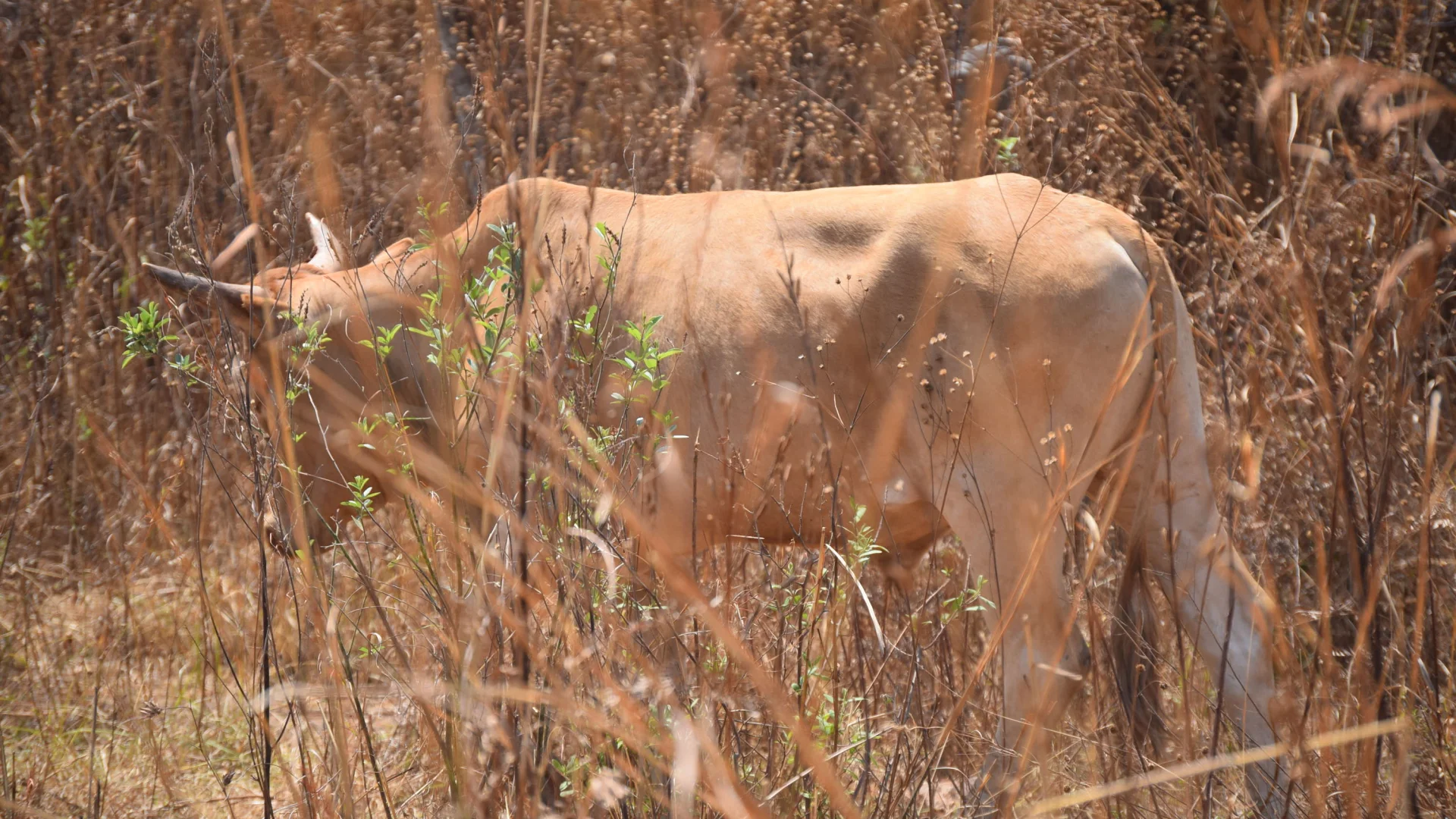
On 18 September, Director of Veterinary Services Dr Charles Maseka told reporters that no anthrax had been recorded in livestock this year, even as wildlife deaths were already being reported in national parks. His own Assistant Director, Dr Fusya Goma, struck a different note the same week, warning that El Niño conditions raised the likelihood of more anthrax cases reaching livestock, not only wildlife. By 21 September, Southern Province had an answer: 257 cattle had tested positive for anthrax out of more than 33,000 animals tested across the province’s camps.
In Muchinga Province, the picture had already turned earlier in the month. Following reports of suspected human anthrax cases in Mpika district from 31 August, a Rapid Response Team investigation found 10 suspected human cases and more than 90 animal deaths concentrated around the Munyamazi River, near a hippopotamus carcass. Eighty percent of the suspected human cases were male, and half were children aged 10 to 15, a pattern consistent with anthrax’s usual route into rural households: through butchering, handling or eating meat from an infected carcass.
The government’s response, in numbers
Government has moved quickly on logistics. By the third week of September, 600,000 anthrax vaccine doses had been dispatched: 100,000 to Southern Province, 58,000 to Eastern Province, 462,000 to Western Province and 20,000 to Muchinga. Mpika, Shiwang’andu and Lavushimanda districts began a vaccination campaign on 20 September targeting 20,000 domestic animals, and the Ministry of Fisheries and Livestock has made stock movement permits mandatory for traders, directing abattoirs to slaughter only animals carrying one. Southern Province’s Acting Permanent Secretary, Gift Monde, said the provincial administration was meeting traditional leaders to work out how testing can be built into upcoming ceremonies, where cattle from multiple herds often mix.
That is a reasonable first response to a confirmed outbreak. It is not yet a sign the disease is contained, and the coming rainy season makes the difference between the two matter more than usual.
Why the rains change the calculation
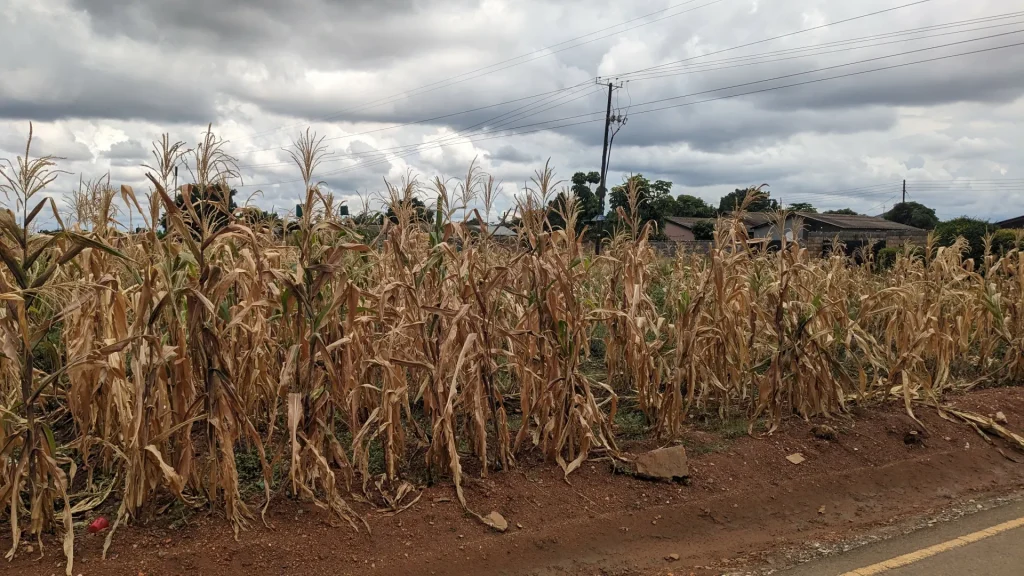
Anthrax spores can lie dormant in soil for decades and resurface when heavy rain, flooding or drought stress disturbs the ground animals graze on, which is why Zambia’s outbreaks tend to cluster around river systems and game management areas rather than spread evenly across the country. The Zambia Meteorological Department has already forecast a hotter, drier 2026/2027 season shaped by a “supersized” El Niño event, serious enough that government ordered drought preparations across the agriculture sector in early September. The same conditions that concentrate livestock and wildlife around shrinking water points, the mechanism Dr Goma flagged as a disease risk, are the conditions farmers now have to plan around for grazing and water access more broadly.
If anthrax spreads further into livestock during that season, the consequences run wider than animal health: loss of cattle and household wealth, reduced meat and milk output, movement restrictions that disrupt local markets, higher veterinary costs and weaker rural incomes, layered onto an El Niño season already expected to squeeze maize output and grid power.
A sector with a lot riding on it
The timing is awkward for a specific reason. Beef exports are one of eight targets in President Hakainde Hichilema’s Grow Zambia Agenda, the 10-10-5-3-3-1-1-1 framework that sets a US$1 billion annual beef export goal alongside targets for maize, power, tourism, copper, soybeans, wheat and sugar. Officials in Muchinga, launching this month’s vaccination campaign, put the national ambition at seven million cattle, a figure that assumes herd growth, not disease losses, over the next several years.
None of this means the outbreak threatens the target outright; current case numbers are still a small fraction of the national herd. It does mean a preventable animal disease event is now competing for the same veterinary budget, the same district administrative capacity and the same rainy season logistics the export push depends on.
Implications for business, investors and policy
For abattoirs and livestock traders, the immediate cost is procedural: mandatory movement permits and district testing slow the supply chain in the short term, a cost worth carrying if it keeps the outbreak contained. For investors watching the beef export target, the outbreak is an early test of whether the institutions behind Grow Zambia can respond to a shock without losing momentum on the underlying goal. For policymakers, the gap between “no anthrax in livestock” on 18 September and 257 confirmed cases on 21 September is the more useful signal: surveillance capacity needs to catch an outbreak before it is confirmed by county-wide testing, not after.
What would make this manageable
Zambia has the institutional memory to handle this well. The One Health programme built with the Food and Agriculture Organization after the 2023 outbreak already links veterinary, wildlife and public health surveillance in the districts most exposed to anthrax. What the current outbreak tests is whether that system can move as fast as the disease: surveillance and vaccination funding that does not lapse once a province reports zero cases, water and sanitation preparedness in districts likely to flood first, and rapid-response financing that does not wait for a second confirmed cluster before it is released.
Prevention is the cheaper option, economically as well as medically. Four deaths and 684 suspected cases in 2023 cost less, in every sense, than a repeat outbreak spreading through a rainy season already forecast to strain food and power supply at the same time. Zambia does not need a new warning. It has one, dated 21 September 2026, and the response over the coming weeks will show whether the lesson from 2023 was learned.
Related reading: Government Orders Immediate Drought Preparations as Zambia Faces Drier, Hotter 2026/2027 Rainy Season, Super El Niño 2026/2027: Why a Warm Patch in the Pacific Threatens Zambia’s Food, Power and Budget and Zambia’s Maize Export Opportunity Faces Food-Security and Climate Risk.
On the sector this touches: Musokotwane Pivots Zambia Toward Export-Led Growth as Jobs and Investment Take Centre Stage and FRA’s Slow Depots and Storage Shortfall Are Turning Zambia’s Bumper Harvest Into a Logistics Problem.
WARNING! All rights reserved. This material and all other digital content on this website may not be reproduced, published, broadcast, rewritten, or redistributed, in whole or in part, without the prior express permission of The Zambian Economist. Where permission is granted, the content must be clearly credited to “The Zambian Economist,” with “www.zambianeconomist.com” prominently displayed.
WhatsApp: +260775574228 | Email: info@zambianeconomist.com
© 2026 The Zambian Economist.