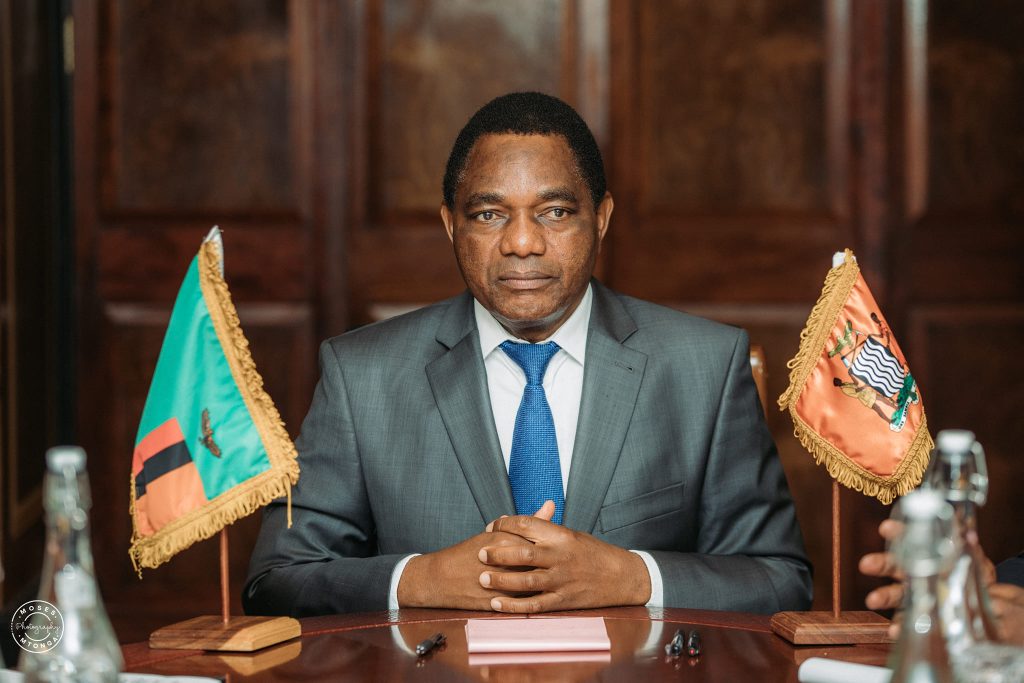


Chitambo District’s incoming council chairperson, Chembe Kunda, has condoled with bereaved families and promised that residents’ lives and safety will lead the new council’s agenda, after a fatal incident at Nshimba Mines in Lusenga Ward.
Key takeaways
- Chembe Kunda, Chitambo District’s council chairperson-elect, has condoled with families after a fatal incident at Nshimba Mines in Lusenga Ward, in a statement issued on 31 August 2026.
- The statement confirms deaths and injuries but gives no casualty figures, cause or incident date; those details rest with police and the mining inspectorate.
- Kunda pledged that residents’ lives and safety would be the incoming council’s highest priority, adding that the district’s resources “must serve the people”.
- Chitambo has recorded repeated deaths at informal gold mining sites in recent years, according to media reports.
- Mining licences are issued by the Ministry of Mines and Minerals Development, not councils, so the pledge will be judged on how well the district coordinates with national regulators.
Chembe Kunda, the council chairperson-elect for Chitambo District, has condoled with families who lost relatives at Nshimba Mines in Lusenga Ward and pledged that the lives and safety of residents will be the highest priority of the incoming council.
The statement, dated 31 August 2026, is the fullest public response yet from the district’s incoming leadership to an incident that killed an unspecified number of residents and left others injured. It does not say when the incident happened, what caused it or how many people were affected.
“It is with great sorrow that I address you today following the tragic incident that occurred at Nshimba Mines in Lusenga Ward,” the statement reads. Kunda extended condolences to bereaved families, wished the injured a quick recovery and asked the Lusenga community to remain united “in prayer and in support of one another during this difficult time”.

What Kunda has promised
The statement commits the incoming leadership to treat “the life and safety of our people” as its highest priority. Its sharpest line speaks to the question that follows every mining death in a mineral-bearing district: “Chitambo is blessed with resources, but resources must serve the people.”
What it does not do is name the machinery behind the commitment. The statement lists no casualty figures and sets no timeline, leaving enforcement to the government bodies that actually regulate mining.
A district that has buried miners before
Chitambo, in Central Province, has seen this kind of loss before. Media reports have documented a string of deaths at informal gold sites in the district, including a 48-year-old man killed when earth collapsed on him at the Kusuko gold site, and a separate collapse in which one miner died and another survived. Chief Chitambo has complained publicly about illegal miners harassing farmers, and Central Province authorities have previously moved to halt gold rushes and demolish makeshift camps around open pits.
Lusenga is one of the nine wards listed by the Chitambo council, and Nshimba sits in the stretch beyond Nshimba Stream, where the council recently built a Constituency Development Fund bridge to reconnect the area. It is the same ward now in mourning.
What a council chairperson can actually do
Here is the governance catch. District councils do not licence mines and do not employ mine inspectors. Licences come from the Ministry of Mines and Minerals Development under the Mines and Minerals Development Act, and safety at licensed operations falls to the ministry’s inspectorate. At unlicensed sites, enforcement usually arrives with the police, often after the deaths.
What a council does control is CDF money, ward-level planning and a public platform. The Nshimba bridge shows the first of those at work in this very ward. Whether “resources must serve the people” becomes a formal buying point for local gold, safer livelihoods or sustained pressure on the ministry will depend on coordination that no council chairperson can compel alone.
Why the pits stay full
Artisanal gold mining has spread across rural Zambia because it pays cash where formal jobs are scarce. The government’s main answer so far has been formalisation. Zambia Gold Company, a subsidiary of ZCCM-IH, was set up in 2020 to buy gold from artisanal and small-scale miners so that production moves through official channels instead of informal pits.
Every death at an unlicensed site is evidence that the official channel is still too far from too many miners. The same tension runs through Zambia’s wider resource debate, from the local-content rules now binding miners to the country’s three-million-tonne copper ambition.
What to watch next
- Casualty numbers and the cause of the incident, once police and the Ministry of Mines publish findings.
- Whether Nshimba Mines turns out to hold a licence, and what the inspectorate does about the site.
- The Central Province administration’s response, given its record of clearing gold rushes in Chitambo.
- Kunda’s first council decisions once sworn in, including whether Lusenga’s CDF priorities change.
The statement is a condolence note with a promise attached. For Lusenga’s bereaved families, the test of “resources must serve the people” will not be the sentence itself, but whether the next gold rush in Chitambo ends differently.
More coverage of Zambia’s mines is collected in our Agriculture and Mining hub.
WARNING! All rights reserved. This material and all other digital content on this website may not be reproduced, published, broadcast, rewritten, or redistributed, in whole or in part, without the prior express permission of The Zambian Economist. Where permission is granted, the content must be clearly credited to “The Zambian Economist,” with “www.zambianeconomist.com” prominently displayed.
WhatsApp: +260775574228 | Email: info@zambianeconomist.com © 2026 The Zambian Economist.
Work With The Zambian Economist: Advertise With Us · List With Us · Submit an Article