The Bank of Zambia Governor’s reflections on Bangkok put a practical question before Zambia: how should investment and public spending translate into work and household income?
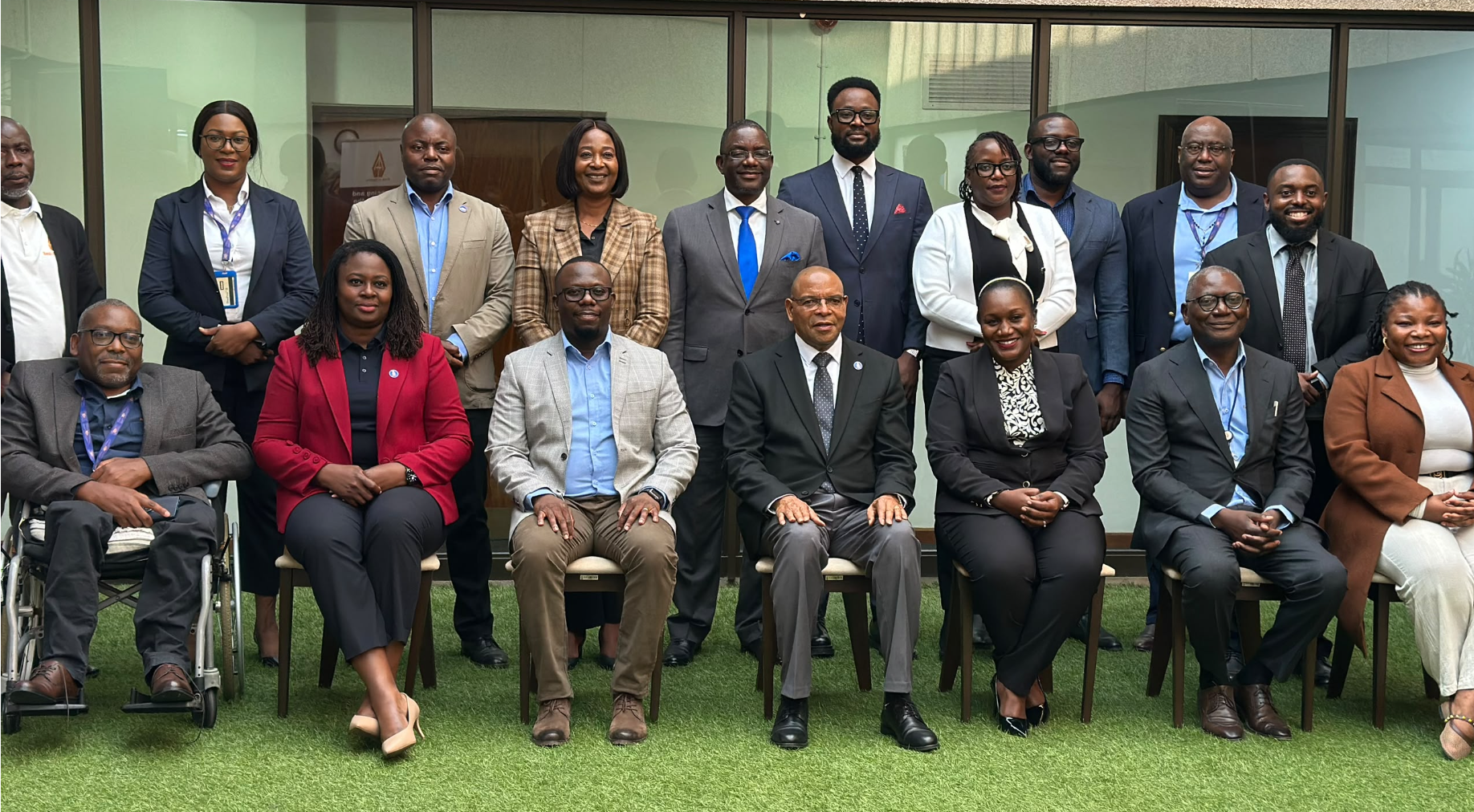
Featured photograph: Dr Denny Kalyalya with the EAZ delegation at the Bank of Zambia, October 2026. Archive image, not the Bangkok meetings. Photo: EAZ.
Bank of Zambia Governor Dr Denny Kalyalya has called for a national focus on delivery, arguing that Zambia’s resources should produce employment and better living standards.
In remarks shared by the Ministry of Finance and National Planning on its official Facebook page, Kalyalya reflected on Thailand’s economic transformation during the 2026 IMF and World Bank Group Annual Meetings in Bangkok. The IMF’s official meeting information gives the dates as 12–18 October.
“We have to change our mindset. We have to be a goal-getting society,” he said. He called for Zambia’s natural resources and workforce to contribute more effectively to economic activity.
What can Zambia learn from Bangkok?
Kalyalya pointed to Bangkok’s functioning urban economy, where food services, transport and logistics help sustain livelihoods. The economic lesson is about connections: one enterprise’s demand can become another enterprise’s income.
A food business needs farmers, delivery services and customers who can reach it. A manufacturer needs dependable electricity and buyers. Training becomes more useful when employers need the skills being taught. These are examples of how productive activity spreads through an economy, rather than claims that a particular Zambian programme has already delivered those results.
Zambia’s circumstances differ from Thailand’s. The comparison offers a way to examine how cities and institutions support enterprise; it does not establish that Zambia can reproduce Thailand’s development path simply by changing attitudes.
Our related coverage examines Zambia’s practical skills and jobs lessons from Thailand. Kalyalya’s remarks extend that discussion to the delivery of economic outcomes.
How should CDF contribute to jobs in Zambia?
The Governor expressed optimism that ongoing development initiatives, supported by the expanded Constituency Development Fund, could improve living standards. The statement did not provide a new funding allocation, project completion figures or a forecast of jobs to be created.
That distinction matters. Spending creates an opportunity to improve services and support businesses, but the amount allocated cannot, on its own, tell citizens whether a project works.
A useful assessment would follow a project beyond disbursement. Is the facility operating? Can people use it? Where enterprise support is involved, does the business remain active after receiving assistance? Has temporary construction work led to any continuing employment?
These are proposed measures of delivery, not outcomes established by the Governor’s statement. Publishing project costs and completion information would help residents judge results in their own constituencies.
What does this mean for small businesses and workers?
For a small business in Lusaka or on the Copperbelt, a call for greater productivity becomes practical when it addresses the cost of operating and the ability to serve customers. Electricity interruptions, expensive finance or delays in payment can prevent a willing entrepreneur from expanding.
A results-driven approach therefore has to include the institutions that shape those conditions. Workers can improve their skills and firms can improve how they operate, while public agencies remain responsible for the services and decisions within their control.
For young people seeking employment opportunities in Zambia, the relevant outcome is work that pays and lasts. Course enrolment, a loan approval or the launch of a project is an intermediate step. Each needs to be assessed against what happens afterwards.
What should investors and policymakers watch?
Businesses considering investment need evidence that infrastructure functions and that suppliers can meet orders. Clear project schedules and reliable services make it easier to decide when to hire or expand.
Policymakers can make Kalyalya’s message concrete by assigning responsibility for delivery and publishing progress against defined targets. Where a programme is intended to support employment, reporting should distinguish short-term work from sustained jobs and explain how the figures were measured.
Readers can follow this discussion through our Business & Economy coverage and Macroeconomy & Policy section.
Kalyalya’s challenge is to make Zambia’s resources work for its people. Citizens should be able to trace that ambition to a functioning service, an enterprise earning income or a job that continues after a project launch.
Sources: Ministry of Finance and National Planning, official Facebook page, statement on Dr Kalyalya’s Bangkok reflections, viewed 25 October 2026; IMF Annual Meetings information. Analysis and proposed delivery measures are The Zambian Economist’s.
Explore our Business Directory and Events. Learn about us or contact the newsroom.
WARNING! All rights reserved. This material and all other digital content on this website may not be reproduced, published, broadcast, rewritten, or redistributed, in whole or in part, without the prior express permission of The Zambian Economist. Where permission is granted, the content must be clearly credited to “The Zambian Economist,” with “www.zambianeconomist.com” prominently displayed.
WhatsApp: +260775574228 | Email: info@zambianeconomist.com© 2026 The Zambian Economist.