The Congo River could supply a much larger share of Africa’s electricity. Dr Kelvin Kamayoyo argues that turning Inga’s potential into useful power requires cross-border grids, credible financing and protection for the people who depend on the river.
Grand Inga could help reduce Africa’s electricity deficit if generation at the Congo River site is developed alongside the networks and institutions needed to deliver power. Its promise lies in the scale of the resource; its success will be measured by electricity reaching homes and productive businesses.
Africa’s energy challenge, in my view, is a failure to turn abundant natural potential into dependable services. Saying the continent has an energy-harnessing problem draws attention to that gap. It does not remove the need to build generation, strengthen utilities or extend connections to people who remain beyond the grid.
For Zambia, the question is practical. A mine needs power when production is scheduled. A small food processor needs refrigeration that works. An entrepreneur deciding whether to buy equipment needs confidence that electricity will be available at a price the business can afford.
What is Grand Inga, and how much power could it provide?
Grand Inga describes the ambition to develop much more of the hydropower resource at Inga, on the Congo River in the Democratic Republic of Congo (DRC). It should not be confused with a completed 42,000 MW power station.
The World Bank’s Inga factsheet, updated in June 2025, puts the site’s potential at around 42,000 MW. It describes a possible sequence of up to eight projects. Existing Inga 1 and Inga 2 plants already operate at the site; Inga 3 would be the next development.
That distinction matters when assessing claims about Africa’s power supply. Potential generating capacity is different from dependable output. Design, river conditions and plant availability affect production, while transmission losses and network constraints affect what reaches customers. The headline capacity figure cannot establish a final tariff or a commissioning date.
What has moved beyond discussion?
In June 2025, the World Bank approved a US$250 million credit as the first phase of a US$1 billion Inga 3 Development Program. The support begins with local development, institutional capacity and preparation rather than the delivery of a finished hydropower plant.
The Bank’s April 2026 implementation report records that the programme became effective on 2 February 2026. It also rates overall risk as high, including governance, institutional capacity and environmental and social risks.
My argument is that Africa should advance credible projects with greater urgency. Urgency must produce better decisions: published studies, accountable procurement and financing arrangements that survive changes of government. It cannot substitute for them.
Why would Zambia need more than a dam?
A power station in the DRC would not automatically end Zambia’s power deficit. Electricity would need an available route through the regional network, and buyers would need contracts they can honour. Utilities and regulators would have to resolve how power is priced, dispatched and paid for across borders.
For Zambia, the investment case should therefore examine the delivered cost of electricity, including transmission and other charges. A low generation cost at the source may still produce an expensive import if the route requires extensive new infrastructure or financing carries a heavy premium.
Long-term imports could support industrial planning if supply is dependable. They should be assessed alongside domestic generation, storage where appropriate and measures to reduce network losses. Zambia cannot postpone investments that can improve supply sooner while waiting for a project of Inga’s scale.
Our coverage of the African Hydro Symposium preparations examines the connection between hydropower, water security and climate resilience. The wider discussion belongs within our Business & Economy coverage and Zambia Economy 2026 series.
How does Inga fit a continental electricity market?
The African Union’s African Single Electricity Market and Continental Power Systems Masterplan provide a framework for connecting national systems and expanding regional trade. The AU linked these initiatives to practical work on distribution-grid loss reduction in Lusaka in April 2026.
The lesson is that new generation and better networks need to advance together. Regional power pools can help countries share resources, but an interconnector is useful only if its operating arrangements work and power can move when buyers need it.
Industrialisation needs those details settled. Processing minerals or agricultural produce closer to their source requires businesses to commit money over many years. Predictable electricity supply helps them make that decision; an unfinanced promise does not.
Can hydropower protect the Congo River?
River health should be a condition of development. It would be misleading, however, to assume that building a dam automatically restores a river, reduces flooding or improves fisheries and navigation. Outcomes depend on the design and its effects across the basin, including downstream.
Studies must establish how altered flows would affect habitats and the livelihoods of river-dependent communities. People facing displacement or loss of access to land and fisheries need meaningful participation, credible compensation arrangements and enforceable remedies.
The IFC’s Performance Standard 6 sets out a mitigation hierarchy: avoid impacts, minimise them, restore where possible and consider offsets for residual harm. Its biodiversity requirements differ by habitat; critical habitat calls for net gains, not merely a blanket promise of “zero net loss”. Meeting safeguards also does not, by itself, guarantee finance.
The Africa Water Vision 2063 and Policy, launched in February 2026, places water security, resilient ecosystems and transboundary cooperation within Africa’s development agenda. Inga should be tested against those aims through evidence and measurable commitments.
Who should benefit first?
Congolese communities must see a credible route from hosting the resource to receiving better services and economic opportunities. Regional exports should form part of a development programme that explains who receives electricity, who pays for the infrastructure and how local livelihoods are protected.
For investors, the questions are equally concrete: who will buy the power, on what terms, and who bears construction, currency and payment risk? Publishing those answers makes the debate more useful than repeating the project’s theoretical capacity.
Africa should pursue Inga’s potential with purpose. The standard of success is affordable electricity delivered to people and enterprises, with the Congo River’s ecological functions protected and affected communities able to hold project institutions to account.
This contributor opinion was edited for clarity and checked against the linked primary sources. Project potential is distinguished from committed capacity and electricity delivered. The policy recommendations are the author’s views.
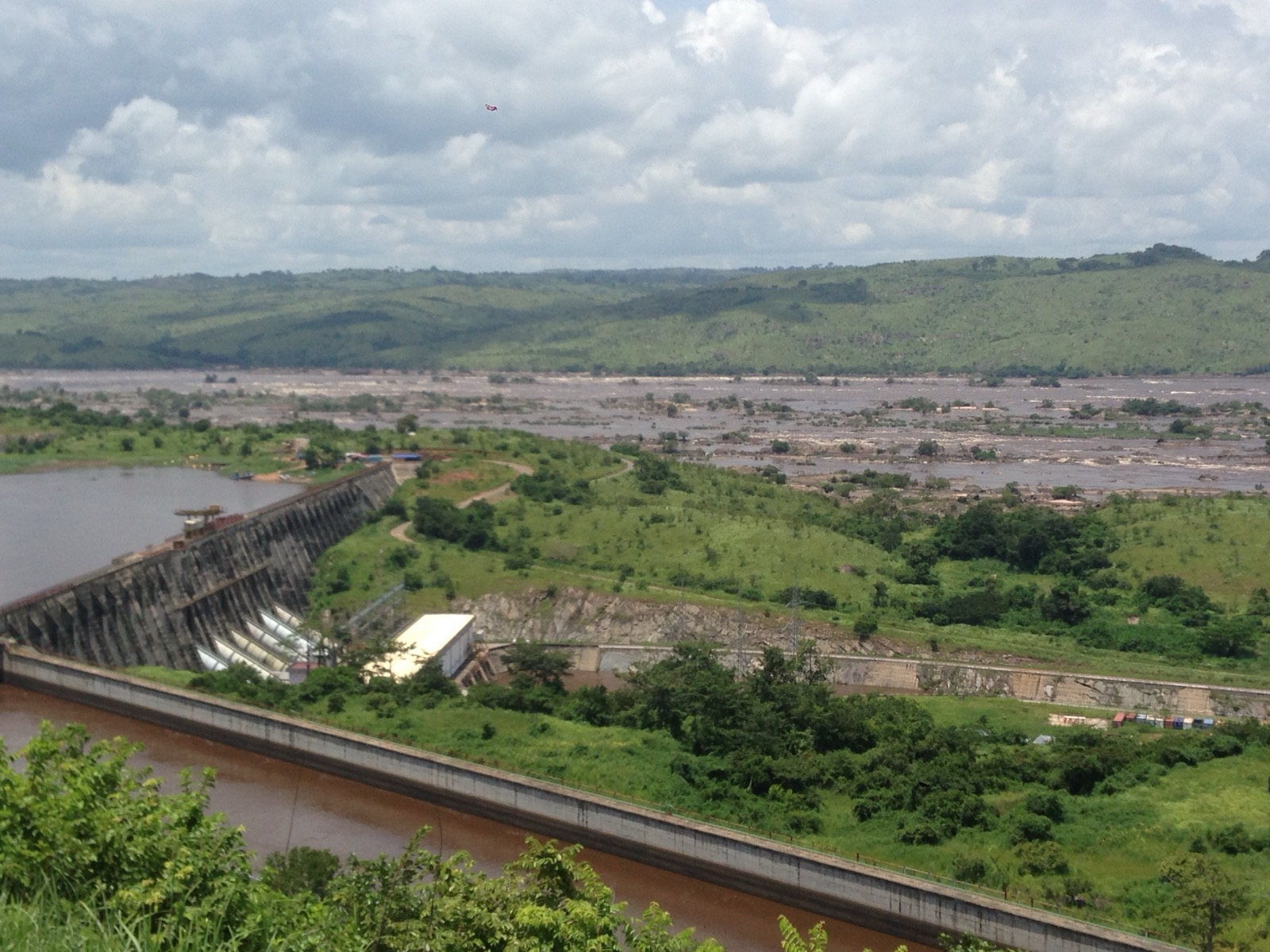
Featured photograph: existing infrastructure at the Inga site and the Congo River, photographed in March 2019. It does not depict a completed Grand Inga project. Photo: Χρίστος Ιμμανοελ / Wikimedia Commons, CC BY-SA 4.0. Cropped and resized; the adapted photograph is available under the same licence.

About the author
Dr Kelvin Kamayoyo
Economist, International Trade Law Scholar and Investment Consultant | Lusaka, Zambia
Dr Kelvin Kamayoyo has over 13 years of experience across academia, policy and the private sector. He is Programme Director of the Purposive Mega-Infrastructure Investment Programme, Lead Consultant at Acacia Trade and Development Consulting Group and Technical Advisor for African Rivers. He is an adjunct lecturer at ESAMI, NIPA and Zambia Open University, and a former board member of the Economics Association of Zambia.
Read his contributor profile · More by Dr Kamayoyo · kamayoyokm@gmail.com
Explore the Business Directory and Events. Read about the publication or contact the newsroom. Third-party photographs retain their stated licences.
WARNING!
All rights reserved. This material and all other digital content on this website may not be reproduced, published, broadcast, rewritten, or redistributed, in whole or in part, without the prior express permission of The Zambian Economist. Where permission is granted, the content must be clearly credited to “The Zambian Economist,” with “www.zambianeconomist.com” prominently displayed.
WhatsApp: +260775574228 | Email: info@zambianeconomist.com
© 2026 The Zambian Economist.