By Zambian Economist Analyst
Six days from now, Zambians vote. By most measures this is one of the most closely watched elections on the continent this year, not for its uncertainty but for the opposite reason: markets have already made up their minds about the likely outcome, and are now pricing what comes after it.
Zambia’s local currency bonds have returned about 36 percent in dollar terms so far this year, the best performance of any emerging market Bloomberg tracks. That is not a typical election year number. It reflects a five year story that began with a sovereign default, moved through a difficult debt restructuring, and has settled into what international investors now treat as a credible, if fragile, recovery. President Hakainde Hichilema is widely expected to win a second term against a fragmented opposition led by Brian Mundubile. The rally in Zambian bonds is, in large part, a bet that policy continuity survives 13 August intact.
That bet comes with conditions attached, and this is where the arithmetic gets more interesting than the politics.
The IMF question
Zambia’s previous 1.7 billion dollar IMF programme, which underpinned the 2024 debt restructuring, ended in January. Investors see a new programme as the clearest available signal of whether the reform path continues or drifts. A government that moves quickly to a successor arrangement after polling day tells one story. A government that delays, or negotiates from a weaker fiscal position than it inherited, tells another. Either way, the first weeks after the election matter more to bondholders than the vote itself.
A wider deficit than planned
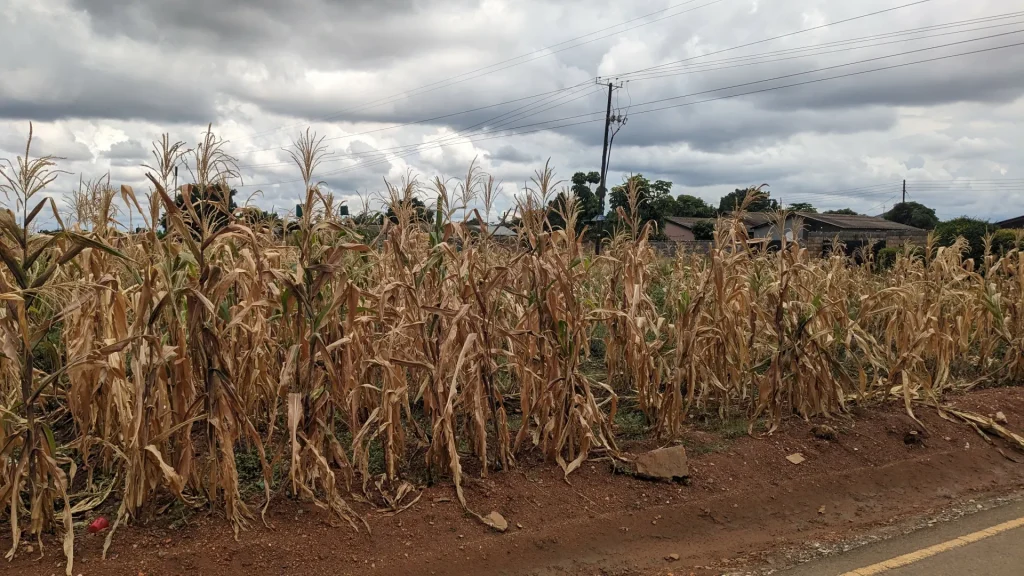
The government’s original target for the 2026 fiscal deficit was 2.1 percent of GDP. Standard Chartered now forecasts something closer to 5 percent, and the reasons are worth sitting with because they are not really about the election at all. An El Nino driven drought has cut hydropower generation, forcing emergency power imports that are running at roughly 50 million dollars a month. At the same time, a bumper maize harvest, up an estimated 28 percent year on year, is pushing farmers’ surplus back onto a grain market where government remains the buyer of last resort. Both pressures existed before the campaign started and will still be there after the results are announced. The question investors are asking is whether the next administration shifts grain marketing toward private buyers, which would ease the fiscal strain, or keeps the state absorbing the surplus, which would not.
Copper, still the anchor
Zambia is Africa’s second largest copper producer, and that fact alone keeps the country on the radar of mining majors and, increasingly, of governments in the US, UK and Australia racing to secure critical mineral supply chains outside China. Regulatory certainty, not political drama, is what this constituency of investor cares about most. A smooth, credible election result is worth more to that group than any single policy promise made on the campaign trail.
The other side of the ledger
None of this is happening in a vacuum for households and small businesses. Extended load shedding, in places running to twenty hours a day, has real costs that do not show up cleanly in a bond yield. The opposition’s pitch, built around drawing on the country’s roughly 6.5 billion dollar foreign exchange reserves to cushion the price of mealie meal, fuel and electricity, is a direct response to that lived experience. It is also, in the assessment of most market analysts, a path that raises the risk of kwacha depreciation and could complicate talks with the IMF. That trade off, between near term relief and medium term stability, is the real choice on the ballot, whichever names appear on it.
What to watch after 13 August
For anyone trying to read the economy rather than the politics in the days ahead, three signals will say more than any victory speech: how quickly a new IMF engagement is announced, whether the 2026 budget is revised to reflect the wider deficit honestly rather than papered over, and what, if anything, changes in how the state buys and sells maize. The bond market has already told you what it expects. Whether that expectation holds is now a matter of delivery, not forecasting.
This piece is part of the Zambian Economist series on the economics of the 2026 general election. It does not grade parties or candidates; it sets out the numbers and lets readers draw their own conclusions.
Related reading:
- The Economics of Zambia’s 2026 Election
- Two years on: the Eurobond restructuring
- Zambia’s fiscal deficit and the IMF
- Zambia’s copper FDI pipeline
Also read: Kelvin Chisanga: Why Zambia’s election is a major economic event.