
Key takeaways
- • Zambia produced 890,345.8 tonnes of copper in 2025, up 7.8% from 2024, but the 2031 target is still more than three times that output.
- • Mines cannot expand on their own. Electricity, water, transport, housing, health services and technical training must be planned against the same production timetable.
- • The 2025 Sino Metals tailings failure showed the cost of weak safeguards: 50,000 cubic metres of acidic effluent entered waterways feeding the Kafue River.
- • The better test is development per tonne: Zambian jobs, local procurement, tax revenue, value addition and stronger productive capacity.
Zambia’s copper ambition is an economy-wide project, not a production contest. If power stations, rail corridors, water systems, technical colleges, clinics and regulators do not grow with the mines, extra ore will strain the systems meant to turn it into national income.
The latest full-year figures show why the supporting work cannot wait. Copper output rose from 825,513 tonnes in 2024 to 890,345.8 tonnes in 2025, according to the Zambia Revenue Authority’s 2025 annual report. To reach three million tonnes by 2031 from that base, production would have to grow by more than 22% a year on average for six years.
Three million tonnes is a national capacity test
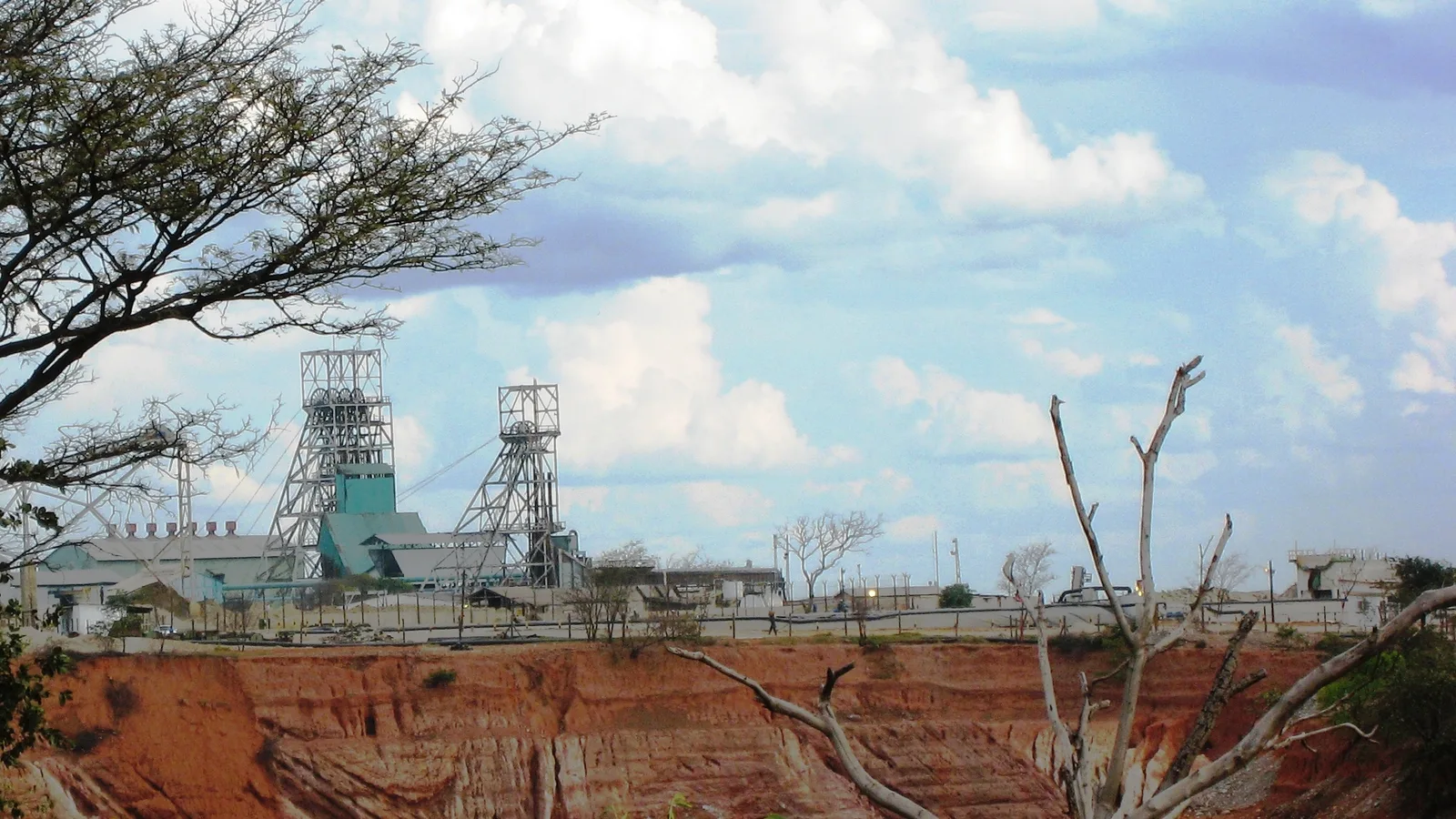
The government’s National Three Million Metric Tonnes Copper Production Strategy is broader than a mine-output target. It covers exploration, mining, processing and the supply of goods and services, and it says production growth should support employment, innovation and environmentally sound mining.
That framing is right. The harder task is making several public systems move to one timetable. Mining approvals may sit with one ministry, but an expansion can also depend on new generation and transmission, water permits, roads, rail capacity, serviced land, health facilities and training institutions. A delay in any one of them becomes a production bottleneck or a cost shifted to communities.
Zambia should therefore treat the 2031 target like a national delivery programme, with named projects, responsible institutions, financing plans and milestones published for each supporting sector. A mine expansion announced without a matching infrastructure and public-service plan is only half an investment decision.
Every extra tonne leans on power, water and transport
Copper mining and processing require reliable electricity around the clock. The drought-driven power shortages of 2024 showed the exposure created by a system that depends heavily on hydropower. More mining demand can support new generation, but only if transmission lines, wheeling arrangements and tariffs are planned early enough to prevent mines from competing with households and manufacturers for scarce supply.
The World Bank’s roadmap on Zambia’s energy-transition minerals reaches the same conclusion: expanding copper and other minerals will require upgrades to energy, transport and water infrastructure, with much of the finance expected from the private sector.
Match mine approvals with infrastructure commitments
Each large expansion should show its expected electricity load, water demand, road and rail use, housing needs and waste footprint before production ramps up. Government can then connect those forecasts to the national power plan, the Lobito and TAZARA rail programmes, border upgrades and municipal investment in Copperbelt and North-Western Province.
Rail matters because moving more concentrate, cathodes, fuel and equipment by road alone raises maintenance costs, congestion and accident risk. Water matters because mines, farms, utilities and communities draw from the same catchments. Housing and clinics matter because production growth attracts workers and contractors before local councils have necessarily expanded their revenue base.
Environmental and health safeguards must grow first
The clearest warning came on 18 February 2025, when a tailings facility operated by Sino Metals Leach Zambia failed at Chambishi. The Water Resources Management Authority reported that about 50,000 cubic metres of acidic effluent entered the Chambishi River and then flowed through the Mwambashi system towards the Kafue. At some monitoring points, pH fell as low as 1.91 and several metals exceeded Zambian ambient and drinking-water standards.
That incident turned a mining failure into a water, health, farming and public-finance emergency. Zambia had to deploy lime along more than 100 kilometres of the river system, monitor over 20 sites and begin audits of tailings facilities in the Copperbelt and North-Western provinces.
Tripling copper throughput without expanding inspection, laboratory testing, emergency response and rehabilitation capacity would be a false economy. ZEMA, WARMA, the Mine Safety Department, local authorities and health services need staffing and equipment plans tied to the mine pipeline. Environmental bonds and closure funds should be large enough to pay for rehabilitation even if an operator fails.
Occupational health deserves the same treatment. More shafts, processing plants, contractors and haulage create more exposure to dust, chemicals, fatigue and heavy machinery. Production targets should sit beside published indicators for fatalities, serious injuries, occupational disease screening and compliance inspections.
Skills and local suppliers decide who receives the income
The labour constraint is already visible. A World Bank assessment found that, in 2023, only 800 students graduated from institutions meeting mining-industry quality standards, and just one in five had qualifications at technician or artisan level. Those are the workers mines need for electrical, mechanical, welding, safety and processing roles.
The same assessment estimates that direct mining employment could rise from 56,000 to 200,000 if the production target is met, with a further 300,000 indirect and induced jobs across the economy. These are scenarios, not guaranteed outcomes. They depend on Zambia training people before vacancies appear and on mines buying competitively from Zambian firms.
The new mining local-content rules can widen the multiplier if they are paired with supplier finance, certification, quality control and timely payment. A quota that local firms cannot finance or meet simply creates imports through intermediaries. A supplier-development programme builds companies that can sell to several mines and later export into the wider Copperbelt.
Value addition must rest on competitive foundations
More copper should support refining, fabrication and manufacturing where Zambia can compete. Copper wire, cable, electrical panels, mining inputs, repair services and selected energy technologies offer more durable productive capacity than exporting additional tonnes with little domestic linkage.
But value addition cannot be ordered into existence. Manufacturers need steady power, skilled engineers, working capital, standards laboratories, predictable tax treatment and access to regional markets. The policy question is not whether every stage of the copper chain must occur inside Zambia. It is which stages can become commercially viable here, what obstacles hold them back and what public support produces a measurable return.
That approach also protects the fiscal case. Tax concessions should be linked to investment, jobs, local purchases, exports or technology transfer, with expiry dates and published evaluations. Zambia needs competition among serious projects, not permanent incentives for production that would have happened anyway.
Measure development per tonne
A national copper dashboard should place output beside the outcomes that justify it. At minimum, government and industry should publish:
- reliable megawatts added for mines and the wider grid, plus hours of supply interruption;
- water abstraction, real-time water-quality compliance and catchment restoration;
- tailings facilities inspected, risks corrected and rehabilitation funds secured;
- Zambian procurement by value, payment times and the number of local suppliers meeting mine standards;
- apprenticeships, technician graduates, safety performance and Zambians promoted into skilled roles;
- copper refined or fabricated domestically and the value of manufactured exports;
- royalties, corporate income tax and other public revenue collected from higher output; and
- community indicators covering clinic pressure, housing, roads, jobs and household livelihoods.
Publishing these measures would make trade-offs visible. It would also let Parliament, investors and host communities judge whether a production increase is creating capacity or merely using it up.
Copper policy should be run as an economic transformation programme
Zambia has a rare opportunity. Copper demand, renewed mine investment and the recovery of major operations can lift exports and public revenue. Yet tonnes alone will not diversify the economy or improve life in mining towns.
The 2031 target should be managed across mining, energy, water, transport, health, education, local government and finance. Success means that every rise in output is accompanied by safer work, cleaner water, stronger suppliers, more skilled Zambians, better infrastructure and a larger domestic tax and production base.
The question at the end of the decade should not be only whether Zambia produced three million tonnes. It should be how much of Zambia became more productive because it did.
Related coverage
- Zambia Agriculture and Mining hub
- Zambia’s Copper Engine: From 890,000 Tonnes to a 3-Million-Tonne Ambition
- Mapping the Copper FDI Pipeline: Vedanta, Mopani and First Quantum’s Zambian Bets
- El Nino Warning: Zambia Told to Fix Its Power Gap Before the Drought Bites
- Doing Business in Zambia
- Events
Related: Lobito Corridor Talks Open in Lusaka With a US$28 Billion Investment Pipeline on the Table.
Related: The Formation Zambia Has Drawn for Growth.
WARNING! All rights reserved. This material and all other digital content on this website may not be reproduced, published, broadcast, rewritten, or redistributed, in whole or in part, without the prior express permission of The Zambian Economist. Where permission is granted, the content must be clearly credited to “The Zambian Economist,” with “www.zambianeconomist.com” prominently displayed.
WhatsApp: +260775574228 | Email: info@zambianeconomist.com
© 2026 The Zambian Economist.
Work With The Zambian Economist
Related: Chitambo Chairperson-Elect Mourns Nshimba Mine Deaths, Pledges Safety First
Related reading: Grow Zambia targets are realistic within five years, economist says, our assessment of the second-term growth agenda built on the three-million-tonne ambition.