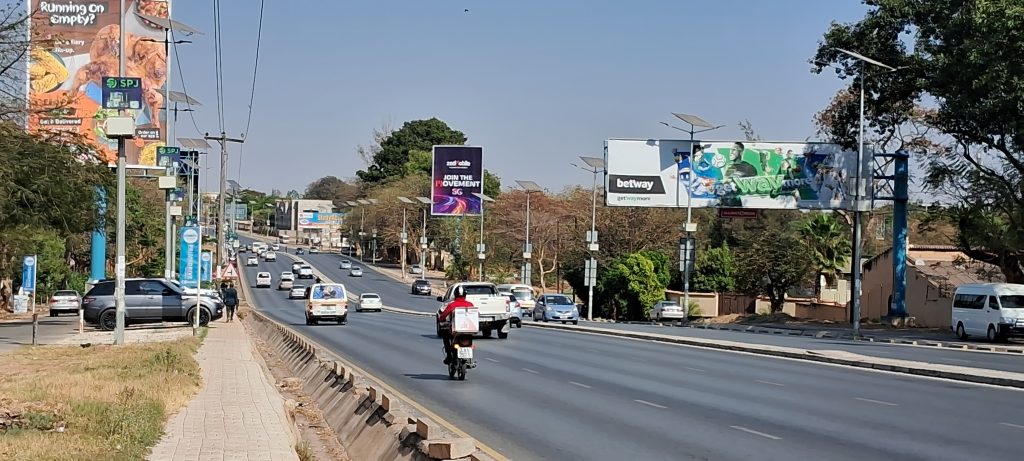


The Judiciary of Zambia has confirmed that a document styled as “the people’s presidential petition” reached Chief Justice Dr Mumba Malila through his private email address, and that he has referred it to the Constitutional Court to decide whether it counts as validly filed. The statement follows Monday’s closure of court premises nationwide on the last day for a legal challenge to the 13 August election result, and does not resolve the central dispute over whether opposition candidate Brian Mundubile was able to lodge his petition through normal channels before the deadline passed.
Key takeaways
- The Judiciary says Chief Justice Mumba Malila received a document called “the people’s presidential petition” by private email from a member of the public, not through the courts’ official channels.
- He has referred the documents to the Constitutional Court for it to decide the separate question of whether the petition was formally and duly filed.
- The Judiciary explicitly distances itself from social media claims that the petition has already been “formally and duly filed,” leaving that determination to the Court.
- The statement follows Monday’s closure of court premises nationwide, on the last day of the seven-day window for challenging the 13 August presidential result.
- It does not say whether the private-email route was Mundubile’s own petition, confirm who sent it, or explain how the closures affected access to the courts that day.
What the Judiciary says happened
In a press statement issued on 25 August 2026 and signed by Deputy Director of Corporate Communications Kalumba Chisambisha-Slavin, the Judiciary said Chief Justice Malila “acknowledges receipt of an electronic mail communication sent to his private email address by a member of the public.” The email, the statement says, contained documentation designated as “the people’s presidential petition,” seeking to challenge the outcome of the 13 August general election and accompanying documents.
The Judiciary said it is “aware of ongoing social media assertions claiming that this petition has been formally and duly filed,” a claim the statement does not confirm. Instead, it says the Chief Justice “finds the mode of communication of official court documents through his private address to be highly irregular,” while noting that he has, “quite exceptionally, using his administrative powers,” referred the documents to the Constitutional Court for its consideration on the question of filing. Affected parties, the statement says, should expect to hear from the Court in due course.
The statement stops short of naming who sent the email, confirming that it originated from Mundubile or his legal team, or detailing what the Constitutional Court will actually decide beyond the filing question.
Why an email reached the Chief Justice at all
The statement lands three days after court premises across Zambia, including the Supreme Court and Constitutional Court complex in Lusaka and High Court premises in several provinces, were closed on 24 August, the final day of the constitutionally mandated seven-day window for a presidential election petition. Armed police sealed off court grounds, and lawyers reported being turned away from the premises. Mundubile, who placed second with roughly 38 percent of the vote to President Hakainde Hichilema’s 60 percent, had said he intended to challenge the result over alleged irregularities; by the close of the deadline, his lawyers said no petition had been formally lodged through the courts.
The Law Association of Zambia and civil society groups raised concerns about the closures and the heavy security presence, and opposition figures accused the government of deliberately obstructing the filing. State House has denied that President Hichilema ordered the closures, saying the President has no constitutional authority over which documents the courts accept and describing the operation as a broader security measure covering several government institutions, not the Judiciary alone.
Against that backdrop, a petition reaching the Chief Justice by private email reads as an attempt to beat the deadline through an unconventional channel once the normal one was physically inaccessible. The Judiciary’s statement does not say whether that reading is correct, only that the communication happened and that the Chief Justice, rather than simply rejecting it for being sent irregularly, chose to pass the underlying question to the court that would ordinarily hear it.
What the Constitutional Court now has to decide
The Judiciary’s statement frames the referral narrowly: the Constitutional Court is being asked to consider “the issue of the filing of the petition,” not the substance of any challenge to the election result itself. That is a procedural question with real consequences. Zambia’s election law sets a strict seven-day window for presidential petitions, and whether a document emailed to a judge’s personal address during a period when court buildings were closed counts as a validly filed petition is not something the Chief Justice can settle unilaterally by referring it onward.
How the Court answers that question will shape the credibility of the entire post-election period. A ruling that treats the email as validly filed would open the door to the underlying challenge being heard on its merits, with implications for the timing of Hichilema’s scheduled inauguration on 1 September. A ruling that it was not validly filed would likely draw fresh criticism that the closures achieved exactly what critics feared: a procedural door closing on Mundubile’s challenge regardless of intent.
Either way, the Judiciary’s own acknowledgment that Zambia’s presidential succession now turns partly on a question about a private email inbox is itself a marker of how unusual this election cycle has become.
Related coverage
- Zambia’s courts close as questions mount over the presidential petition window
- Police cite security assessments at government premises
- State House denies Hichilema ordered court closures
WARNING! All rights reserved. This material and all other digital content on this website may not be reproduced, published, broadcast, rewritten, or redistributed, in whole or in part, without the prior express permission of The Zambian Economist. Where permission is granted, the content must be clearly credited to “The Zambian Economist,” with “www.zambianeconomist.com” prominently displayed.
WhatsApp: +260775574228 | Email: info@zambianeconomist.com
© 2026 The Zambian Economist.