
Zambia has welcomed the European Union Election Observation Mission’s forthcoming final report, but says any reforms it adopts must fit national priorities, Zambian law and the country’s international obligations.
Key takeaways
- Permanent Secretary Etambuyu Anamela Gundersen received an EU Election Observation Mission delegation at Charter House on 27 August.
- The EU mission expects to present its final report to the Government in the last week of October.
- Government says it is available to facilitate implementation of recommendations that it adopts.
- Gundersen said adopted recommendations must be considered in line with Zambia’s national priorities, laws and international obligations.
- The report will follow preliminary EU findings that described a competitive election but raised concerns about unequal conditions and parts of the results process.
Zambia has told the European Union’s election observers that the Government is ready to consider their final recommendations, but adoption will not be automatic. The proposals will be judged against Zambia’s laws, national priorities and international commitments, according to Permanent Secretary for International Relations and Cooperation Etambuyu Anamela Gundersen.
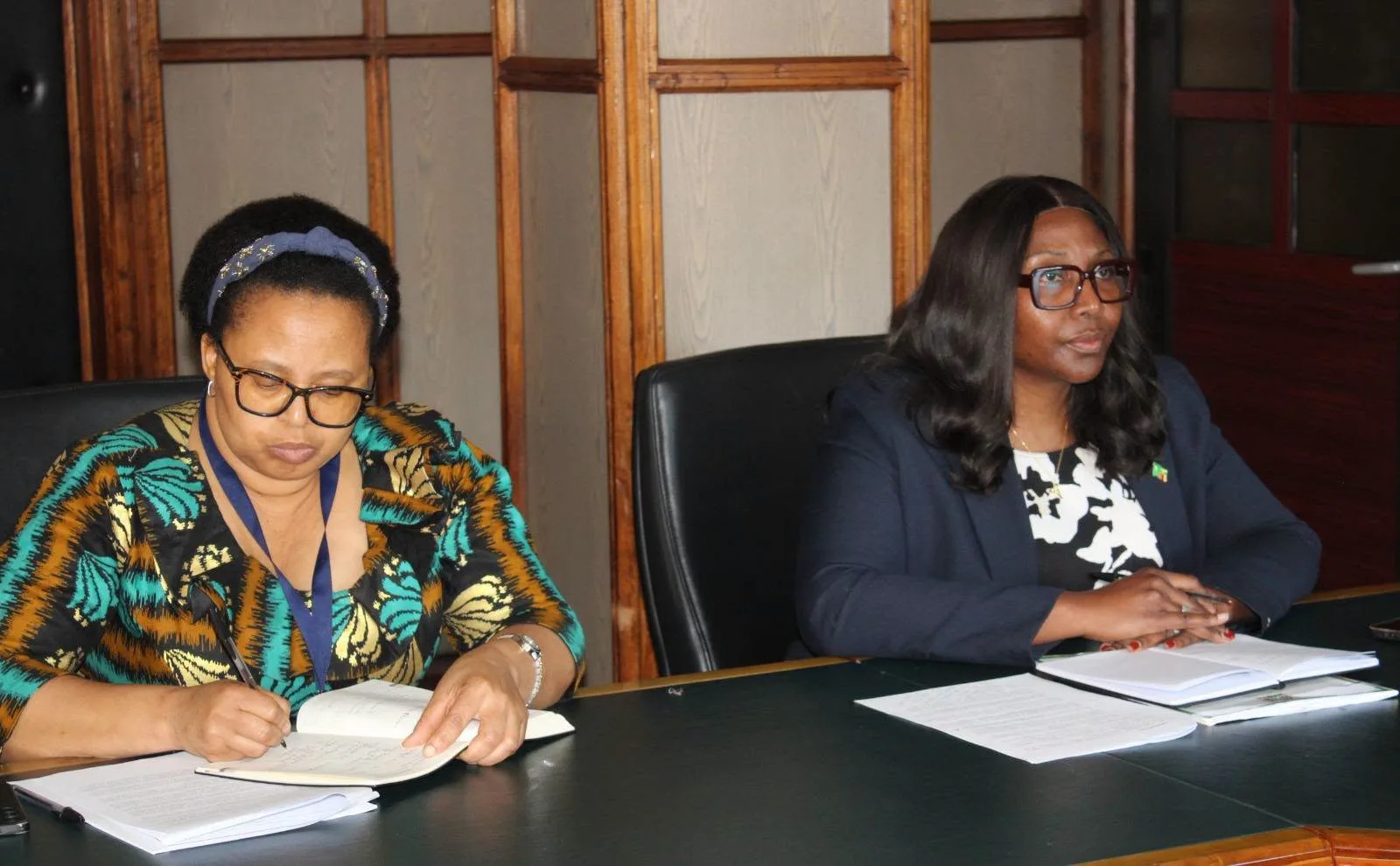
Gundersen made the remarks at Charter House in Lusaka on Thursday, 27 August 2026, after receiving a delegation from the European Union Election Observation Mission, led by Deputy Chief Observer Dr Beata Martin-Rozumilowicz. The meeting centred on Zambia’s recently concluded general elections.
Government welcomes report, but reserves the decision
The EU delegation thanked the Government for the hospitality and cooperation extended to its observers throughout the electoral process. It said the mission expects to present its final report in the last week of October, setting out its observations and recommendations.
Gundersen thanked the mission for its work and said the Government looked forward to receiving the report. She added that the Government remained available to facilitate implementation of recommendations arising from it.
Her qualification matters. Zambia would consider and implement recommendations it chooses to adopt in accordance with its own development priorities, while taking account of national law and its obligations as a member of the international community.
What the EU mission has already said
The EU deployed about 100 observers for the 13 August election, including a core team of 11 experts and long-term and short-term observers. Its mandate covered the legal framework, election administration, voter registration, campaigning, campaign finance, media, inclusion, voting, counting, tabulation and complaints.
In its 15 August preliminary statement, the mission said voters were offered a competitive choice and that voting was generally conducted efficiently. It also reported restrictions on campaigning and advantages associated with incumbency, which it said contributed to an uneven playing field.
A later EU EOM update on tabulation raised concerns about procedures at some constituency totalling centres after the Electoral Commission of Zambia temporarily suspended counting and the announcement of results on 14 August. These remain preliminary findings. The final report is expected to assess the whole process and set out recommendations for future elections.
What national ownership means for electoral reform
National ownership means that electoral reforms are debated, accepted and carried out through Zambia’s own institutions. It does not remove the country’s international commitments from consideration. Gundersen explicitly placed both ideas together: local priorities on one side, and Zambia’s legal and international obligations on the other.
That creates the central test for October. The value of the final report will depend less on the number of recommendations than on whether Government clearly states which proposals it accepts, which it rejects, and why. Recommendations that require changes to legislation would also need a transparent parliamentary process rather than an administrative promise alone.
Why businesses and investors should pay attention
Election observation can look distant from day-to-day business, but the quality of public institutions affects how investors assess political and regulatory risk. Clear election rules, credible dispute resolution and predictable reform timetables help businesses plan. Uncertainty over how rules are applied makes that planning harder.
For businesses, the immediate issue is not the diplomatic wording of the October report. It is whether the report leads to a public, time-bound response from the institutions responsible for election law and administration. A reform process with named responsibilities and measurable deadlines would give citizens and investors a clearer basis for judging progress before the next electoral cycle.
Four questions to ask when the final report arrives
- Which problems require amendments to law, and which can be fixed through better administration?
- What changes are proposed for counting, tabulation and publication of results?
- Which institution will own each accepted recommendation, and what will implementation cost?
- How will Government report progress to citizens before the next election?
What happens next
The EU mission is expected to deliver its final report to the Government in the last week of October. Depending on its contents, implementation could require action by the Electoral Commission of Zambia, Parliament, the courts and other public institutions.
The Government has said it is ready to facilitate implementation of recommendations it adopts. The next measure of that commitment will be whether its response is public, specific and linked to a workable timetable.
Related coverage
- The Economics of Zambia’s 2026 Election
- Zambia’s Turnaround Won the Election. Now It Has to Deliver.
- State House Denies Hichilema Ordered Court Closures as Access Questions Persist
- Judiciary Confirms Receipt of Presidential Petition, Refers It to Constitutional Court
Official sources
- European Union Election Observation Mission Zambia 2026
- EU EOM preliminary statement, 15 August 2026
- EU EOM election observation update, 19 August 2026
WARNING! All rights reserved. This material and all other digital content on this website may not be reproduced, published, broadcast, rewritten, or redistributed, in whole or in part, without the prior express permission of The Zambian Economist. Where permission is granted, the content must be clearly credited to “The Zambian Economist,” with “www.zambianeconomist.com” prominently displayed.
WhatsApp: +260775574228 | Email: info@zambianeconomist.com
© 2026 The Zambian Economist.