
Mwandi Kuta has welcomed the start of works on the Livingstone-Sesheke M10 Road after years of appeals for its rehabilitation, while questioning the proposed allocation of five kilometres of road works per district along the route.
Key takeaways
- Mwandi Kuta of the Barotse Royal Establishment has welcomed the commencement of works on the Livingstone-Sesheke M10 Road, describing the project as long overdue.
- Induna Omei told a stakeholder meeting in Mwandi that the road has remained in poor condition despite serving as a critical transport and trade corridor connecting communities and neighbouring countries.
- The BRE raised concern over the proposed allocation of only five kilometres of road works per district, arguing that communities along the route have endured the poor road for years.
- The BRE pledged cooperation with the contractor, including facilitating access to land for project facilities and identifying quarry sites and borrow pits.
- Traditional land should be treated as a resource for development, not an obstacle: “Land is there for development,” Induna Omei said.
The Barotse Royal Establishment (BRE), through Mwandi Kuta, has welcomed the commencement of works on the Livingstone-Sesheke M10 Road, describing the long-awaited project as a major opportunity for economic development in Mwandi and the wider Western Province.

Years of calls
For many years, Mwandi Kuta, together with Senior Chief Anañanga Imwiko, has consistently called for the construction and rehabilitation of the Livingstone-Sesheke Road, highlighting its importance to the people of Mwandi and communities along the route.
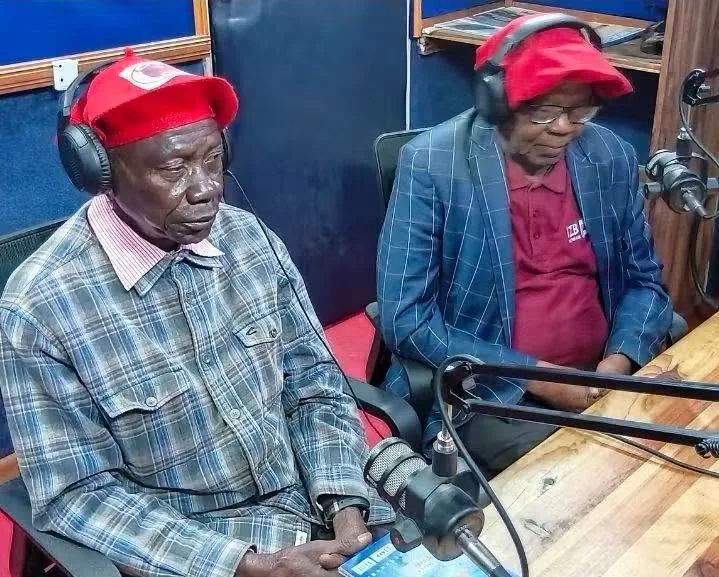
Speaking during a stakeholder engagement meeting held on Wednesday at the Catholic Church Hall in Mwandi, Induna Omei said the road had remained in poor condition for many years despite being a critical transport and trade corridor connecting communities and neighbouring countries.
He said the commencement of works was therefore welcome and long overdue, noting that a properly rehabilitated road would improve transportation, stimulate economic activity, open up opportunities for local businesses and improve the movement of people and goods.
A trade corridor, not just a road
The route matters beyond Mwandi district. It runs from Livingstone, Zambia’s tourist capital, to Sesheke on the border with Namibia, placing it on one of the paths cargo takes between Zambian markets and the port of Walvis Bay, part of the wider network of trade corridors Zambia has been working to strengthen. A road in poor condition on that stretch translates into higher vehicle operating costs, slower turnaround times for transporters and higher prices for goods reaching communities along the way.
Concern over the works allocation
However, the BRE raised concern over the proposed allocation of only five kilometres of road works per district, arguing that communities across the route have endured the effects of the poor road for many years.
The establishment has called for continued engagement between Government, the contractor and local stakeholders to ensure that the concerns of affected communities are adequately addressed.
Cooperation and land
Induna Omei also assured the contractor of the BRE’s cooperation and support, including facilitating access to land required for project facilities and identifying suitable sources of construction materials, such as quarry sites and borrow pits. That offer has practical weight: quarry sites and borrow pits sourced near the route keep construction inputs local and reduce haulage costs.
The BRE further urged Government, traditional leaders, local authorities and communities to work together and put development ahead of disagreements.
Induna Omei stressed that traditional land should not be viewed as an obstacle to development, but as an important resource that can be made available for genuine projects that improve the lives of local people.
“Land is there for development,” Induna Omei said, urging stakeholders to embrace development and make decisions that will benefit present and future generations.
What it means for the corridor economy
For traders, transporters and tourism operators between Livingstone and Sesheke, the works are the difference between a corridor that functions and one that taxes everything that moves along it. The project also arrives amid wider interest in Western Province infrastructure, where proposals have included canal restoration and new crossings for Barotseland.
Mwandi itself enters this period with new representation, having returned Iris Kaingu as MP-elect in the August general election. The BRE has reaffirmed its commitment to working with Government, the contractor and other stakeholders to ensure the project delivers lasting economic and social benefits to the people of Mwandi, Western Province and the communities along the M10 corridor.
Related coverage
- Mwandi MP-Elect Iris Kaingu Congratulates Hichilema on Re-Election
- Litunga, Senior Chief Mweemba Congratulate Hichilema on Re-Election
- African Rivers Proposes Lift Bridges, Canal Restoration and a Data Centre for Barotseland
- Senior Chief Kambombo Congratulates Hichilema, Calls for Bigger FISP and Chama Road Works
- Economic Diplomacy and Zambia in the Global Economy
Related: Ngambela Mukela Manyando Retires; BRE Says He Was Not Fired.
WARNING! All rights reserved. This material and all other digital content on this website may not be reproduced, published, broadcast, rewritten, or redistributed, in whole or in part, without the prior express permission of The Zambian Economist. Where permission is granted, the content must be clearly credited to “The Zambian Economist,” with “www.zambianeconomist.com” prominently displayed.
WhatsApp: +260775574228 | Email: info@zambianeconomist.com
© 2026 The Zambian Economist.