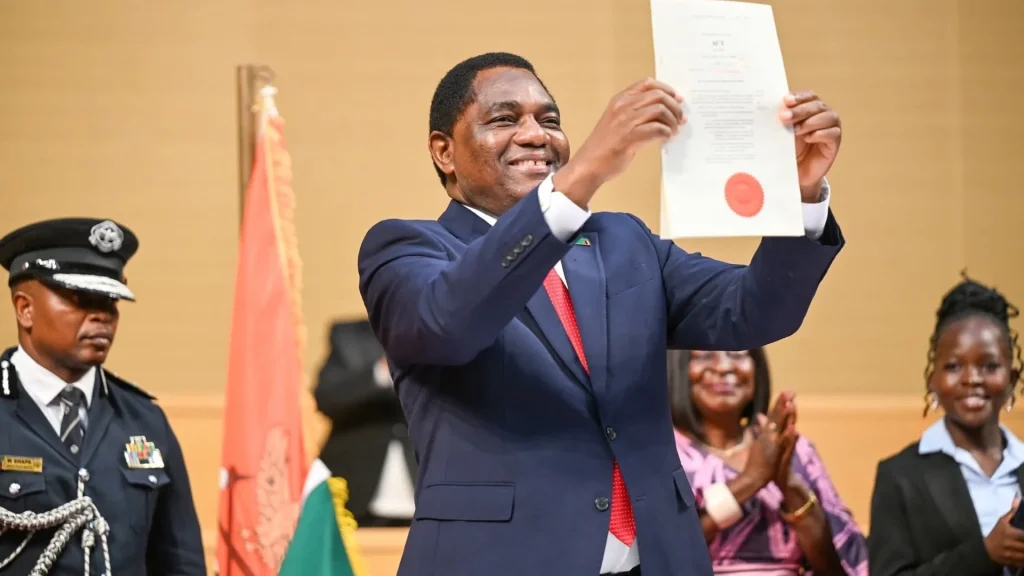
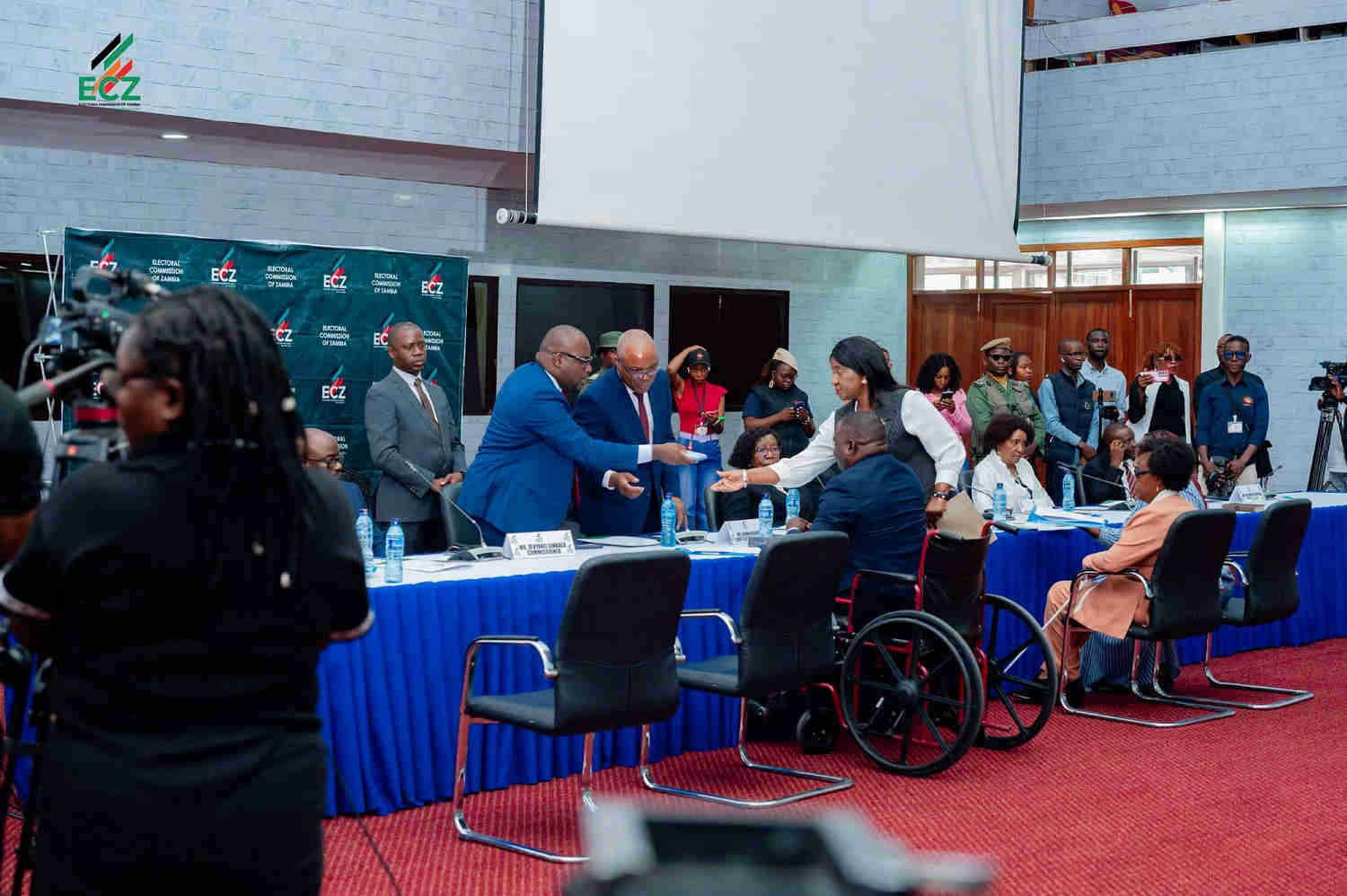
The ECZ validated the forty National Assembly proportional representation nominees at Mulungushi International Conference Centre in Lusaka on 18 September 2026. Photo: supplied.
KEY TAKEAWAYS
- The Electoral Commission of Zambia validated all 40 National Assembly proportional representation nominees at Mulungushi International Conference Centre on 18 September 2026.
- Validation was conducted before Returning Officer Mrs. Mwangala Zaloumis, SC, who is also the ECZ Chairperson.
- Only two parties qualified for PR seats: the ruling UPND and the National Reconciliation Party for Unity and Prosperity (NRPUP).
- The exercise implements the Constitution of Zambia (Amendment) Act No. 13 of 2025, which created 40 PR seats in the National Assembly and PR seats in councils.
- The process completes the National Assembly’s formation alongside the directly elected members and the five nominated MPs.
The Electoral Commission of Zambia has validated the forty National Assembly proportional representation nominees, completing the final piece of the new Parliament’s composition. The nominees appeared before Returning Officer Mrs. Mwangala Zaloumis, SC, who chairs the Commission, at Mulungushi International Conference Centre on 18 September 2026.
The validation clears the last procedural hurdle before the PR members take their seats alongside the directly elected members and the five MPs nominated by President Hakainde Hichilema. It also lands exactly on the timetable set earlier this month, when the National Assembly gave the ECZ until 17 September to name the proportional representation MPs.
What happened at Mulungushi
Each of the forty nominees appeared for validation before the Returning Officer, who confirmed their eligibility under the law governing PR seats. The process involved the two political parties that qualified for National Assembly PR seats: the National Reconciliation Party for Unity and Prosperity (NRPUP) and the United Party for National Development (UPND).
By validating the party nominees, the Commission has now implemented the provisions of the Constitution of Zambia (Amendment) Act No. 13 of 2025, which introduced the forty PR seats in the National Assembly and proportional representation seats in councils as prescribed.
Why Zambia now has PR seats at all
The 2025 amendment moved Zambia toward a mixed member proportional system: voters still elect constituency MPs directly, but an additional layer of seats is filled from party lists in proportion to each party’s national support. We explained the mechanics in detail in How Zambia’s Mixed-Member Proportional Representation System Works.
The design intent is twofold. First, it gives parties with nationally spread but locally thin support a route into Parliament. Second, the Act reserves space for groups that struggled to win constituency seats, which is why the party lists have drawn close attention from civil society groups since the amendment passed.
What it means for Parliament’s arithmetic
With only two parties qualifying, the PR block of 40 will be shared between the UPND and NRPUP. For the ruling party, whose landslide win already delivered a commanding majority of constituency seats, the PR seats pad the margin further. For NRPUP, the seats provide a national platform and a voice in committee work that its constituency performance alone would not have delivered.
The practical effect is legislative. Budget approvals, constitutional amendments and ministerial oversight all become smoother for the executive when the government bench is this large. The check on that power now rests less on numbers and more on the quality of debate, the courts and institutions such as the Auditor General.
What to watch next
Watch the swearing-in of the PR members and the committee assignments that follow, since those posts determine where the new members actually exert influence. The PR seats in councils, also created by the Act, will follow their own timetable. And one chamber dispute remains live: the Mandevu constituency votes again on 24 September after the totalling centre attack, which will add one more member to the house.
What this means for you
For taxpayers: 40 more MPs means 40 more salary and gratuity bills, office budgets and staff. The cost of the expanded Parliament was debated when the Act passed and will resurface in budget debates.
For opposition politics: NRPUP’s presence shows smaller parties can reach Parliament through the list route, which may change how parties campaign in 2031.
For policy watchers: a larger government-friendly house means scrutiny depends on the few independent voices, the courts and your vote at the next election.
WARNING! All rights reserved. This material and all other digital content on this website may not be reproduced, published, broadcast, rewritten, or redistributed, in whole or in part, without the prior express permission of The Zambian Economist. Where permission is granted, the content must be clearly credited to “The Zambian Economist,” with “www.zambianeconomist.com” prominently displayed.
WhatsApp: +260775574228 | Email: info@zambianeconomist.com © 2026 The Zambian Economist.
Work With The Zambian Economist: Advertise With Us | List With Us | Submit an Article