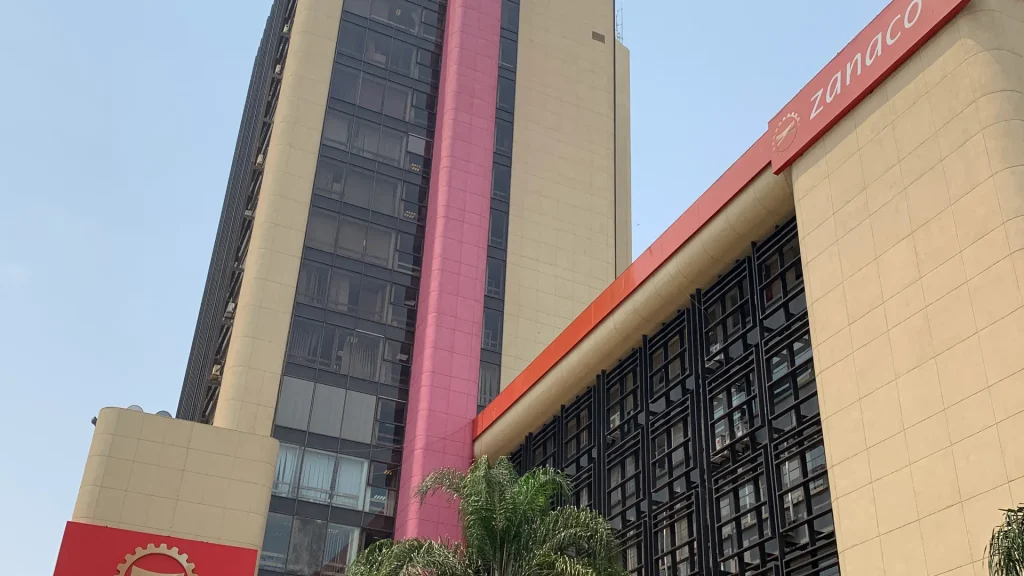

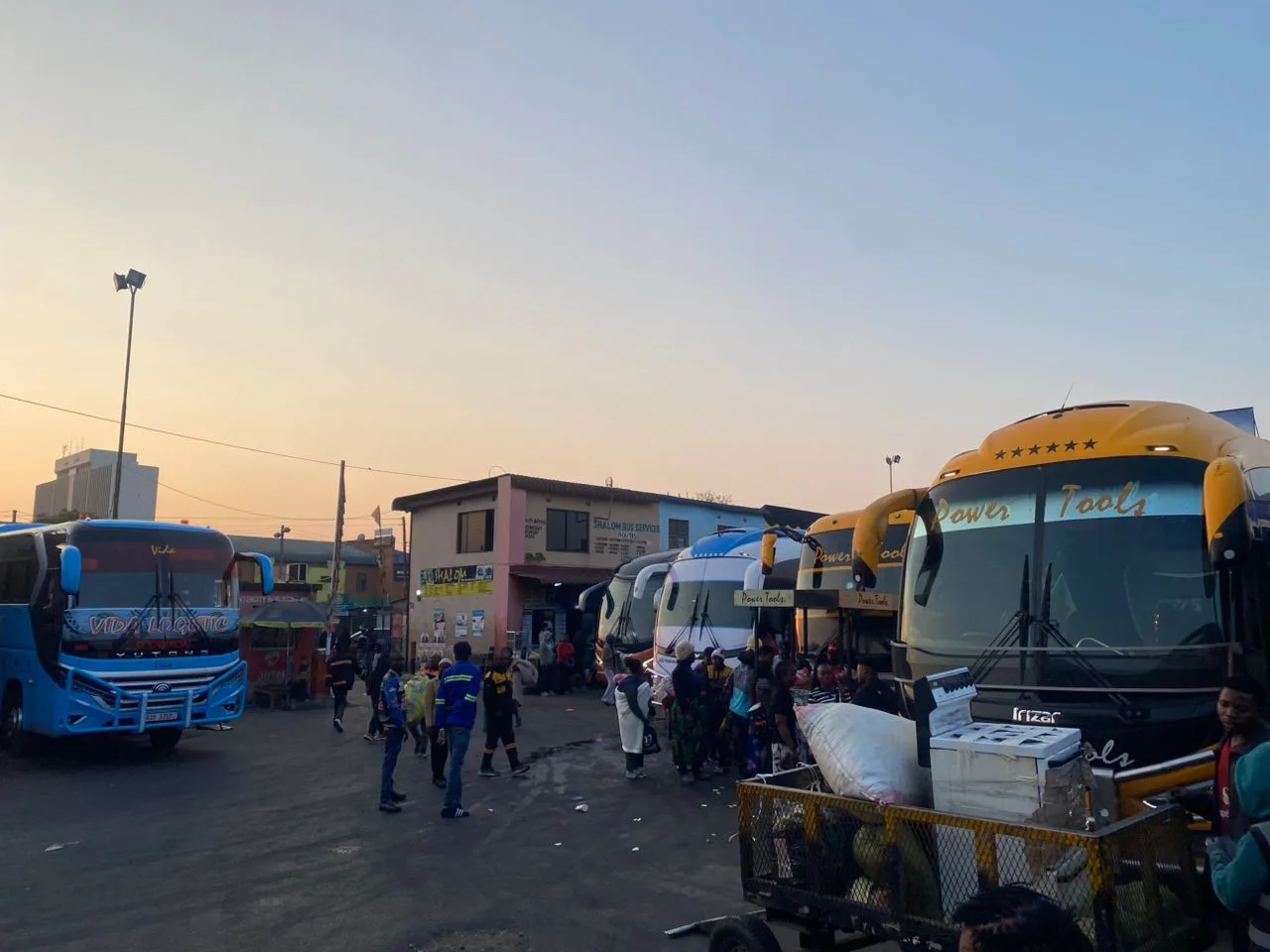
Before Lusaka fully wakes, the capital’s Intercity Bus Terminus is already moving. Travellers, drivers, porters and traders begin a Sunday shaped by departures, arrivals and the small transactions that keep the city connected to the rest of Zambia.
Key Takeaways
- Lusaka’s Intercity Bus Terminus starts Sunday quietly, but the first travellers and long-distance coaches are already in motion.
- Each departure supports work beyond the bus itself, from luggage handling and local transport to food sales and nearby shops.
- The terminus shows how movement between Lusaka and other towns sustains a network of everyday economic activity.
- Sunday’s slower pace offers a clearer view of the people whose work keeps the capital connected.
At first light on Sunday, Lusaka’s Intercity Bus Terminus is quieter than it will be later in the day. The sky is pale, the shadows are long and the usual city roar has not yet settled over the centre. Yet the day’s economy has already begun.
Coaches wait in their bays. Travellers gather beside bags, boxes and parcels. A handcart stands loaded near one of the buses. Drivers and conductors move between vehicles while small groups compare tickets, check luggage and prepare for the road.
Before the city raises its voice
Sunday changes the rhythm of central Lusaka. Many shopfronts remain closed in the early hours, traffic is lighter and pedestrians have more room to move. At Intercity, however, rest is relative. A bus timetable does not pause simply because the surrounding city has chosen a slower morning.
Some passengers are leaving the capital. Others have just arrived after travelling through the night. Around them, the terminus is a working system: people direct vehicles, move luggage, clean coaches and help passengers find the correct departure point.

An economy built around departure times
A long-distance journey creates work before the engine starts. The ticket is one transaction. A taxi or minibus ride to the station may be another. Travellers buy food and water, pay for help with heavy luggage or make a last-minute purchase from a nearby shop.
None of these exchanges is large enough to dominate an economic report. Together, they form the daily income of people whose businesses depend on movement. Intercity is therefore more than transport infrastructure. It is a marketplace organised around time, distance and the certainty that somebody always needs to get somewhere.
Who earns when a bus leaves?
The coach operator earns the fare, but the chain spreads further. Porters handle bulky parcels. Street and shop traders serve passengers who may have hours ahead of them. Taxi and minibus drivers carry people into and away from the terminus. Mechanics, cleaners and other support workers keep vehicles ready for the next trip.
For these workers, Sunday is not simply the end of the weekend. It can be the start of another earning day. The first bus creates a deadline, and that deadline pulls a small commercial community into action before much of Lusaka opens its doors.

A meeting point for Zambia
Intercity gives Lusaka a national reach that is easy to overlook. The people crossing its yard carry different destinations, reasons and expectations. A journey may be for work, family, school, trade or a return home. Parcels travel alongside passengers, linking buyers and sellers who may never meet face to face.
The terminus turns those separate journeys into one visible flow. It is one of the places where the capital’s relationship with the rest of the country becomes physical: a queue, a suitcase, a parcel and a seat on a bus.


The meaning of a quiet morning
Sunday morning strips away some of the congestion and urgency that usually define the area. That makes the underlying system easier to see. Lusaka wakes because people move, and people move because work, trade and family life do not remain in one place.
By mid-morning, the open spaces will narrow. More engines will start, more passengers will arrive and more shops will trade. The calm will pass. What remains is the steady economic purpose beneath it: Zambia moving through its capital, one departure at a time.
Explore more Business & Economy reporting, browse the Zambia Business Directory or see upcoming events.
WARNING! All rights reserved. This material and all other digital content on this website may not be reproduced, published, broadcast, rewritten, or redistributed, in whole or in part, without the prior express permission of The Zambian Economist. Where permission is granted, the content must be clearly credited to “The Zambian Economist,” with “www.zambianeconomist.com” prominently displayed.
WhatsApp: +260775574228 | Email: info@zambianeconomist.com
© 2026 The Zambian Economist.